THE ADVENTURE COLLECTIVE® · Independent discovery and booking for outdoor travel

Experience Angkor’s major temples in a private full‑day tour timed for sunrise or sunset. A local guide, private transport, and a flexible itinerary let you explore Bayon, Ta Prohm, Angkor Wat and Phnom Bakheng with context and comfort.
Experience Angkor’s major temples in a private full‑day tour timed for sunrise or sunset. A local guide, private transport, and a flexible itinerary let you explore Bayon, Ta Prohm, Angkor Wat and Phnom Bakheng with context and comfort.
Dawn unfurls over a broad moat and the silhouette of Angkor Wat sharpens against a pale sky. A local guide waits in the hotel lobby, the tuk‑tuk idling like a patient animal ready to carry you into stone and shadow. Whether you begin before first light to catch the temple spires framed by mirror‑flat water or linger until evening for golden relief on carved bas‑reliefs, the complex moves with an almost theatrical rhythm.
Verified experiences and guided adventures in the surrounding area.
Operated by Vamos Camboja Turismo · Siem Reap, Siem Reap Province
Dawn unfurls over a broad moat and the silhouette of Angkor Wat sharpens against a pale sky. A local guide waits in the hotel lobby, the tuk‑tuk idling like a patient animal ready to carry you into stone and shadow. Whether you begin before first light to catch the temple spires framed by mirror‑flat water or linger until evening for golden relief on carved bas‑reliefs, the complex moves with an almost theatrical rhythm.
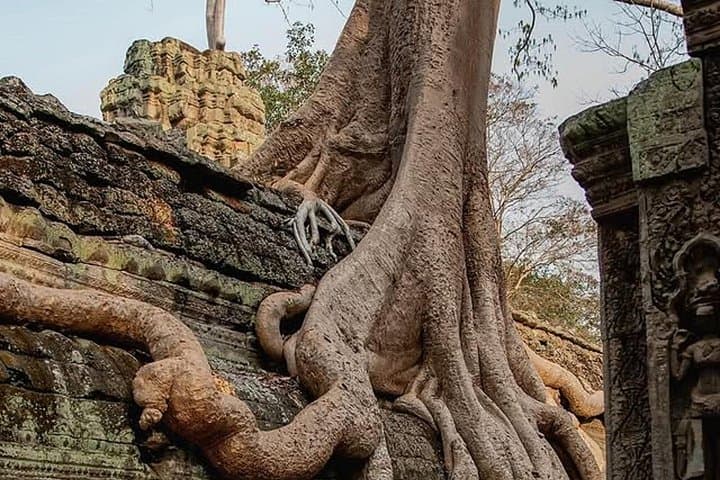
These temples were raised by the Khmer Empire between the 9th and 12th centuries; Angkor Wat itself was laid out in the early 1100s as a Hindu monument and later adapted for Buddhist worship. The plazas and galleries sit on sandstone and laterite—sediments cut from quarries and transported across the Siem Reap basin—and the area’s seasonal floodplain helped sustain the capital for centuries. Bayon’s hundred‑faced towers, Ta Prohm’s strangler figs, and the elevated causeways of Angkor Thom each tell a piece of local craft, religion, and urban planning.
Practicalities set the day: buy the Angkor Archaeological Park pass (required), wear clothing that covers knees and shoulders at most temples, and plan for long stretches on uneven stone and steep temple steps. Bring sun protection, insect repellent, and cash for food and tips. Sunrise runs start very early and are cooler; a sunset finale at Phnom Bakheng rewards patience but fills quickly—arrive early. Guides streamline routes so you see Bayon, Ta Prohm, Angkor Wat and Phnom Bakheng in comfort, leaving you free to read the carvings, listen for birds, and let the stones tell their history.
No, the Angkor Archaeological Park pass (USD 37 for a 1‑day pass as of recent rates) is not included and must be purchased separately at the ticket center or online.
Sunrise over Angkor Wat is dramatic for reflective pools and cooler temperatures; sunset from Phnom Bakheng offers wide vistas—choose based on whether you prefer still water reflections or panoramic light.
Yes; the operator notes children under 12 can join free, but parents should plan for long walks and ensure children follow dress rules and safety on steep steps.
Bring cash (US dollars commonly accepted) for entrance fees, meals, tips, and small purchases; some restaurants accept cards but ATMs are in town.
Vamos Camboja Turismo operates guided outdoor trips and adventures with an emphasis on safety, stewardship, and memorable experiences.


Dawn unfurls over a broad moat and the silhouette of Angkor Wat sharpens against a pale sky. A local guide waits in the hotel lobby, the tuk‑tuk idling like a patient animal ready to carry you into stone and shadow. Whether you begin before first light to catch the temple spires framed by mirror‑flat water or linger until evening for golden relief on carved bas‑reliefs, the complex moves with an almost theatrical rhythm.
Dawn unfurls over a broad moat and the silhouette of Angkor Wat sharpens against a pale sky. A local guide waits in the hotel lobby, the tuk‑tuk idling like a patient animal ready to carry you into stone and shadow. Whether you begin before first light to catch the temple spires framed by mirror‑flat water or linger until evening for golden relief on carved bas‑reliefs, the complex moves with an almost theatrical rhythm.
These temples were raised by the Khmer Empire between the 9th and 12th centuries; Angkor Wat itself was laid out in the early 1100s as a Hindu monument and later adapted for Buddhist worship. The plazas and galleries sit on sandstone and laterite—sediments cut from quarries and transported across the Siem Reap basin—and the area’s seasonal floodplain helped sustain the capital for centuries. Bayon’s hundred‑faced towers, Ta Prohm’s strangler figs, and the elevated causeways of Angkor Thom each tell a piece of local craft, religion, and urban planning.
Practicalities set the day: buy the Angkor Archaeological Park pass (required), wear clothing that covers knees and shoulders at most temples, and plan for long stretches on uneven stone and steep temple steps. Bring sun protection, insect repellent, and cash for food and tips. Sunrise runs start very early and are cooler; a sunset finale at Phnom Bakheng rewards patience but fills quickly—arrive early. Guides streamline routes so you see Bayon, Ta Prohm, Angkor Wat and Phnom Bakheng in comfort, leaving you free to read the carvings, listen for birds, and let the stones tell their history.