THE ADVENTURE COLLECTIVE® · Independent discovery and booking for outdoor travel

A private full-day tuk-tuk tour that visits Angkor Wat, Bayon, Ta Prohm and nearby temples—ideal for travelers who want a guided, paced exploration of Siem Reap’s archaeological park. Expect long walks on uneven stone, strong sun, and immersive historic architecture.
A private full-day tuk-tuk tour that visits Angkor Wat, Bayon, Ta Prohm and nearby temples—ideal for travelers who want a guided, paced exploration of Siem Reap’s archaeological park. Expect long walks on uneven stone, strong sun, and immersive historic architecture.
You step out of a tuk-tuk into a cooling wash of shadow and stone; the sun outlines Angkor Wat’s five towers while tourists move like slow currents along causeways. The guide points to bas-reliefs where gods and warriors once marched; roots press through cracks and seem to argue with the masonry for ownership.
Verified experiences and guided adventures in the surrounding area.
Operated by Angkor Daily Trip · Siem Reap, Siem Reap Province
You step out of a tuk-tuk into a cooling wash of shadow and stone; the sun outlines Angkor Wat’s five towers while tourists move like slow currents along causeways. The guide points to bas-reliefs where gods and warriors once marched; roots press through cracks and seem to argue with the masonry for ownership.
Angkor’s monuments date primarily to the 12th and 13th centuries, raised by kings such as Suryavarman II and Jayavarman VII as both Hindu and later Buddhist centers of power. The sandstone here tells a geological story: compacted river sediments carved into blocks and fitted without mortar, now softened by centuries of monsoon and root growth.
Culture remains present—monks in saffron, local vendors selling cold sugarcane juice, and villagers maintaining small shrine offerings. Less obvious are small, quiet corners: Thommanon’s delicate lintels and Banteay Kdei’s tree-wound galleries, where light fragments through leaf gaps.
Practically, this private full-day tour runs about 6–7 hours and covers Angkor Wat, the South Gate of Angkor Thom, Bayon, Thommanon, Ta Prohm, and Banteay Kdei. Expect a lot of walking on uneven stone, steep temple steps, and strong sun between late morning and midafternoon. Carry water, wear non-slip shoes, and cover shoulders and knees in sacred sites.
Timing matters: early morning light at Angkor Wat is cooler and less crowded; Ta Prohm’s atmosphere is most striking when the low sun throws tree roots into relief. Respect ropes and carved surfaces—these ruins survive because visitors treat them carefully.
Yes. Entrance to Angkor Archaeological Park requires a paid Angkor Pass, bought at the official ticket center; bring your passport and proof when your guide arranges entry.
This private tour is approximately 6–7 hours and uses a tuk-tuk for transport between sites, with a licensed English-speaking guide and hotel pickup/drop-off included.
Dress modestly: shoulders and knees should be covered to enter main religious structures; breathable fabrics work best in warm weather.
While the tour is family-friendly, many temples have uneven steps and rough ground—infants must sit on laps per operator policy and guests with serious mobility or spinal issues should take care.
Angkor Daily Trip operates guided outdoor trips and adventures with an emphasis on safety, stewardship, and memorable experiences.
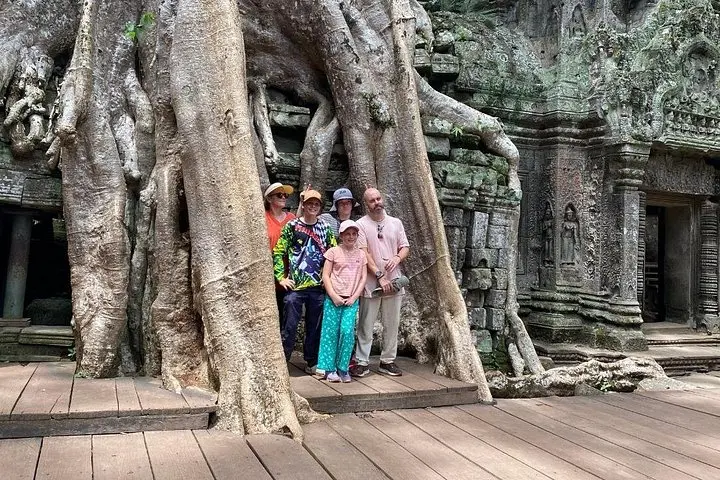
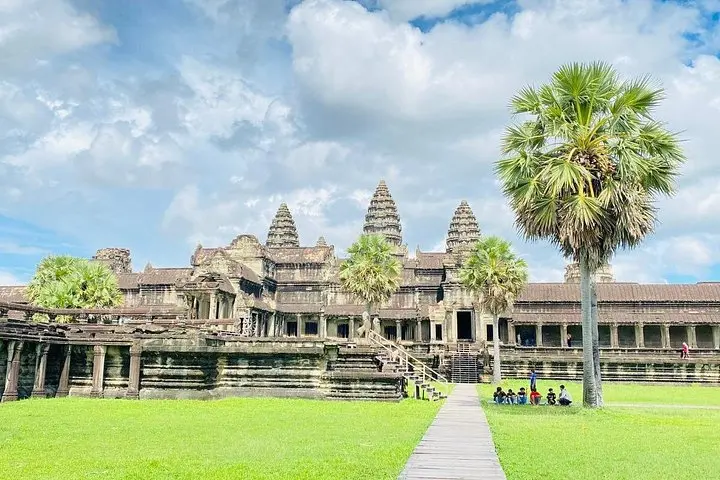
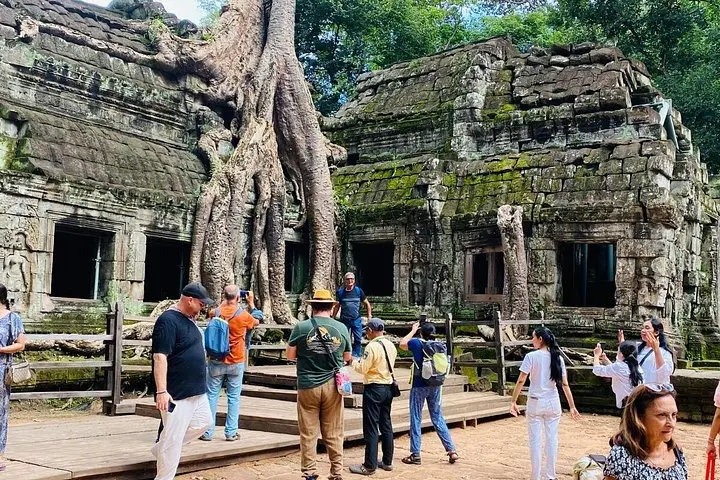
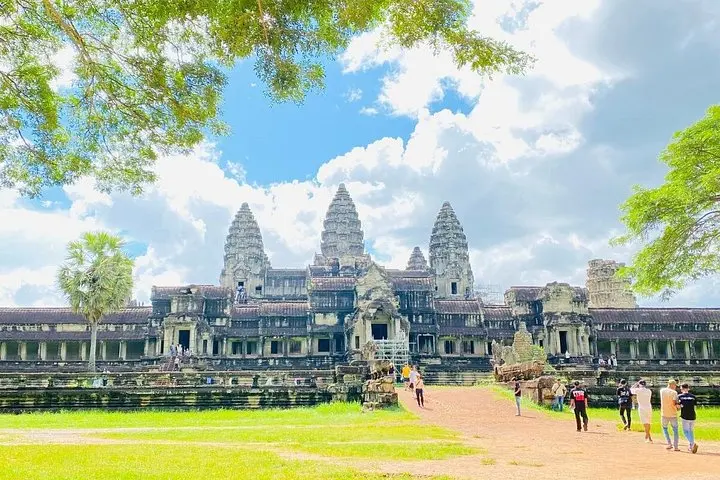
You step out of a tuk-tuk into a cooling wash of shadow and stone; the sun outlines Angkor Wat’s five towers while tourists move like slow currents along causeways. The guide points to bas-reliefs where gods and warriors once marched; roots press through cracks and seem to argue with the masonry for ownership.
You step out of a tuk-tuk into a cooling wash of shadow and stone; the sun outlines Angkor Wat’s five towers while tourists move like slow currents along causeways. The guide points to bas-reliefs where gods and warriors once marched; roots press through cracks and seem to argue with the masonry for ownership.
Angkor’s monuments date primarily to the 12th and 13th centuries, raised by kings such as Suryavarman II and Jayavarman VII as both Hindu and later Buddhist centers of power. The sandstone here tells a geological story: compacted river sediments carved into blocks and fitted without mortar, now softened by centuries of monsoon and root growth.
Culture remains present—monks in saffron, local vendors selling cold sugarcane juice, and villagers maintaining small shrine offerings. Less obvious are small, quiet corners: Thommanon’s delicate lintels and Banteay Kdei’s tree-wound galleries, where light fragments through leaf gaps.
Practically, this private full-day tour runs about 6–7 hours and covers Angkor Wat, the South Gate of Angkor Thom, Bayon, Thommanon, Ta Prohm, and Banteay Kdei. Expect a lot of walking on uneven stone, steep temple steps, and strong sun between late morning and midafternoon. Carry water, wear non-slip shoes, and cover shoulders and knees in sacred sites.
Timing matters: early morning light at Angkor Wat is cooler and less crowded; Ta Prohm’s atmosphere is most striking when the low sun throws tree roots into relief. Respect ropes and carved surfaces—these ruins survive because visitors treat them carefully.