THE ADVENTURE COLLECTIVE® · Independent discovery and booking for outdoor travel

Watch Angkor Wat bloom into sunrise and explore Angkor Thom and Ta Prohm with a private English-speaking guide. This full-day, small-group itinerary pairs early-morning calm with afternoon temple exploration—plan for long walks, uneven steps, and mandatory park admission.
Watch Angkor Wat bloom into sunrise and explore Angkor Thom and Ta Prohm with a private English-speaking guide. This full-day, small-group itinerary pairs early-morning calm with afternoon temple exploration—plan for long walks, uneven steps, and mandatory park admission.
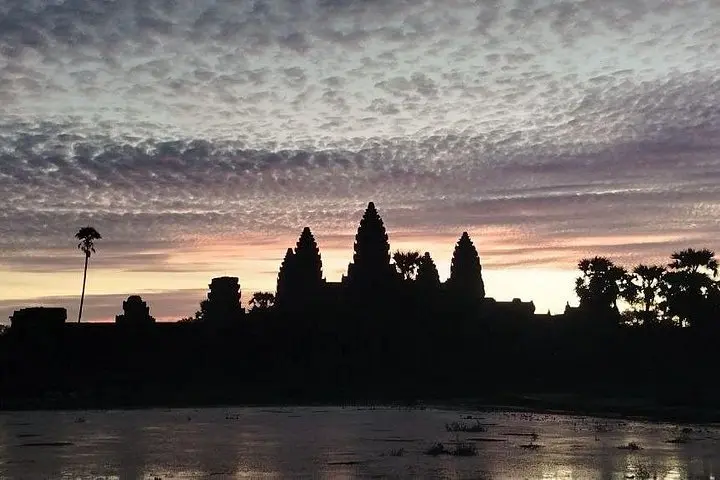
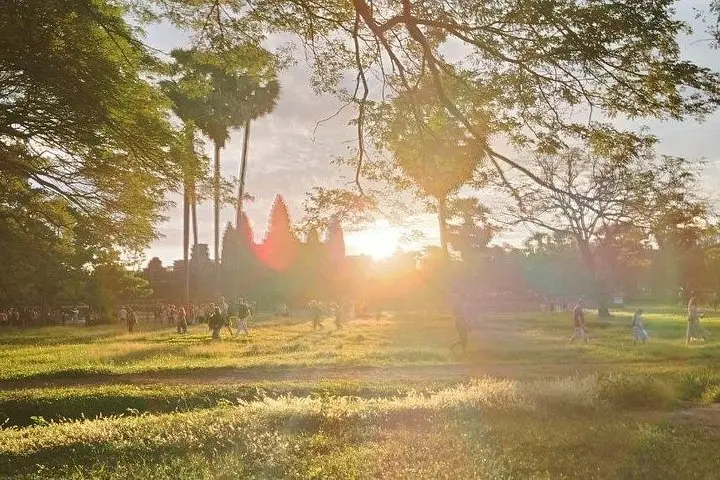
You stand before the reflecting pond as the sky lightens: the central towers of Angkor Wat outline themselves against a slow, cool gold. Early mist lifts off the moat and lotus leaves, and the first sunstroke finds bas-reliefs carved into sandstone centuries ago.
Verified experiences and guided adventures in the surrounding area.
Operated by Pheap · Siem Reap, Siem Reap Province
You stand before the reflecting pond as the sky lightens: the central towers of Angkor Wat outline themselves against a slow, cool gold. Early mist lifts off the moat and lotus leaves, and the first sunstroke finds bas-reliefs carved into sandstone centuries ago.
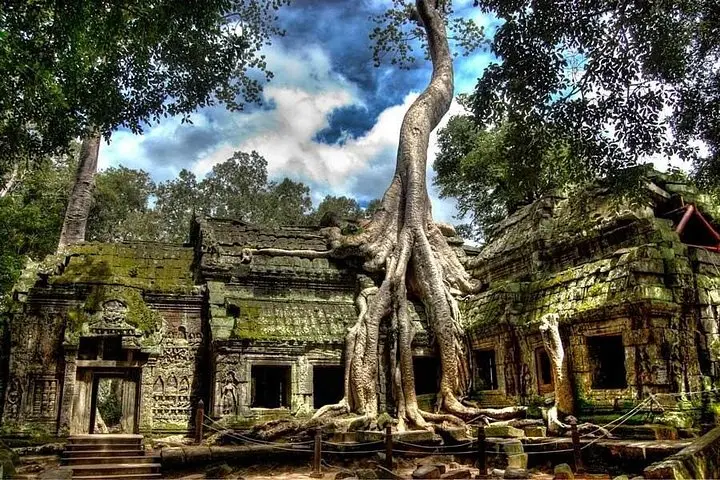
This private small-group tour moves from that quiet sunrise into the wider story of Angkor — the 12th-century capital built by King Suryavarman II, where Khmer stone and laterite were shaped into massive galleries, faces and causeways. Geology plays a role here: weathered sandstone holds the carving while jungle roots pry at laterite foundations, producing the dramatic scenes at Ta Prohm where fig and silk-cotton trees wind through lintels and towers.
Culturally, Angkor sits at the intersection of Hindu and Buddhist traditions; temples change function through time and remain active spiritual places. Local guides translate iconography into human stories, and the experience shifts from contemplative sunrise to the lively, photo-ready crowds at Bayon.
Plan practically: arrive before dawn for the best light and quieter paths; an Angkor Park pass (1-day ~USD 37) is required and paid on arrival. Wear breathable, modest clothing that covers shoulders and knees; comfortable shoes with grip for uneven steps; carry cash, bottled water, a hat and insect repellent. The full outing can run up to nine hours with hotel pickup and drop-off; pace your day to avoid midday heat. Respect temple conservation: stay on marked routes, don’t climb fragile carvings, and follow your guide’s instructions for photography and altars.
No. The mandatory Angkor Park pass (1-day ~USD 37) is purchased on-site; bring cash to buy it before entering.
For the sunrise component expect an early pickup—typically around 4:00–4:30 AM depending on your hotel and sunrise time; confirm exact pickup with the operator.
Many areas have uneven steps and narrow passageways; people with significant mobility restrictions may find some temples difficult to navigate.
Photography is generally allowed in most open areas, but avoid flash in dim interior shrines, and always respect signs and worshippers near active altars.
Pheap operates guided outdoor trips and adventures with an emphasis on safety, stewardship, and memorable experiences.

You stand before the reflecting pond as the sky lightens: the central towers of Angkor Wat outline themselves against a slow, cool gold. Early mist lifts off the moat and lotus leaves, and the first sunstroke finds bas-reliefs carved into sandstone centuries ago.
You stand before the reflecting pond as the sky lightens: the central towers of Angkor Wat outline themselves against a slow, cool gold. Early mist lifts off the moat and lotus leaves, and the first sunstroke finds bas-reliefs carved into sandstone centuries ago.
This private small-group tour moves from that quiet sunrise into the wider story of Angkor — the 12th-century capital built by King Suryavarman II, where Khmer stone and laterite were shaped into massive galleries, faces and causeways. Geology plays a role here: weathered sandstone holds the carving while jungle roots pry at laterite foundations, producing the dramatic scenes at Ta Prohm where fig and silk-cotton trees wind through lintels and towers.
Culturally, Angkor sits at the intersection of Hindu and Buddhist traditions; temples change function through time and remain active spiritual places. Local guides translate iconography into human stories, and the experience shifts from contemplative sunrise to the lively, photo-ready crowds at Bayon.
Plan practically: arrive before dawn for the best light and quieter paths; an Angkor Park pass (1-day ~USD 37) is required and paid on arrival. Wear breathable, modest clothing that covers shoulders and knees; comfortable shoes with grip for uneven steps; carry cash, bottled water, a hat and insect repellent. The full outing can run up to nine hours with hotel pickup and drop-off; pace your day to avoid midday heat. Respect temple conservation: stay on marked routes, don’t climb fragile carvings, and follow your guide’s instructions for photography and altars.