THE ADVENTURE COLLECTIVE® · Independent discovery and booking for outdoor travel

Walk from Pokhara into the Annapurna Sanctuary on a guided 9–10 day trek to Annapurna Base Camp (4,130 m). This private itinerary mixes cultural village stops, high-alpine meadows, and panoramic summit views with teahouse nights and porter support.
Walk from Pokhara into the Annapurna Sanctuary on a guided 9–10 day trek to Annapurna Base Camp (4,130 m). This private itinerary mixes cultural village stops, high-alpine meadows, and panoramic summit views with teahouse nights and porter support.
You step off the bus in Pokhara with lake air in your lungs and a string of ridgelines pinching the horizon. The trail climbs from terraced rice fields into rhododendron forest, then higher through alpine meadows until the sanctuary opens: Annapurna Base Camp — a bowl of moraine and ice ringed by towering summits at roughly 4,130 m.
Verified experiences and guided adventures in the surrounding area.
Operated by Everest Glacier Trek Pvt Ltd · Pokhara, Gandaki Province
You step off the bus in Pokhara with lake air in your lungs and a string of ridgelines pinching the horizon. The trail climbs from terraced rice fields into rhododendron forest, then higher through alpine meadows until the sanctuary opens: Annapurna Base Camp — a bowl of moraine and ice ringed by towering summits at roughly 4,130 m.
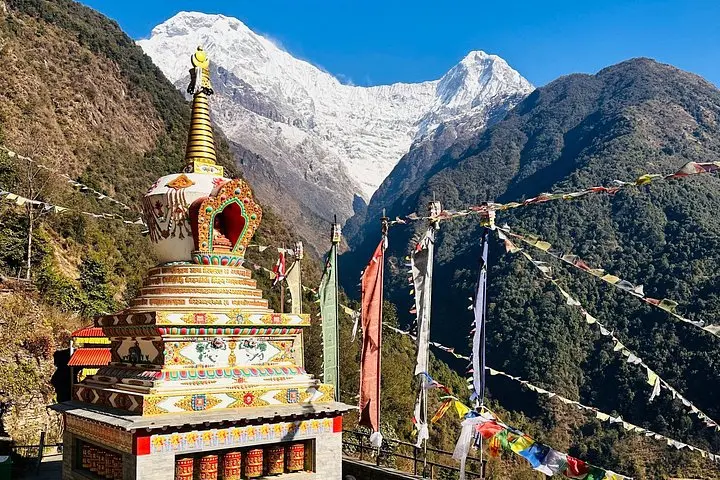
This route threads historic trade paths used by Gurung communities and salt caravans, now managed within the Annapurna Conservation Area — Nepal’s first and largest conservation project. Geologically the valley is a glacial amphitheater carved by Pleistocene ice; granite and schist outcrops frame scree slopes and blue-tinged moraines. Culturally, villages like Chhomrong offer a window into Gurung life: stone houses, prayer flags, and teahouses that accommodate trekkers.
Expect varied terrain: steep stone staircases, narrow forest tracks, river crossings on suspension bridges, and open scree near ABC. The itinerary covers roughly 60–80 km round-trip across 7–9 days of walking, with daily elevation changes of 500–1,200 m on steeper stretches. Weather shifts fast — sun-drenched mornings can turn into wind-driven, snowy afternoons.
Practical guidance: pace your ascent to reduce altitude sickness risk, carry layered insulation, and use trekking poles on descents. Hydrate frequently — water sources are common but treat or refill from teahouse supplies. Nights are spent in basic teahouses; book the private guided option to include a porter and planned transfers between Kathmandu and Pokhara. The reward is immediate: a 360° ring of Himalayan giants that make the effort tangible and the silence of high alpine air feel like a companion pushing you onward.
Yes — trekkers need the Annapurna Conservation Area Permit (ACAP) and a TIMS card; guides usually arrange these before departure.
Clear weather windows are spring (March–May) and fall (September–November) for stable skies and warmer daytime temperatures.
ABC reaches 4,130 m; some people experience mild altitude symptoms. Slow ascent, hydration, and awareness of AMS signs are essential.
Teahouses provide basic rooms and hot meals; comforts decrease above 3,000 m, so expect shared washrooms and limited hot-water/charging options.
Everest Glacier Trek Pvt Ltd operates guided outdoor trips and adventures with an emphasis on safety, stewardship, and memorable experiences.
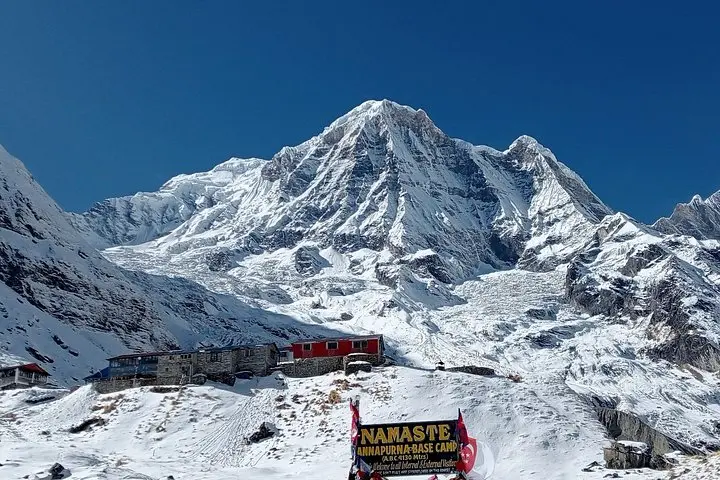
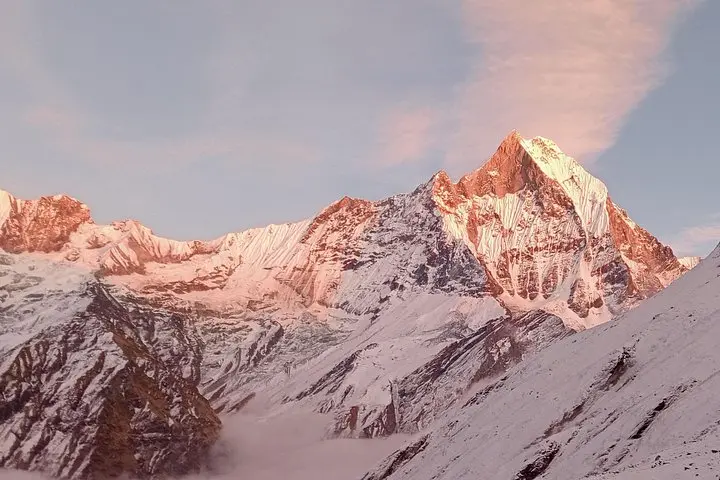
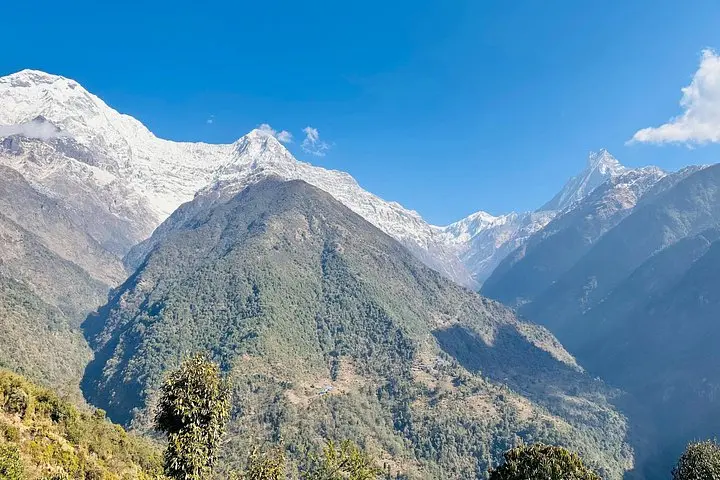
You step off the bus in Pokhara with lake air in your lungs and a string of ridgelines pinching the horizon. The trail climbs from terraced rice fields into rhododendron forest, then higher through alpine meadows until the sanctuary opens: Annapurna Base Camp — a bowl of moraine and ice ringed by towering summits at roughly 4,130 m.
You step off the bus in Pokhara with lake air in your lungs and a string of ridgelines pinching the horizon. The trail climbs from terraced rice fields into rhododendron forest, then higher through alpine meadows until the sanctuary opens: Annapurna Base Camp — a bowl of moraine and ice ringed by towering summits at roughly 4,130 m.
This route threads historic trade paths used by Gurung communities and salt caravans, now managed within the Annapurna Conservation Area — Nepal’s first and largest conservation project. Geologically the valley is a glacial amphitheater carved by Pleistocene ice; granite and schist outcrops frame scree slopes and blue-tinged moraines. Culturally, villages like Chhomrong offer a window into Gurung life: stone houses, prayer flags, and teahouses that accommodate trekkers.
Expect varied terrain: steep stone staircases, narrow forest tracks, river crossings on suspension bridges, and open scree near ABC. The itinerary covers roughly 60–80 km round-trip across 7–9 days of walking, with daily elevation changes of 500–1,200 m on steeper stretches. Weather shifts fast — sun-drenched mornings can turn into wind-driven, snowy afternoons.
Practical guidance: pace your ascent to reduce altitude sickness risk, carry layered insulation, and use trekking poles on descents. Hydrate frequently — water sources are common but treat or refill from teahouse supplies. Nights are spent in basic teahouses; book the private guided option to include a porter and planned transfers between Kathmandu and Pokhara. The reward is immediate: a 360° ring of Himalayan giants that make the effort tangible and the silence of high alpine air feel like a companion pushing you onward.