THE ADVENTURE COLLECTIVE® · Independent discovery and booking for outdoor travel

A private, full-day trip from Las Vegas that pairs Antelope Canyon’s sculpted slot walls with the dramatic overlook at Horseshoe Bend. Expect a long day, Navajo-guided canyon access, and unforgettable light for photos.
A private, full-day trip from Las Vegas that pairs Antelope Canyon’s sculpted slot walls with the dramatic overlook at Horseshoe Bend. Expect a long day, Navajo-guided canyon access, and unforgettable light for photos.
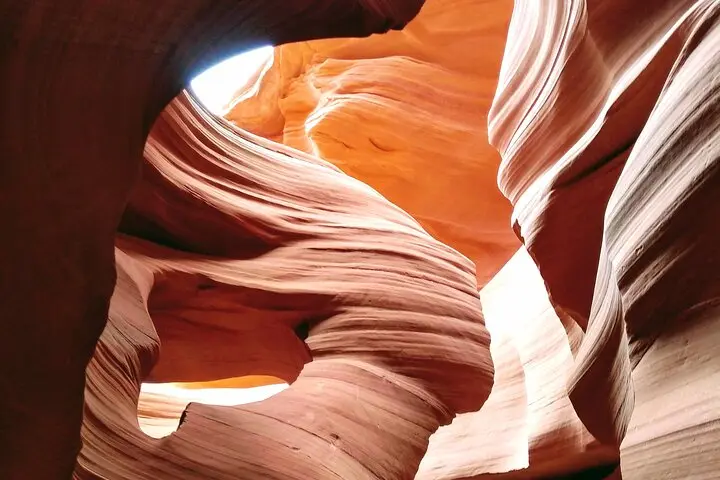
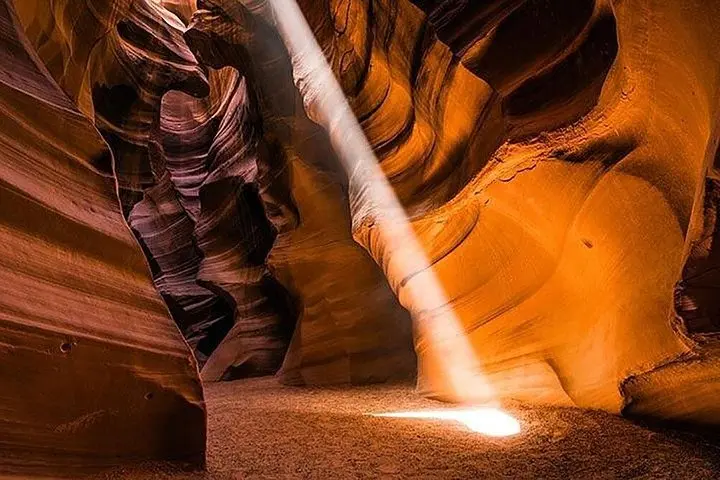
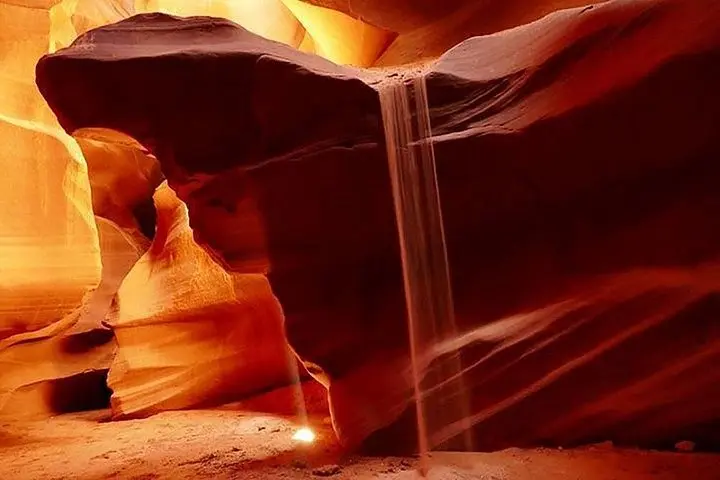
You step off the air-conditioned van into a desert that feels like a page from deep geological time—clear, dry air, a horizon of rust-red mesas, and the low hum of other travelers. Inside Antelope Canyon the world changes: walls squeeze close, sandstone folds into ribbons, and a shaft of sun pours through a narrow opening to make the sand-lit chamber glow. The slot canyon doesn’t wait; it moves light and shadow across your shoulders while a Navajo guide maps out the route and the stories held in the stone.
Verified experiences and guided adventures in the surrounding area.
Operated by National Park Express · Page, Arizona
You step off the air-conditioned van into a desert that feels like a page from deep geological time—clear, dry air, a horizon of rust-red mesas, and the low hum of other travelers. Inside Antelope Canyon the world changes: walls squeeze close, sandstone folds into ribbons, and a shaft of sun pours through a narrow opening to make the sand-lit chamber glow. The slot canyon doesn’t wait; it moves light and shadow across your shoulders while a Navajo guide maps out the route and the stories held in the stone.
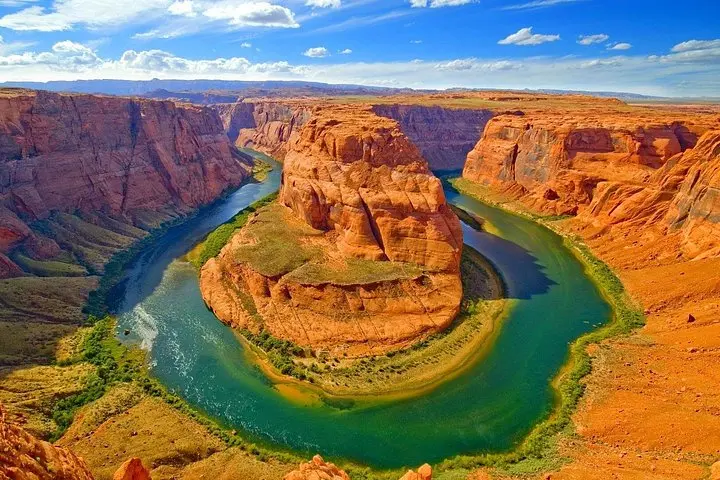
Antelope Canyon and Horseshoe Bend sit on the edge of the Colorado Plateau, an arena of Navajo (Diné) land, Navajo sandstone, and river-forged canyons. The narrow corridors of Upper and Lower Antelope are carved by episodic flash floods that scoured softer layers out of the sandstone, leaving sinuous, polished walls. Horseshoe Bend is a blunt counterpoint—an aerial view where the Colorado River completes a 280-degree loop, cutting through rock laid down in the Jurassic.
Culturally, these places are watched over by Navajo guides and the Navajo Parks and Recreation Department. Guides not only shepherd visitors but explain the spiritual and practical significance of the land while managing fragile foot traffic. The tour also threads past modern infrastructure—Glen Canyon Dam and Lake Powell—reminders that this landscape is an active intersection of nature and human engineering.
Practically, expect a long, full day from Las Vegas—about 13 hours on the schedule, with much of that in transit. The Antelope Canyon portion requires walking on uneven surfaces and climbing moderately steep stairs in places; large backpacks and professional video equipment are not permitted inside the guided canyon segment. The Horseshoe Bend stop is an easy, roughly 1.5-mile round-trip walk on a sandy, sometimes windy trail with minimal elevation change to the rim—watch your footing near the edge.
Weather governs access: Antelope Canyon shuts for dangerous conditions; flash floods are real here, and closures are non-negotiable. Photography is a draw, but note the guided Antelope segment has restrictions on professional video and certain camera setups—smartphones and small cameras are fine in most cases. The tour includes bottled water, a boxed lunch, and Wi‑Fi on the van, but bring sun protection, closed-toe shoes, and a small daypack (left at the vehicle during canyon entry).
For travelers: arrive at your pickup on time, carry ID, follow your guide’s instructions, and plan no tight connections after the tour—delays happen. When the light finds the canyon or the river flashes turquoise at Horseshoe Bend, you’ll understand why people make the long drive from Las Vegas: these are moments where geology, culture, and a little patience come together into a day you won’t forget.
This private tour runs about 13 hours round-trip including transit, guided Antelope Canyon time, and the Horseshoe Bend stop.
Professional camera setups and tripods/video recording are generally restricted during the guided Antelope Canyon visit; small cameras and smartphones are usually allowed—follow your guide’s instructions.
Many ages participate, but all guests must be able to walk unassisted on uneven surfaces and climb stairs; infants must sit on laps.
If closed, the tour will still visit Horseshoe Bend and other viewpoints; partial refunds may be issued according to operator policy.
Restroom facilities are available at trailheads and visitor areas, but not inside the slot canyon—use them before your guided entry.
Yes—this listing is a private tour with hotel pickup options from Las Vegas; confirm your pickup location with reservations ahead of time.
National Park Express operates guided outdoor trips and adventures with an emphasis on safety, stewardship, and memorable experiences.
You step off the air-conditioned van into a desert that feels like a page from deep geological time—clear, dry air, a horizon of rust-red mesas, and the low hum of other travelers. Inside Antelope Canyon the world changes: walls squeeze close, sandstone folds into ribbons, and a shaft of sun pours through a narrow opening to make the sand-lit chamber glow. The slot canyon doesn’t wait; it moves light and shadow across your shoulders while a Navajo guide maps out the route and the stories held in the stone.
You step off the air-conditioned van into a desert that feels like a page from deep geological time—clear, dry air, a horizon of rust-red mesas, and the low hum of other travelers. Inside Antelope Canyon the world changes: walls squeeze close, sandstone folds into ribbons, and a shaft of sun pours through a narrow opening to make the sand-lit chamber glow. The slot canyon doesn’t wait; it moves light and shadow across your shoulders while a Navajo guide maps out the route and the stories held in the stone.
Antelope Canyon and Horseshoe Bend sit on the edge of the Colorado Plateau, an arena of Navajo (Diné) land, Navajo sandstone, and river-forged canyons. The narrow corridors of Upper and Lower Antelope are carved by episodic flash floods that scoured softer layers out of the sandstone, leaving sinuous, polished walls. Horseshoe Bend is a blunt counterpoint—an aerial view where the Colorado River completes a 280-degree loop, cutting through rock laid down in the Jurassic.
Culturally, these places are watched over by Navajo guides and the Navajo Parks and Recreation Department. Guides not only shepherd visitors but explain the spiritual and practical significance of the land while managing fragile foot traffic. The tour also threads past modern infrastructure—Glen Canyon Dam and Lake Powell—reminders that this landscape is an active intersection of nature and human engineering.
Practically, expect a long, full day from Las Vegas—about 13 hours on the schedule, with much of that in transit. The Antelope Canyon portion requires walking on uneven surfaces and climbing moderately steep stairs in places; large backpacks and professional video equipment are not permitted inside the guided canyon segment. The Horseshoe Bend stop is an easy, roughly 1.5-mile round-trip walk on a sandy, sometimes windy trail with minimal elevation change to the rim—watch your footing near the edge.
Weather governs access: Antelope Canyon shuts for dangerous conditions; flash floods are real here, and closures are non-negotiable. Photography is a draw, but note the guided Antelope segment has restrictions on professional video and certain camera setups—smartphones and small cameras are fine in most cases. The tour includes bottled water, a boxed lunch, and Wi‑Fi on the van, but bring sun protection, closed-toe shoes, and a small daypack (left at the vehicle during canyon entry).
For travelers: arrive at your pickup on time, carry ID, follow your guide’s instructions, and plan no tight connections after the tour—delays happen. When the light finds the canyon or the river flashes turquoise at Horseshoe Bend, you’ll understand why people make the long drive from Las Vegas: these are moments where geology, culture, and a little patience come together into a day you won’t forget.