THE ADVENTURE COLLECTIVE® · Independent discovery and booking for outdoor travel

Walk the streets frozen by Vesuvius and follow an authorized archaeological guide through the Forum, baths and a restored domus. This private tour highlights recent discoveries and hidden corners of Pompeii in a focused 2–2.5 hour experience.
Walk the streets frozen by Vesuvius and follow an authorized archaeological guide through the Forum, baths and a restored domus. This private tour highlights recent discoveries and hidden corners of Pompeii in a focused 2–2.5 hour experience.
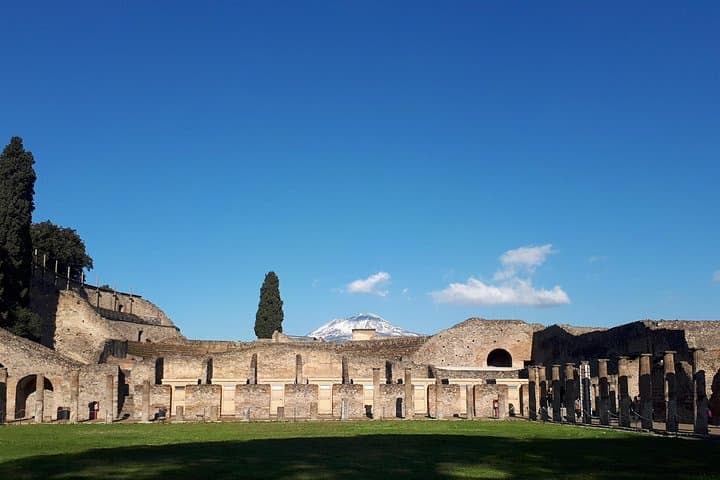
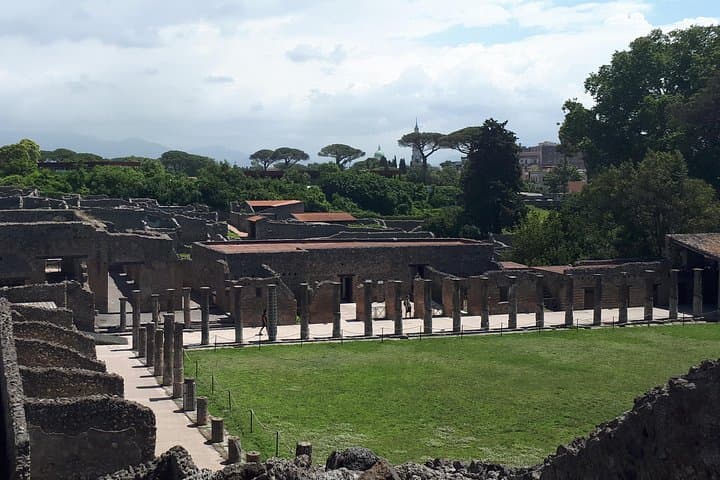
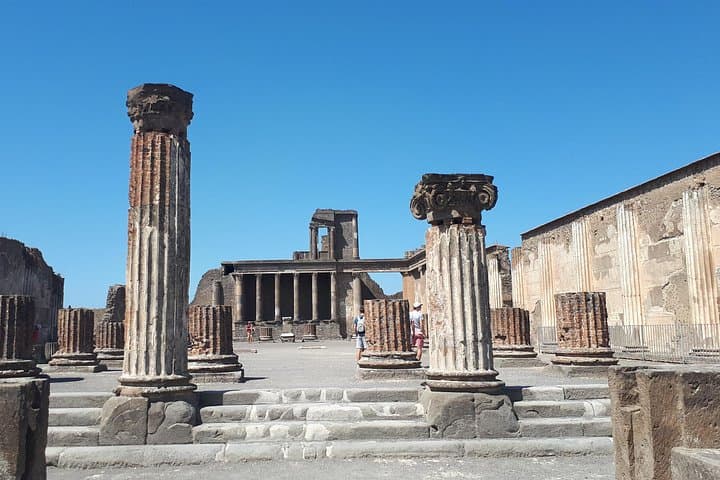
Morning light slices between collapsed walls as the group forms at Porta Marina — the city gate where merchants once entered a living town preserved by ash. The guide leads along narrow basalt streets; voices fall away and the place works like a time machine, revealing household shrines, bath complexes and a Forum that held civic life two millennia ago.
Verified experiences and guided adventures in the surrounding area.
Operated by Pompeii 4U · Pompeii, Campania
Morning light slices between collapsed walls as the group forms at Porta Marina — the city gate where merchants once entered a living town preserved by ash. The guide leads along narrow basalt streets; voices fall away and the place works like a time machine, revealing household shrines, bath complexes and a Forum that held civic life two millennia ago.
Pompeii sits on volcanic terrain shaped by Mount Vesuvius, whose 79 AD eruption sealed a city in plastered moments. The site’s excavation history reads like detective work: 18th–19th century digs, ongoing finds, and recent conservation efforts that have exposed frescoed domus and public baths. Local culture still carries Roman, Greek and later Mediterranean influences seen in pottery styles and street layouts.
Practically, expect a walking tour of roughly 1.5–2 km of paved ancient streets with very little elevation gain but many uneven stones and short staircases inside buildings. The authorized archaeological guide will focus on the Forum, baths, theatre and a restored domus, plus recent discoveries and off-the-beaten-path corners not always open to general visitors.
Wear sturdy shoes, sun protection and carry water; shade is sparse between ruins. The best windows for fewer crowds are early morning or late afternoon. Photography is welcomed, but some interiors restrict flash to protect pigments. The tour is accessible to most fitness levels but involves standing and short walks; plan at least 2–2.5 hours, longer if you linger. Respect barriers and follow the guide to ensure fragile frescoes and fragile archaeology remain for future discovery.
The tour meets at Porta Marina entrance to the Pompeii archaeological park; coordinates are provided on booking confirmation.
Parts of the site are accessible, but many streets and buildings have uneven stones and steps—check accessibility details with the operator in advance.
Photography is generally allowed outdoors; some interiors restrict flash or access to protect frescoes—follow your guide’s instructions.
This listing is for a private archaeological guide; check booking for maximum group sizes—shared tours may include up to 15 people.
Pompeii 4U operates guided outdoor trips and adventures with an emphasis on safety, stewardship, and memorable experiences.

Morning light slices between collapsed walls as the group forms at Porta Marina — the city gate where merchants once entered a living town preserved by ash. The guide leads along narrow basalt streets; voices fall away and the place works like a time machine, revealing household shrines, bath complexes and a Forum that held civic life two millennia ago.
Morning light slices between collapsed walls as the group forms at Porta Marina — the city gate where merchants once entered a living town preserved by ash. The guide leads along narrow basalt streets; voices fall away and the place works like a time machine, revealing household shrines, bath complexes and a Forum that held civic life two millennia ago.
Pompeii sits on volcanic terrain shaped by Mount Vesuvius, whose 79 AD eruption sealed a city in plastered moments. The site’s excavation history reads like detective work: 18th–19th century digs, ongoing finds, and recent conservation efforts that have exposed frescoed domus and public baths. Local culture still carries Roman, Greek and later Mediterranean influences seen in pottery styles and street layouts.
Practically, expect a walking tour of roughly 1.5–2 km of paved ancient streets with very little elevation gain but many uneven stones and short staircases inside buildings. The authorized archaeological guide will focus on the Forum, baths, theatre and a restored domus, plus recent discoveries and off-the-beaten-path corners not always open to general visitors.
Wear sturdy shoes, sun protection and carry water; shade is sparse between ruins. The best windows for fewer crowds are early morning or late afternoon. Photography is welcomed, but some interiors restrict flash to protect pigments. The tour is accessible to most fitness levels but involves standing and short walks; plan at least 2–2.5 hours, longer if you linger. Respect barriers and follow the guide to ensure fragile frescoes and fragile archaeology remain for future discovery.