THE ADVENTURE COLLECTIVE® · Independent discovery and booking for outdoor travel

Explore two of Aswan’s most compelling sites in a focused private day: the half-carved Unfinished Obelisk in the granite quarries and the island sanctuary of Philae, relocated and restored after the Aswan High Dam. Expect short boat transfers, flat but uneven walking, and concentrated archaeological storytelling.
Explore two of Aswan’s most compelling sites in a focused private day: the half-carved Unfinished Obelisk in the granite quarries and the island sanctuary of Philae, relocated and restored after the Aswan High Dam. Expect short boat transfers, flat but uneven walking, and concentrated archaeological storytelling.
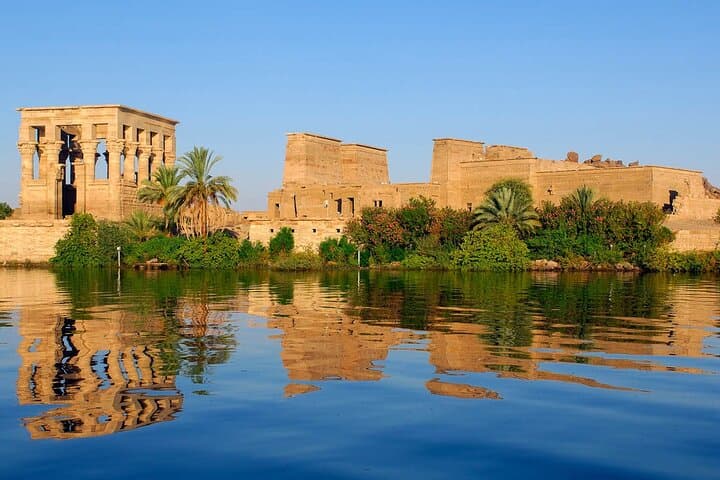
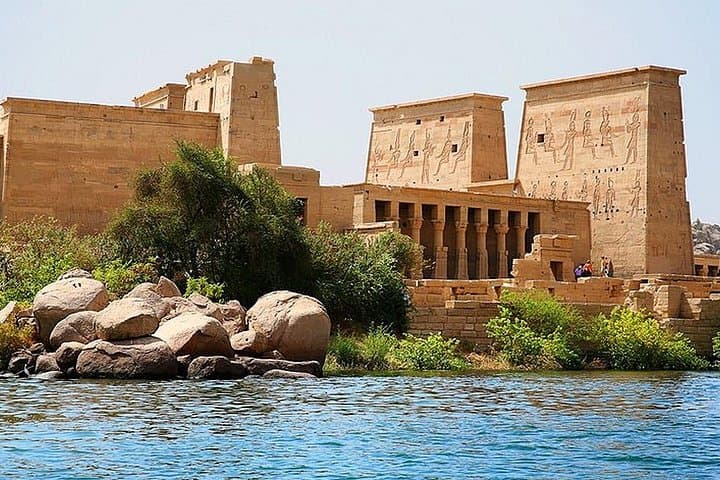
Morning light strikes the Nile and the island of Philae gleams like a cut of granite sitting in the river. You step from a short motorboat onto worn stone — the river seems to pull and push at the craft as if daring you to slow down and look. Across the water, columns and reliefs rise from the island, while upriver the Unfinished Obelisk sits half-split in the ancient quarry, frozen mid-carving.
Verified experiences and guided adventures in the surrounding area.
Operated by Egypt Best Day Tours · Aswan, Aswan Governorate
Morning light strikes the Nile and the island of Philae gleams like a cut of granite sitting in the river. You step from a short motorboat onto worn stone — the river seems to pull and push at the craft as if daring you to slow down and look. Across the water, columns and reliefs rise from the island, while upriver the Unfinished Obelisk sits half-split in the ancient quarry, frozen mid-carving.
Philae was a center for the cult of Isis; after the Aswan High Dam threatened to flood it, international teams dismantled and rebuilt the complex on Agilkia Island in the 1970s — a rare example of modern engineering rescuing Pharaonic architecture. The Unfinished Obelisk lies in Aswan’s northern granite quarries, offering a tactile lesson in imperial stone-working: tool marks, attached bedrock, and the scale of planned monoliths that never left the ground.
Expect mostly flat walking on stone paths and uneven flagstones, short boat transfers (10–20 minutes), and roughly 2–3 km of walking across both sites with negligible elevation gain. The experience blends archaeology, geology, and the Nile’s living presence; sandblasted granite and river currents feel active, not static.
Practical notes: go early to avoid heat and crowds, wear sturdy closed-toe shoes for uneven surfaces, carry sun protection and water, and confirm whether entrance or boat fees are included with your booking. Guides typically lead 2–4 hour visits, pacing between close-up reliefs and shaded courtyards so you can both read inscriptions and rest in the breeze of the Nile.
Policies vary by operator; confirm at booking—some tours include all fees and boat transfers while others require on-site payment.
Access to Philae requires a short motorboat transfer from the riverbank; the ride is typically 10–20 minutes depending on departure point.
Yes—it's an open-air site with short walks and dramatic visual features, but supervise children near uneven stone and quarry edges.
Most visitors spend about 1.5–2 hours at each site; this tour schedules roughly 2 hours at the Obelisk and 2 hours at Philae within a 4-hour window.
Egypt Best Day Tours operates guided outdoor trips and adventures with an emphasis on safety, stewardship, and memorable experiences.


Morning light strikes the Nile and the island of Philae gleams like a cut of granite sitting in the river. You step from a short motorboat onto worn stone — the river seems to pull and push at the craft as if daring you to slow down and look. Across the water, columns and reliefs rise from the island, while upriver the Unfinished Obelisk sits half-split in the ancient quarry, frozen mid-carving.
Morning light strikes the Nile and the island of Philae gleams like a cut of granite sitting in the river. You step from a short motorboat onto worn stone — the river seems to pull and push at the craft as if daring you to slow down and look. Across the water, columns and reliefs rise from the island, while upriver the Unfinished Obelisk sits half-split in the ancient quarry, frozen mid-carving.
Philae was a center for the cult of Isis; after the Aswan High Dam threatened to flood it, international teams dismantled and rebuilt the complex on Agilkia Island in the 1970s — a rare example of modern engineering rescuing Pharaonic architecture. The Unfinished Obelisk lies in Aswan’s northern granite quarries, offering a tactile lesson in imperial stone-working: tool marks, attached bedrock, and the scale of planned monoliths that never left the ground.
Expect mostly flat walking on stone paths and uneven flagstones, short boat transfers (10–20 minutes), and roughly 2–3 km of walking across both sites with negligible elevation gain. The experience blends archaeology, geology, and the Nile’s living presence; sandblasted granite and river currents feel active, not static.
Practical notes: go early to avoid heat and crowds, wear sturdy closed-toe shoes for uneven surfaces, carry sun protection and water, and confirm whether entrance or boat fees are included with your booking. Guides typically lead 2–4 hour visits, pacing between close-up reliefs and shaded courtyards so you can both read inscriptions and rest in the breeze of the Nile.