THE ADVENTURE COLLECTIVE® · Independent discovery and booking for outdoor travel

Drive through Cambodia’s rice plains to Battambang on a private day tour that pairs an 11th-century temple, family-run rice paper workshops and the country’s iconic Bamboo Train with a dusk bat exodus at Phnom Sampeau. It’s a long day of culture, geology and vivid rural scenes.
Drive through Cambodia’s rice plains to Battambang on a private day tour that pairs an 11th-century temple, family-run rice paper workshops and the country’s iconic Bamboo Train with a dusk bat exodus at Phnom Sampeau. It’s a long day of culture, geology and vivid rural scenes.
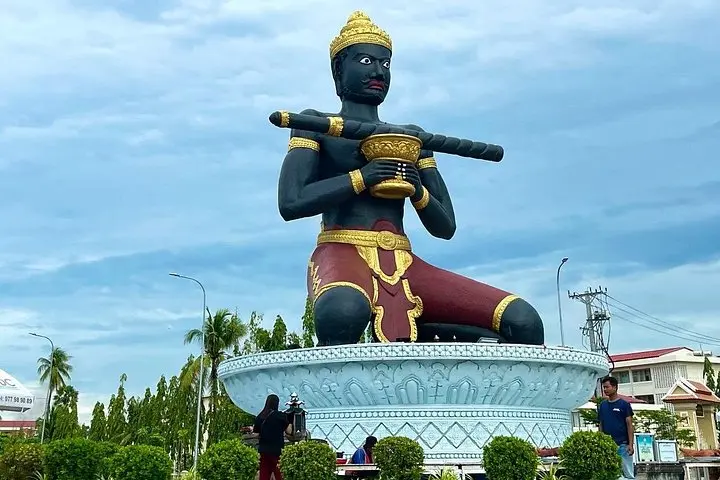
You step into the back of a private car at dawn and the road unfurls: flat rice plains, sugar palms leaning like sentries, and village life threaded with buffalo carts and wooden houses. The drive to Battambang is its own slow introduction to Cambodia’s countryside, where fields sway and towns reveal French colonial roofs.
Verified experiences and guided adventures in the surrounding area.
Operated by Gocambo Travel · Battambang, Battambang Province
You step into the back of a private car at dawn and the road unfurls: flat rice plains, sugar palms leaning like sentries, and village life threaded with buffalo carts and wooden houses. The drive to Battambang is its own slow introduction to Cambodia’s countryside, where fields sway and towns reveal French colonial roofs.
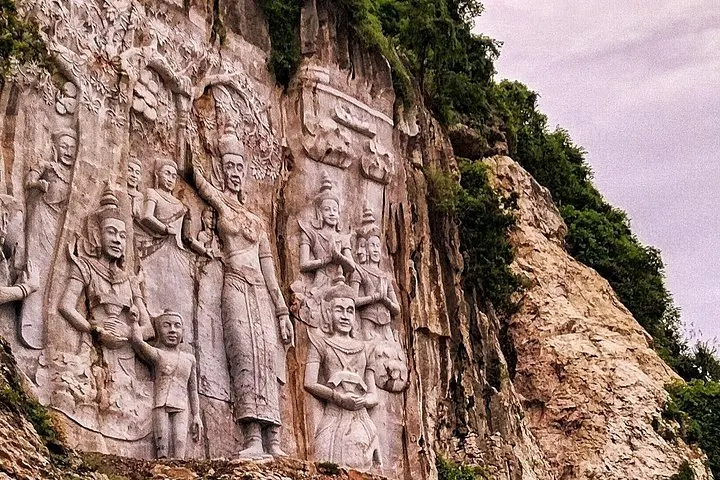
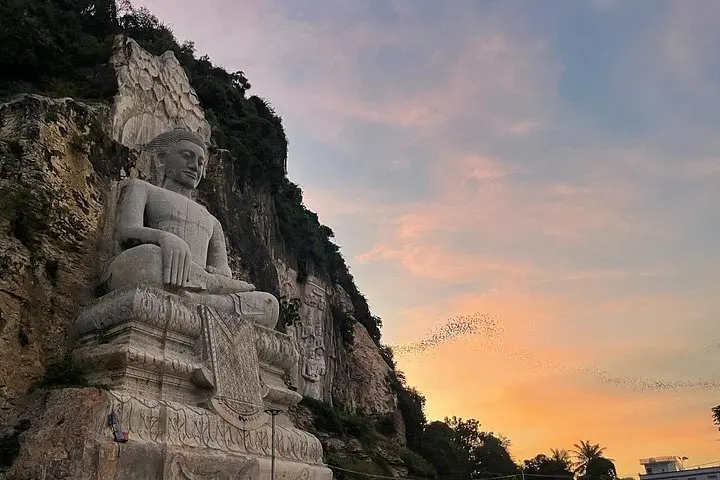
Battambang wears its history plainly — Angkorian stones at Ek Phnom date to the 11th century, overlaid by a modern pagoda and a seated Buddha that mark centuries of continuous worship. Phnom Sampeau, a limestone ridge outside town, holds wartime memory sites and caves that invite both reverence and curiosity. Geologically, the region’s low karst hills puncture alluvial plains, forming caves that shelter bats by the millions; at dusk they erupt from the mouth of Phnom Sampeau in a black ribbon across the sky.
Culturally the day balances craft and commerce: a family-run rice paper workshop demonstrates hand-stretched rice sheets and seasonal recipes, while Battambang’s Central Market sits inside a 1905 colonial frame, trading produce, herbs, textiles and local rhythm.
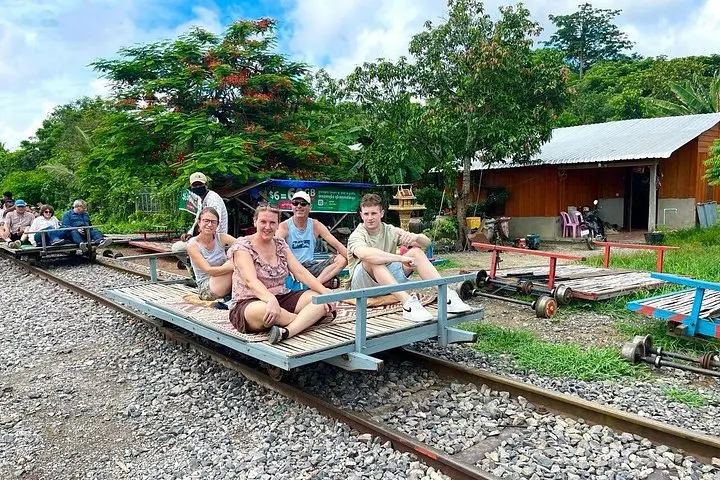
Practical note: this is a long, private day — expect 2.5–3 hours each way. Wear comfortable, closed shoes for uneven temple paths and stairs, bring insect repellent for dusk at the caves, and carry cash for market snacks. The bamboo train is brief and thrilling; it’s an open, low platform over tracks that requires steady footing. Plan timing so you reach Phnom Sampeau well before sunset to find a vantage point for the bat exodus and to respect local memorial sites.
Expect about 2.5–3 hours each way by private vehicle, depending on traffic and road conditions.
The Bamboo Train is a simple motorized flat platform on tracks; operators are experienced—stay seated, keep hands and feet inside the platform, and follow staff instructions.
The tour is listed as wheelchair accessible for parts, but some sites have uneven terrain and stairs; contact the operator ahead to confirm vehicle and site access.
Arrive at the cave before sunset; the bat exodus typically begins right after dusk and lasts for 30–60 minutes depending on conditions.
Gocambo Travel operates guided outdoor trips and adventures with an emphasis on safety, stewardship, and memorable experiences.
You step into the back of a private car at dawn and the road unfurls: flat rice plains, sugar palms leaning like sentries, and village life threaded with buffalo carts and wooden houses. The drive to Battambang is its own slow introduction to Cambodia’s countryside, where fields sway and towns reveal French colonial roofs.
You step into the back of a private car at dawn and the road unfurls: flat rice plains, sugar palms leaning like sentries, and village life threaded with buffalo carts and wooden houses. The drive to Battambang is its own slow introduction to Cambodia’s countryside, where fields sway and towns reveal French colonial roofs.
Battambang wears its history plainly — Angkorian stones at Ek Phnom date to the 11th century, overlaid by a modern pagoda and a seated Buddha that mark centuries of continuous worship. Phnom Sampeau, a limestone ridge outside town, holds wartime memory sites and caves that invite both reverence and curiosity. Geologically, the region’s low karst hills puncture alluvial plains, forming caves that shelter bats by the millions; at dusk they erupt from the mouth of Phnom Sampeau in a black ribbon across the sky.
Culturally the day balances craft and commerce: a family-run rice paper workshop demonstrates hand-stretched rice sheets and seasonal recipes, while Battambang’s Central Market sits inside a 1905 colonial frame, trading produce, herbs, textiles and local rhythm.
Practical note: this is a long, private day — expect 2.5–3 hours each way. Wear comfortable, closed shoes for uneven temple paths and stairs, bring insect repellent for dusk at the caves, and carry cash for market snacks. The bamboo train is brief and thrilling; it’s an open, low platform over tracks that requires steady footing. Plan timing so you reach Phnom Sampeau well before sunset to find a vantage point for the bat exodus and to respect local memorial sites.