THE ADVENTURE COLLECTIVE® · Independent discovery and booking for outdoor travel

Explore the less‑crowded Ben Duoc section of the Cu Chi Tunnels on a private half‑day trip from Ho Chi Minh City. Crawl short original passages, see wartime relics and taste tapioca while an expert guide places the site in wartime and local context.
Explore the less‑crowded Ben Duoc section of the Cu Chi Tunnels on a private half‑day trip from Ho Chi Minh City. Crawl short original passages, see wartime relics and taste tapioca while an expert guide places the site in wartime and local context.
You step out of the air‑conditioned van and into a low, green horizon where rubber trees rhythmically shade a narrow lane. The earth here holds scars—craters and patched mounds—and a hush that makes the documentary in the visitor center feel immediate rather than distant. At Ben Duoc, the ground seems to hold its breath; the tunnels are a human-made underground landscape, cool and compact against the bright Vietnamese day.
Verified experiences and guided adventures in the surrounding area.
Operated by Vielokal Travel · Ho Chi Minh City, Ho Chi Minh City
You step out of the air‑conditioned van and into a low, green horizon where rubber trees rhythmically shade a narrow lane. The earth here holds scars—craters and patched mounds—and a hush that makes the documentary in the visitor center feel immediate rather than distant. At Ben Duoc, the ground seems to hold its breath; the tunnels are a human-made underground landscape, cool and compact against the bright Vietnamese day.
Ben Duoc is one of two main Cu Chi complexes and was used by the Viet Cong as a fortified logistics and living network during the Vietnam War. The tunnels demonstrate simple but effective engineering: hand‑dug galleries, concealed trapdoors, and stacked chambers for kitchens, clinics and weapon caches. The surrounding terrain—rubber plantations and irrigated rice fields—shaped both concealment and supply lines, and local guides tie these features to regional wartime strategy and peasant life.
Expect a mix of interpretation and hands‑on sections: a short documentary, displays of relics and booby traps, and the option to crawl through a managed tunnel. The shooting range is optional and extra; tapioca and pandan tea offer a literal taste of wartime rations. Practicalities: wear closed‑toe shoes and long pants for walking through uneven ground and vegetation, bring sun protection for the outdoor exhibits, and carry modest hydration beyond the supplied bottle if you’re sensitive to heat. The tour is private and includes round‑trip pickup from central Ho Chi Minh City; it runs about five to six hours total, with roughly two hours on site. Ben Duoc rewards curiosity and respect—keep to paths, follow guides, and you’ll leave with a clearer, grittier sense of how the tunnels shaped life above and below ground.
Plan on roughly five to six hours total including hotel pickup, round‑trip driving time and about two hours at the Ben Duoc site.
There is an option to crawl through a short section; those with claustrophobia can remain above ground and view the original entrances and demonstrations.
No—the range is optional and requires an additional fee; notify your guide if you want to participate and check age and safety rules on arrival.
The site involves uneven ground and low entrances, and isn’t recommended for travelers with serious back or heart conditions; pickup and general viewing are still possible from the surface.
Vielokal Travel operates guided outdoor trips and adventures with an emphasis on safety, stewardship, and memorable experiences.
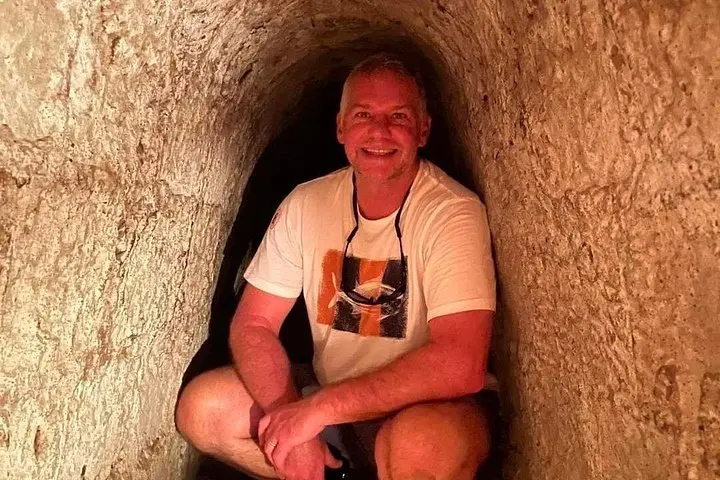
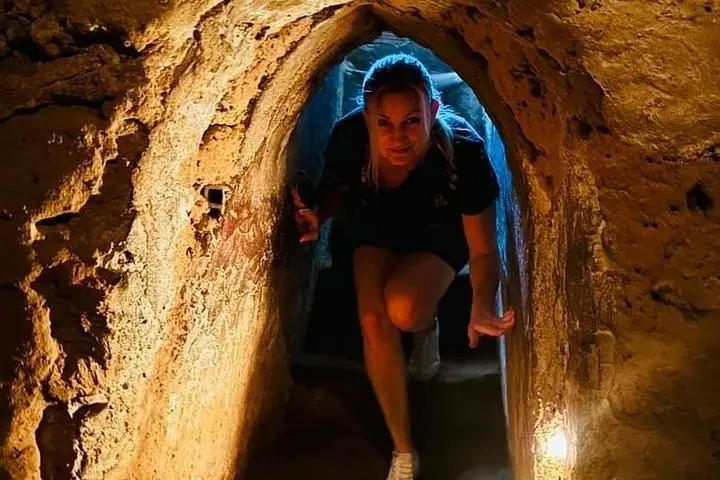
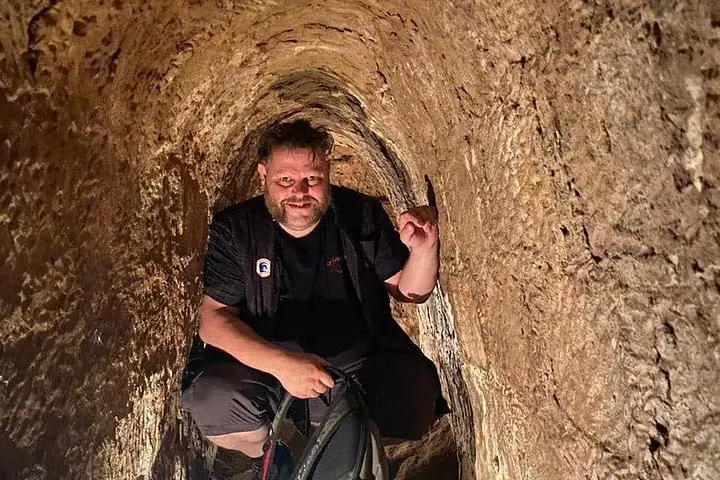
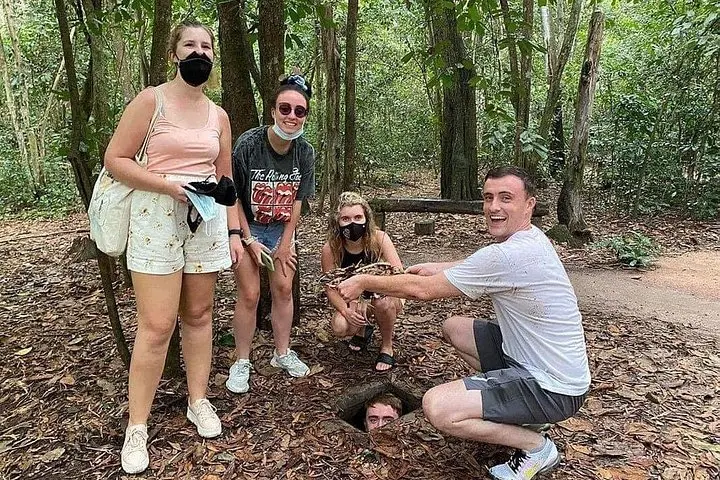
You step out of the air‑conditioned van and into a low, green horizon where rubber trees rhythmically shade a narrow lane. The earth here holds scars—craters and patched mounds—and a hush that makes the documentary in the visitor center feel immediate rather than distant. At Ben Duoc, the ground seems to hold its breath; the tunnels are a human-made underground landscape, cool and compact against the bright Vietnamese day.
You step out of the air‑conditioned van and into a low, green horizon where rubber trees rhythmically shade a narrow lane. The earth here holds scars—craters and patched mounds—and a hush that makes the documentary in the visitor center feel immediate rather than distant. At Ben Duoc, the ground seems to hold its breath; the tunnels are a human-made underground landscape, cool and compact against the bright Vietnamese day.
Ben Duoc is one of two main Cu Chi complexes and was used by the Viet Cong as a fortified logistics and living network during the Vietnam War. The tunnels demonstrate simple but effective engineering: hand‑dug galleries, concealed trapdoors, and stacked chambers for kitchens, clinics and weapon caches. The surrounding terrain—rubber plantations and irrigated rice fields—shaped both concealment and supply lines, and local guides tie these features to regional wartime strategy and peasant life.
Expect a mix of interpretation and hands‑on sections: a short documentary, displays of relics and booby traps, and the option to crawl through a managed tunnel. The shooting range is optional and extra; tapioca and pandan tea offer a literal taste of wartime rations. Practicalities: wear closed‑toe shoes and long pants for walking through uneven ground and vegetation, bring sun protection for the outdoor exhibits, and carry modest hydration beyond the supplied bottle if you’re sensitive to heat. The tour is private and includes round‑trip pickup from central Ho Chi Minh City; it runs about five to six hours total, with roughly two hours on site. Ben Duoc rewards curiosity and respect—keep to paths, follow guides, and you’ll leave with a clearer, grittier sense of how the tunnels shaped life above and below ground.