THE ADVENTURE COLLECTIVE® · Independent discovery and booking for outdoor travel

Trace the routes of the 43rd British Infantry Division across Berjou’s hedgerows on a private three-hour tour led by a local guide. Expect close-range battlefield narratives, short walks over uneven ground, and deep local knowledge of Normandy’s bocage.
Trace the routes of the 43rd British Infantry Division across Berjou’s hedgerows on a private three-hour tour led by a local guide. Expect close-range battlefield narratives, short walks over uneven ground, and deep local knowledge of Normandy’s bocage.
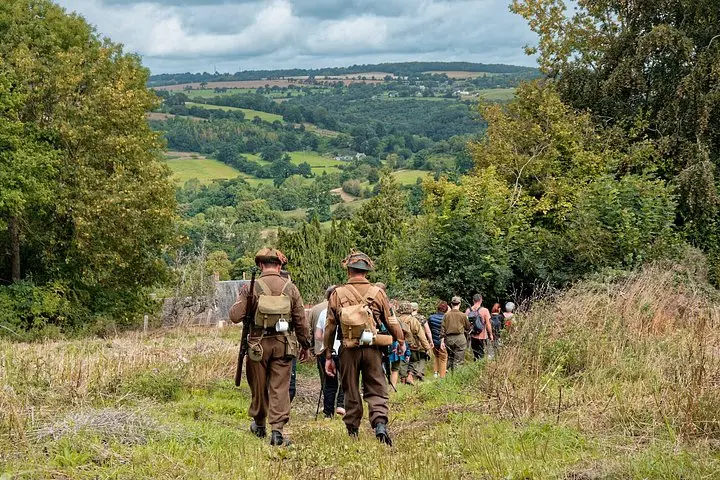
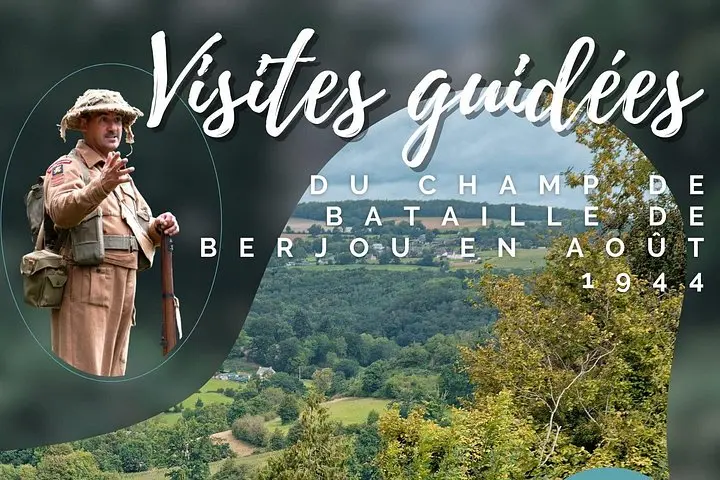
Dawn light spreads across hedgerows and pasture as your guide pulls the van onto a country lane outside Berjou. The fields here still wear the scars of 1944: low stone walls, sunken tracks and clipped hedges that once channelled movement and shaped strategy. Walking from lane to orchard, you follow the route of the 43rd British Infantry Division and the 5th DCLI, hearing tactical decisions and personal anecdotes layered over the map of the land.
Verified experiences and guided adventures in the surrounding area.
Operated by Remember Normandy 44 · Berjou, Normandy
Dawn light spreads across hedgerows and pasture as your guide pulls the van onto a country lane outside Berjou. The fields here still wear the scars of 1944: low stone walls, sunken tracks and clipped hedges that once channelled movement and shaped strategy. Walking from lane to orchard, you follow the route of the 43rd British Infantry Division and the 5th DCLI, hearing tactical decisions and personal anecdotes layered over the map of the land.
This part of Normandy is classic bocage — small, irregular fields separated by thick hedgerows grown on earthen banks, a terrain that forced close-range fighting during the Battle of Normandy. Locally, villages like Berjou and nearby Flers were hard-fought nodes in the campaign to break out from the beaches. The guide’s stories trade regimental detail for lived geography: where a farmhouse became a strongpoint, where a stream slowed an advance, and how post-war agriculture reshaped the ground.
Expect a mix of road-side stops and short walks across uneven pasture and lanes. The tour blends military history with landscape reading: maps, unit movements and the physical traces that remain. Practicalities matter — sturdy footwear, layered clothing, and a full water bottle. Most tours run about three hours and include private transport and a driver-guide with deep local knowledge.
This is both a history lesson and a terrain exercise: you’ll leave with clearer sense of how landscape altered strategy and how memory is written into place. Respect memorials and private land, and plan travel time — Normandy’s quiet roads make the experience contemplative but logistically deliberate.
Private transportation, a driver-guide knowledgeable in local WWII history, and multiple stops with short walks totaling about three hours.
Children with a reasonable attention span and older travelers in moderate health can join, but expect uneven terrain; the operator notes the tour isn’t recommended for those with serious cardiovascular issues or pregnancy.
Most guests stay in Bayeux or Caen and drive or are picked up; confirm the exact pickup location with the operator during booking.
The guide can tailor stops to highlight British regimental actions and nearby memorials, but access to some private properties may be restricted.
Remember Normandy 44 operates guided outdoor trips and adventures with an emphasis on safety, stewardship, and memorable experiences.
Dawn light spreads across hedgerows and pasture as your guide pulls the van onto a country lane outside Berjou. The fields here still wear the scars of 1944: low stone walls, sunken tracks and clipped hedges that once channelled movement and shaped strategy. Walking from lane to orchard, you follow the route of the 43rd British Infantry Division and the 5th DCLI, hearing tactical decisions and personal anecdotes layered over the map of the land.
Dawn light spreads across hedgerows and pasture as your guide pulls the van onto a country lane outside Berjou. The fields here still wear the scars of 1944: low stone walls, sunken tracks and clipped hedges that once channelled movement and shaped strategy. Walking from lane to orchard, you follow the route of the 43rd British Infantry Division and the 5th DCLI, hearing tactical decisions and personal anecdotes layered over the map of the land.
This part of Normandy is classic bocage — small, irregular fields separated by thick hedgerows grown on earthen banks, a terrain that forced close-range fighting during the Battle of Normandy. Locally, villages like Berjou and nearby Flers were hard-fought nodes in the campaign to break out from the beaches. The guide’s stories trade regimental detail for lived geography: where a farmhouse became a strongpoint, where a stream slowed an advance, and how post-war agriculture reshaped the ground.
Expect a mix of road-side stops and short walks across uneven pasture and lanes. The tour blends military history with landscape reading: maps, unit movements and the physical traces that remain. Practicalities matter — sturdy footwear, layered clothing, and a full water bottle. Most tours run about three hours and include private transport and a driver-guide with deep local knowledge.
This is both a history lesson and a terrain exercise: you’ll leave with clearer sense of how landscape altered strategy and how memory is written into place. Respect memorials and private land, and plan travel time — Normandy’s quiet roads make the experience contemplative but logistically deliberate.