THE ADVENTURE COLLECTIVE® · Independent discovery and booking for outdoor travel

Explore Odisha’s temple heart by private car: Konark’s chariot-like Sun Temple, Dhauli’s Ashokan edicts, Jain caves and Bhubaneswar’s finest temples in one adaptable day. Admissions and a local guide are included for a hassle-free, culturally rich itinerary.
Explore Odisha’s temple heart by private car: Konark’s chariot-like Sun Temple, Dhauli’s Ashokan edicts, Jain caves and Bhubaneswar’s finest temples in one adaptable day. Admissions and a local guide are included for a hassle-free, culturally rich itinerary.
You step into the car as dawn light softens over Bhubaneswar’s low skyline; the driver turns toward the coast and the built world gives way to rice paddies and sun-baked roads. By mid-morning the silhouette of Konark’s chariot wheels appears on the horizon—an enormous stone mechanism that seems to hold the sun in place.
Verified experiences and guided adventures in the surrounding area.
Operated by Opatrip.com India · Bhubaneswar, Odisha
You step into the car as dawn light softens over Bhubaneswar’s low skyline; the driver turns toward the coast and the built world gives way to rice paddies and sun-baked roads. By mid-morning the silhouette of Konark’s chariot wheels appears on the horizon—an enormous stone mechanism that seems to hold the sun in place.
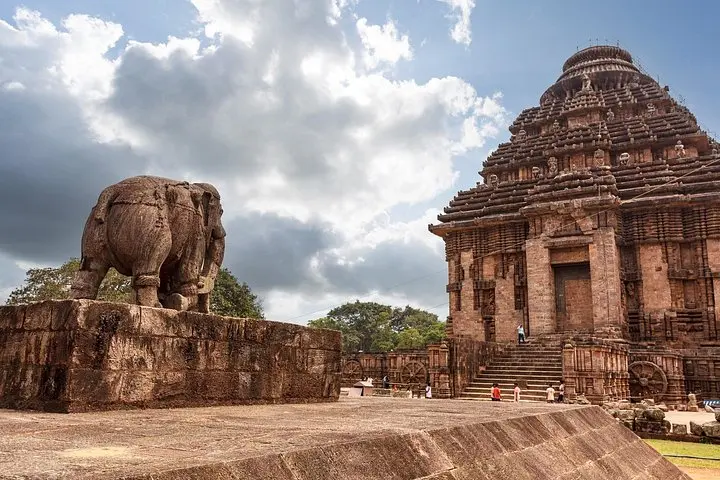
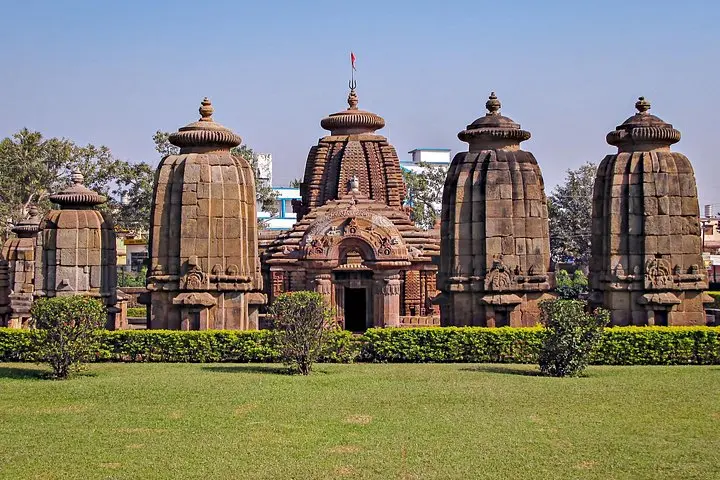
This full-day private tour threads together Odisha’s major temple sites and historic landmarks: the 13th-century Konark Sun Temple with its carved stone wheels and erotic friezes; Dhauli Hills where Ashoka’s rock edicts mark a turning toward nonviolence; the austere Jain rock-cut caves; and Bhubaneswar’s collection of Kalinga-style temples, including Mukteswar and Rajarani. Geologically the region sits on coastal alluvial plains and sandstone outcrops, which explains the weathering patterns on Konark’s carved facades and the soft red hue of Rajarani sandstone.
Culture here is visible in ritual, architecture, and the steady rhythm of temple bells—expect active worship at many stops and short walks across compact archaeological grounds. The tour’s private car makes the roughly 65 km drive to Konark (about 1.5–2 hours one way) straightforward; elevation change is minimal, but sun and humidity can make the day feel longer.
Practical guidance: start early to avoid midday heat, wear modest clothing and footwear suitable for uneven stone surfaces, and bring a refillable water bottle and sunscreen. Admissions and a professional local guide are included, but carry small change for donations or snacks. The pace is flexible—use it to linger at carving panels, photograph chariot wheels, or simply listen to the wind push through temple corridors.
Yes—advertised pricing includes entrance fees for the listed monuments such as Konark and selected temples.
Yes; the private car allows flexible pacing and the walking demands are light, though some temple steps may be steep.
Expect roughly 65 km and about 1.5–2 hours one way depending on traffic and stops en route.
Yes; it’s best to note accessibility needs, dietary restrictions, or specific interests at booking so the guide can tailor the day.
Opatrip.com India operates guided outdoor trips and adventures with an emphasis on safety, stewardship, and memorable experiences.


You step into the car as dawn light softens over Bhubaneswar’s low skyline; the driver turns toward the coast and the built world gives way to rice paddies and sun-baked roads. By mid-morning the silhouette of Konark’s chariot wheels appears on the horizon—an enormous stone mechanism that seems to hold the sun in place.
You step into the car as dawn light softens over Bhubaneswar’s low skyline; the driver turns toward the coast and the built world gives way to rice paddies and sun-baked roads. By mid-morning the silhouette of Konark’s chariot wheels appears on the horizon—an enormous stone mechanism that seems to hold the sun in place.
This full-day private tour threads together Odisha’s major temple sites and historic landmarks: the 13th-century Konark Sun Temple with its carved stone wheels and erotic friezes; Dhauli Hills where Ashoka’s rock edicts mark a turning toward nonviolence; the austere Jain rock-cut caves; and Bhubaneswar’s collection of Kalinga-style temples, including Mukteswar and Rajarani. Geologically the region sits on coastal alluvial plains and sandstone outcrops, which explains the weathering patterns on Konark’s carved facades and the soft red hue of Rajarani sandstone.
Culture here is visible in ritual, architecture, and the steady rhythm of temple bells—expect active worship at many stops and short walks across compact archaeological grounds. The tour’s private car makes the roughly 65 km drive to Konark (about 1.5–2 hours one way) straightforward; elevation change is minimal, but sun and humidity can make the day feel longer.
Practical guidance: start early to avoid midday heat, wear modest clothing and footwear suitable for uneven stone surfaces, and bring a refillable water bottle and sunscreen. Admissions and a professional local guide are included, but carry small change for donations or snacks. The pace is flexible—use it to linger at carving panels, photograph chariot wheels, or simply listen to the wind push through temple corridors.