THE ADVENTURE COLLECTIVE® · Independent discovery and booking for outdoor travel

Step into the dark bush around Victoria Falls for a private, two-hour stargazing session led by an astrophile guide. Learn southern constellations, observe planets through optics, and enjoy a quiet night in the Zambezi’s shadow.
Step into the dark bush around Victoria Falls for a private, two-hour stargazing session led by an astrophile guide. Learn southern constellations, observe planets through optics, and enjoy a quiet night in the Zambezi’s shadow.
The night opens over the mopane and baobab, and the bush exhales. Away from town lights, the Zambezi plateau becomes a dark stage; constellations prick the sky and the Milky Way pours like a pale river. A private astrophile guide points out planets, myths written in star patterns, and the faint smear of distant galaxies while the bush listens—hippos grunting in the river and insects ticking in time.
Verified experiences and guided adventures in the surrounding area.
Operated by Savannah Adventures Safaris · Victoria Falls, Matabeleland North
The night opens over the mopane and baobab, and the bush exhales. Away from town lights, the Zambezi plateau becomes a dark stage; constellations prick the sky and the Milky Way pours like a pale river. A private astrophile guide points out planets, myths written in star patterns, and the faint smear of distant galaxies while the bush listens—hippos grunting in the river and insects ticking in time.
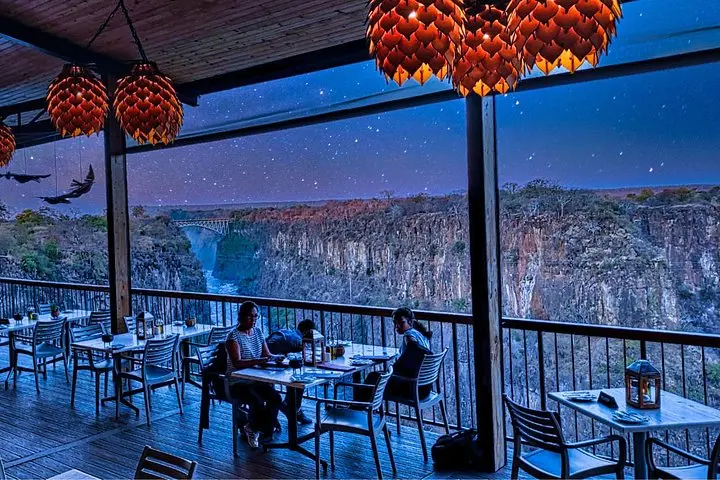
This experience sits on land carved by the Zambezi and framed by basalt escarpments—the same geology that created the great cataract nearby. The area’s human story shifts from the Tonga and Lozi peoples who named the falls Mosi-oa-Tunya (“The Smoke That Thunders”) to 19th-century explorers who mapped the gorge. Tonight’s guide blends that cultural context with practical astronomy: how to read the southern sky, why the seasons change the view, and where light pollution hides objects from sight.
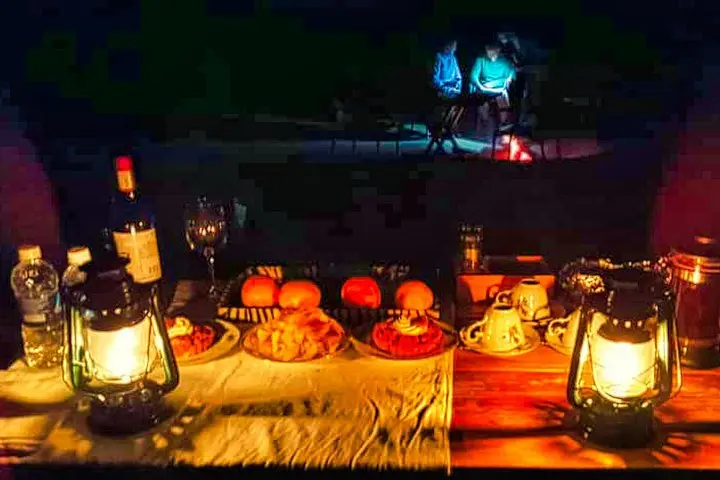
Expect two hours in a secluded clearing: verbal navigation of constellations, a chance to view planets through portable optics, and gentle commentary on the science behind what you see. Temperatures drop quickly after sunset—layers matter. Bring a headlamp with a red filter, closed-toe shoes for uneven ground, and patience for wildlife that may cross the path. Tours include hot coffee or tea and fleece sweaters; transfers back to lodge are typically provided.
Best times are moonless nights and dry-season months when humidity is low. The experience is calm, tactile, and surprisingly humbling—an accessible way to connect to the southern skies without advanced technical skills.
This is a private two-hour experience—group size is kept small to preserve the setting and allow personalized guiding.
Visibility depends on moon phase, cloud cover and season; planets like Jupiter or Saturn are visible when they’re above the horizon and the sky is clear; distant galaxies require dark, moonless conditions.
Most bookings include return transfers to nearby hotels or lodges in the Victoria Falls area—confirm pickup details when booking.
Families are welcome but infants must sit on an adult’s lap; consider whether young children can remain quietly seated during the nighttime session.
Savannah Adventures Safaris operates guided outdoor trips and adventures with an emphasis on safety, stewardship, and memorable experiences.
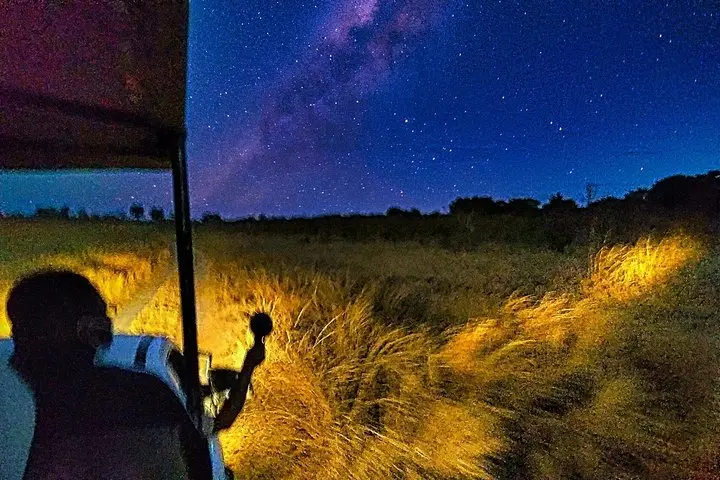
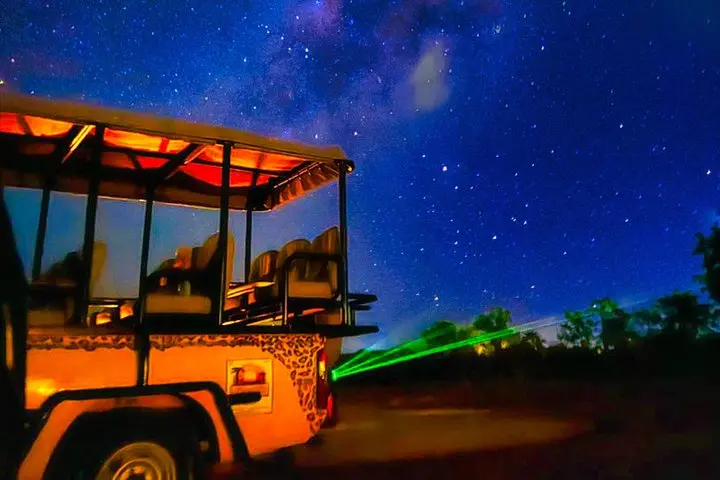
The night opens over the mopane and baobab, and the bush exhales. Away from town lights, the Zambezi plateau becomes a dark stage; constellations prick the sky and the Milky Way pours like a pale river. A private astrophile guide points out planets, myths written in star patterns, and the faint smear of distant galaxies while the bush listens—hippos grunting in the river and insects ticking in time.
The night opens over the mopane and baobab, and the bush exhales. Away from town lights, the Zambezi plateau becomes a dark stage; constellations prick the sky and the Milky Way pours like a pale river. A private astrophile guide points out planets, myths written in star patterns, and the faint smear of distant galaxies while the bush listens—hippos grunting in the river and insects ticking in time.
This experience sits on land carved by the Zambezi and framed by basalt escarpments—the same geology that created the great cataract nearby. The area’s human story shifts from the Tonga and Lozi peoples who named the falls Mosi-oa-Tunya (“The Smoke That Thunders”) to 19th-century explorers who mapped the gorge. Tonight’s guide blends that cultural context with practical astronomy: how to read the southern sky, why the seasons change the view, and where light pollution hides objects from sight.
Expect two hours in a secluded clearing: verbal navigation of constellations, a chance to view planets through portable optics, and gentle commentary on the science behind what you see. Temperatures drop quickly after sunset—layers matter. Bring a headlamp with a red filter, closed-toe shoes for uneven ground, and patience for wildlife that may cross the path. Tours include hot coffee or tea and fleece sweaters; transfers back to lodge are typically provided.
Best times are moonless nights and dry-season months when humidity is low. The experience is calm, tactile, and surprisingly humbling—an accessible way to connect to the southern skies without advanced technical skills.