THE ADVENTURE COLLECTIVE® · Independent discovery and booking for outdoor travel

Skip the road and fly from Hurghada to Cairo for a private, full-day tour of the Pyramids, the Egyptian Museum, and Khan El Khalili bazaar. This streamlined itinerary pairs efficient logistics with a local Egyptologist to make a long day remarkably manageable.
Skip the road and fly from Hurghada to Cairo for a private, full-day tour of the Pyramids, the Egyptian Museum, and Khan El Khalili bazaar. This streamlined itinerary pairs efficient logistics with a local Egyptologist to make a long day remarkably manageable.
You step off a short domestic flight into Cairo’s smoky light and find the desert horizon staring back—low ridges cutting across a wash of ochre, and the Pyramids rising like deliberate giants on the skyline. With a private Egyptologist at your side the noise of the city sharpens into detail: the limestone faces of the Great Pyramid, the Sphinx’s carved patience, and alleyways where mint tea steams in chipped brass cups.
Verified experiences and guided adventures in the surrounding area.
Operated by Sky World Egypt · Cairo, Cairo Governorate
You step off a short domestic flight into Cairo’s smoky light and find the desert horizon staring back—low ridges cutting across a wash of ochre, and the Pyramids rising like deliberate giants on the skyline. With a private Egyptologist at your side the noise of the city sharpens into detail: the limestone faces of the Great Pyramid, the Sphinx’s carved patience, and alleyways where mint tea steams in chipped brass cups.
The Giza Plateau dates to the fourth dynasty (around 2,560 BCE), its stones quarried and set with engineering that still puzzles specialists. The Egyptian Museum, meanwhile, catalogs millennia of art, religious practice, and royal life—context that transforms each statue or funerary mask into a human story rather than a relic. Khan El Khalili offers a living contrast: Ottoman-era lanes, brassworkers, and vendors who have traded here for centuries.
Expect 10–12 hours on a full-day schedule: two hours at Giza, two in the museum, a relaxed lunch, and time to browse the bazaar. Terrain is primarily paved and compacted sand; some uneven surfaces and short climbs for viewpoints. Heat, dust, and crowds shift the day’s rhythm — mornings and late afternoons are cooler and more photographic.
Practical guidance: carry original passport and a photocopy for museum and airport checks, bring a sun hat and at least 1.5 liters of water, wear sturdy walking shoes with good grip, and plan for a long but seamless travel day thanks to included round-trip flights and private transfers.
Visa requirements depend on your nationality; many travelers can obtain an e-visa or visa on arrival—check Egypt’s official entry rules well before travel.
Yes; the tour includes entry fees as stated in the itinerary, but optional extras (like entering the Great Pyramid chamber) may cost extra on site.
Flight time is about 1 hour; the full day includes airport transfers and ground travel, totaling roughly 10–12 hours for the entire excursion.
Yes—infant seats are available and the tour is described as suitable for all fitness levels, though expect a long day and some walking.
Sky World Egypt operates guided outdoor trips and adventures with an emphasis on safety, stewardship, and memorable experiences.
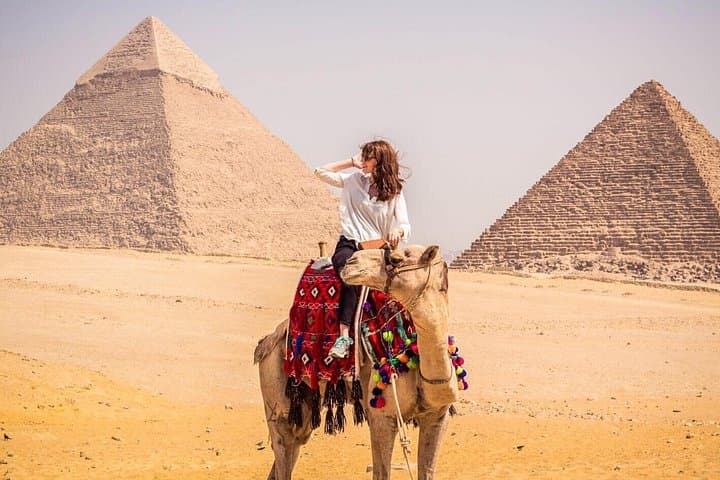


You step off a short domestic flight into Cairo’s smoky light and find the desert horizon staring back—low ridges cutting across a wash of ochre, and the Pyramids rising like deliberate giants on the skyline. With a private Egyptologist at your side the noise of the city sharpens into detail: the limestone faces of the Great Pyramid, the Sphinx’s carved patience, and alleyways where mint tea steams in chipped brass cups.
You step off a short domestic flight into Cairo’s smoky light and find the desert horizon staring back—low ridges cutting across a wash of ochre, and the Pyramids rising like deliberate giants on the skyline. With a private Egyptologist at your side the noise of the city sharpens into detail: the limestone faces of the Great Pyramid, the Sphinx’s carved patience, and alleyways where mint tea steams in chipped brass cups.
The Giza Plateau dates to the fourth dynasty (around 2,560 BCE), its stones quarried and set with engineering that still puzzles specialists. The Egyptian Museum, meanwhile, catalogs millennia of art, religious practice, and royal life—context that transforms each statue or funerary mask into a human story rather than a relic. Khan El Khalili offers a living contrast: Ottoman-era lanes, brassworkers, and vendors who have traded here for centuries.
Expect 10–12 hours on a full-day schedule: two hours at Giza, two in the museum, a relaxed lunch, and time to browse the bazaar. Terrain is primarily paved and compacted sand; some uneven surfaces and short climbs for viewpoints. Heat, dust, and crowds shift the day’s rhythm — mornings and late afternoons are cooler and more photographic.
Practical guidance: carry original passport and a photocopy for museum and airport checks, bring a sun hat and at least 1.5 liters of water, wear sturdy walking shoes with good grip, and plan for a long but seamless travel day thanks to included round-trip flights and private transfers.