THE ADVENTURE COLLECTIVE® · Independent discovery and booking for outdoor travel

Spend a private day discovering Cappadocia’s surreal rock formations, Byzantine cave churches and centuries‑old pottery tradition. This 6–8 hour Red Tour mixes short walks, panoramic stops and a hands‑on pottery demo with a local guide.
Spend a private day discovering Cappadocia’s surreal rock formations, Byzantine cave churches and centuries‑old pottery tradition. This 6–8 hour Red Tour mixes short walks, panoramic stops and a hands‑on pottery demo with a local guide.
The morning light in Cappadocia strips the landscape down to shape and shadow: honey‑colored cones rise like workbenches shaped by wind and rain, and an air-conditioned van eases you between them while your private guide sketches the region’s story.
Verified experiences and guided adventures in the surrounding area.
Operated by Ekstra Tour · Goreme, Nevşehir
The morning light in Cappadocia strips the landscape down to shape and shadow: honey‑colored cones rise like workbenches shaped by wind and rain, and an air-conditioned van eases you between them while your private guide sketches the region’s story.
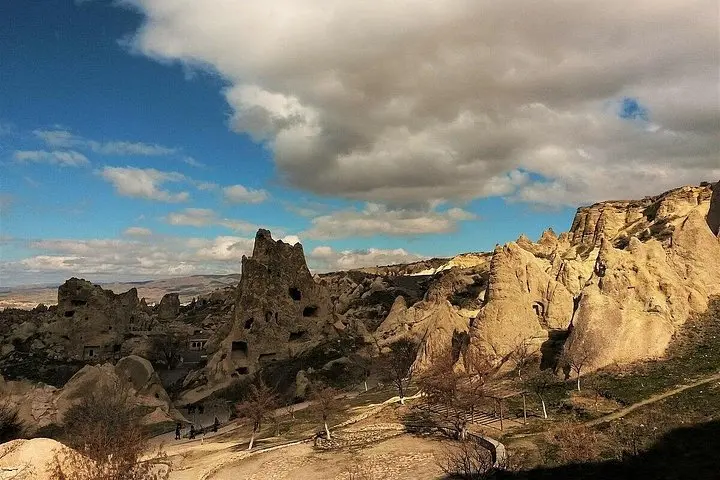
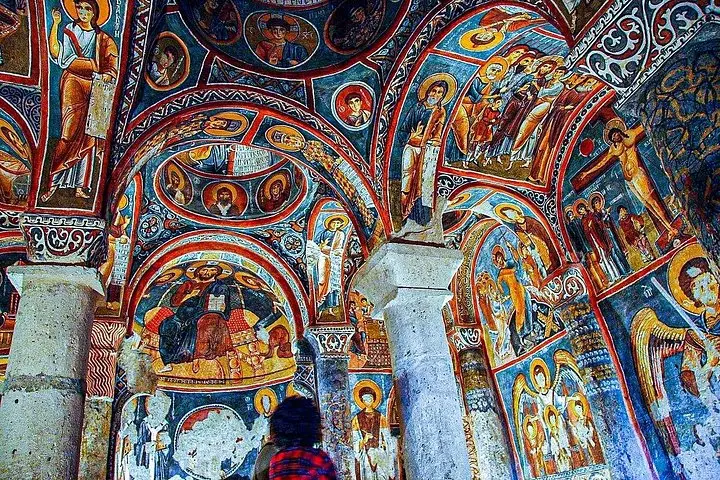
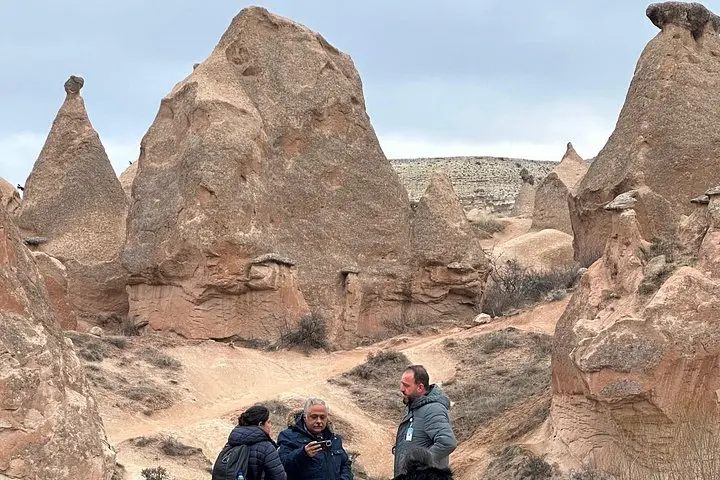
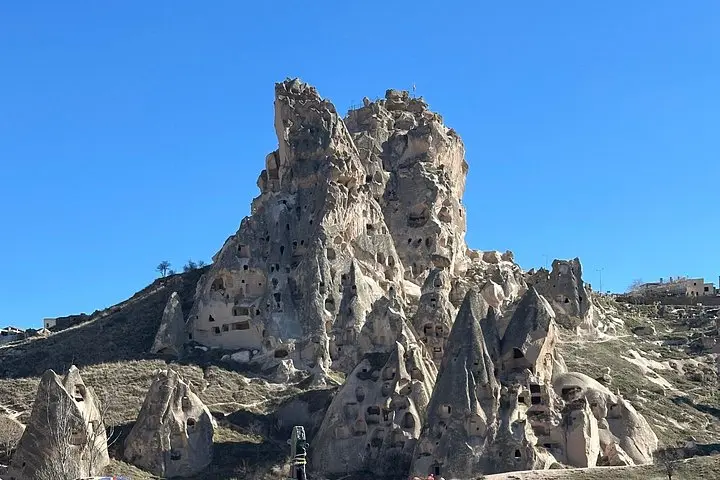
Over six to eight hours the Red Tour threads Devrent (Imagination Valley), where sculpted rock prompts comparisons with animals and faces; Pasabag (Monks Valley), where towering fairy chimneys still hold carved hermitages; Avanos on the Kızılırmak, where a pottery demonstration links modern hands to millennia of ceramic craft; and the Goreme Open Air Museum, whose cave churches preserve Byzantine frescoes from the 10th–12th centuries. Uçhisar Castle and Esentepe offer panorama breaks to read the landscape’s volcanic script.
Geology here is blunt: Pliocene volcanics produced thick tuff that erodes into cones, spires and caves. Culturally, Cappadocia has long been a crossroads — early Christians carved sanctuaries into the soft rock, and Avanos’s clay trade stretches back to Hittite and Roman times.
Practical notes: expect short, uneven walks on packed tuff and steps; comfortable walking shoes and sun protection are essential. Carry cash for entrance fees and small purchases; photography is welcome but don’t touch frescoed surfaces. The private format gives flexibility for slower pacing and extra stops for photos or pottery shopping. Aim for early departures to avoid midday heat and the largest crowds, and follow your guide’s route to minimize erosion impact on fragile formations.
Entrance fees are typically not included in this type of private Red Tour; bring Turkish lira or check with your operator ahead of time.
Yes—short, easy walks and private transport make the itinerary accessible for most ages, though cave floors and steps can be awkward for limited mobility.
No; balloon flights are separate bookable experiences and must be scheduled independently, usually at dawn.
Yes—the tour generally includes a pottery demonstration and often offers a hands‑on session for a small extra fee or souvenir purchase.
Ekstra Tour operates guided outdoor trips and adventures with an emphasis on safety, stewardship, and memorable experiences.
The morning light in Cappadocia strips the landscape down to shape and shadow: honey‑colored cones rise like workbenches shaped by wind and rain, and an air-conditioned van eases you between them while your private guide sketches the region’s story.
The morning light in Cappadocia strips the landscape down to shape and shadow: honey‑colored cones rise like workbenches shaped by wind and rain, and an air-conditioned van eases you between them while your private guide sketches the region’s story.
Over six to eight hours the Red Tour threads Devrent (Imagination Valley), where sculpted rock prompts comparisons with animals and faces; Pasabag (Monks Valley), where towering fairy chimneys still hold carved hermitages; Avanos on the Kızılırmak, where a pottery demonstration links modern hands to millennia of ceramic craft; and the Goreme Open Air Museum, whose cave churches preserve Byzantine frescoes from the 10th–12th centuries. Uçhisar Castle and Esentepe offer panorama breaks to read the landscape’s volcanic script.
Geology here is blunt: Pliocene volcanics produced thick tuff that erodes into cones, spires and caves. Culturally, Cappadocia has long been a crossroads — early Christians carved sanctuaries into the soft rock, and Avanos’s clay trade stretches back to Hittite and Roman times.
Practical notes: expect short, uneven walks on packed tuff and steps; comfortable walking shoes and sun protection are essential. Carry cash for entrance fees and small purchases; photography is welcome but don’t touch frescoed surfaces. The private format gives flexibility for slower pacing and extra stops for photos or pottery shopping. Aim for early departures to avoid midday heat and the largest crowds, and follow your guide’s route to minimize erosion impact on fragile formations.