THE ADVENTURE COLLECTIVE® · Independent discovery and booking for outdoor travel

Spend a full day exploring Cappadocia’s iconic valleys and rock-cut history on a private Red Tour. From Göreme Open Air Museum to Uçhisar Castle and Avanos pottery, this guided route blends geology, early Christian sites, and living crafts into one accessible day trip.
Spend a full day exploring Cappadocia’s iconic valleys and rock-cut history on a private Red Tour. From Göreme Open Air Museum to Uçhisar Castle and Avanos pottery, this guided route blends geology, early Christian sites, and living crafts into one accessible day trip.
Morning light finds you on a quiet hotel terrace in Göreme watching dozens of balloons stitch the sky with color while the valley below wakes slow and sure. A private driver arrives, the guide folds a map and promises a route that feels like stepping through time—volcanic slopes giving way to chimneys, churches cut into rock, and narrow streets where pottery wheels still turn by hand.
Verified experiences and guided adventures in the surrounding area.
Operated by bolour travel · Göreme, Nevşehir Province
Morning light finds you on a quiet hotel terrace in Göreme watching dozens of balloons stitch the sky with color while the valley below wakes slow and sure. A private driver arrives, the guide folds a map and promises a route that feels like stepping through time—volcanic slopes giving way to chimneys, churches cut into rock, and narrow streets where pottery wheels still turn by hand.
The Red Tour is a full-day (about 7 hours) circuit of central Cappadocia designed for first-time visitors who want geological context and cultural texture without the crowds. Start at Ortahisar, a town built around a tall rock keep hollowed with rooms and stairways; here you get an immediate sense of how human life and soft tuff rock have coexisted for centuries. From there the tour moves to the Göreme Open Air Museum—UNESCO-listed rock-cut churches whose frescoes record early Christian life in Anatolia.
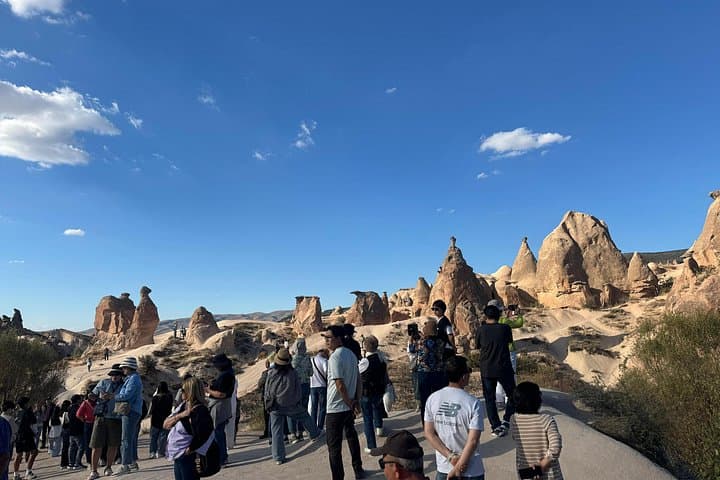
Geology drives the show: 10 million years of eruptions left layers of tuff and basalt that wind and rain carved into the region’s famous “fairy chimneys.” In places the soft tuff has surrendered to erosion so completely that columns wear mushroom caps of harder stone; in others, monks carved stairways and chapels into the rock, letting light and shadow become part of devotional practice.
Culture here is tactile. Avanos, on the Kızılırmak’s clay-rich banks, preserves a pottery tradition with roots in Hittite and Roman workshops; you can spin a wheel and feel how local materials shape local craft. At Pasabag and Devrent the landscape prompts storytelling—stone figures that look oddly like animals or faces keep visitors inventing origin myths.
Practical edge: expect uneven ground, dusty trails and short stair sections—cumulative walking of roughly 3–4 km with modest elevation gain when climbing Uçhisar Castle (about 100–150 m above valley floor). The tour includes lunch and hotel pickup; private vehicles make timing flexible, but allocate the full day if you want museum time and a pottery demo.
Timing and gear matter: mornings are cool and best for photographs and balloon views; midday can be hot, especially in summer. Good walking shoes, sun protection, and a refillable water bottle will keep you moving. Guides typically handle permits and parking fees, but bring cash for small shop purchases and tips.
This route balances spectacle and explanation—the landscape will push you forward, and a knowledgeable guide will point out the geology, fresco details, and local stories that make Cappadocia feel less like a postcard and more like a lived place. Leave time afterward for sunset at a viewpoint; the stone seems to change its mind about color every ten minutes.
The private Red Tour runs about 7 hours and typically includes Ortahisar, Göreme Open Air Museum, Uçhisar Castle, Love Valley, Paşabağları, Avanos pottery workshop, and Devrent Valley.
Admissions listed as included for specific sites in the itinerary—your booking often covers main entrance fees like Göreme Open Air Museum; confirm at booking.
Yes—this is a private tour and the guide/driver can adjust pace or swap stops when arranged in advance.
Yes—pickup from Göreme-area hotels is standard; confirm your exact pickup point when you book and expect about 20 minutes before departure time for collection.
A local lunch is included in the tour, typically at a regional restaurant offering Anatolian dishes.
Many sites are accessible and the tour notes stroller access for infants, but some rock-cut sites involve stairs and uneven paths that limit stroller access.
bolour travel operates guided outdoor trips and adventures with an emphasis on safety, stewardship, and memorable experiences.


Morning light finds you on a quiet hotel terrace in Göreme watching dozens of balloons stitch the sky with color while the valley below wakes slow and sure. A private driver arrives, the guide folds a map and promises a route that feels like stepping through time—volcanic slopes giving way to chimneys, churches cut into rock, and narrow streets where pottery wheels still turn by hand.
Morning light finds you on a quiet hotel terrace in Göreme watching dozens of balloons stitch the sky with color while the valley below wakes slow and sure. A private driver arrives, the guide folds a map and promises a route that feels like stepping through time—volcanic slopes giving way to chimneys, churches cut into rock, and narrow streets where pottery wheels still turn by hand.
The Red Tour is a full-day (about 7 hours) circuit of central Cappadocia designed for first-time visitors who want geological context and cultural texture without the crowds. Start at Ortahisar, a town built around a tall rock keep hollowed with rooms and stairways; here you get an immediate sense of how human life and soft tuff rock have coexisted for centuries. From there the tour moves to the Göreme Open Air Museum—UNESCO-listed rock-cut churches whose frescoes record early Christian life in Anatolia.
Geology drives the show: 10 million years of eruptions left layers of tuff and basalt that wind and rain carved into the region’s famous “fairy chimneys.” In places the soft tuff has surrendered to erosion so completely that columns wear mushroom caps of harder stone; in others, monks carved stairways and chapels into the rock, letting light and shadow become part of devotional practice.
Culture here is tactile. Avanos, on the Kızılırmak’s clay-rich banks, preserves a pottery tradition with roots in Hittite and Roman workshops; you can spin a wheel and feel how local materials shape local craft. At Pasabag and Devrent the landscape prompts storytelling—stone figures that look oddly like animals or faces keep visitors inventing origin myths.
Practical edge: expect uneven ground, dusty trails and short stair sections—cumulative walking of roughly 3–4 km with modest elevation gain when climbing Uçhisar Castle (about 100–150 m above valley floor). The tour includes lunch and hotel pickup; private vehicles make timing flexible, but allocate the full day if you want museum time and a pottery demo.
Timing and gear matter: mornings are cool and best for photographs and balloon views; midday can be hot, especially in summer. Good walking shoes, sun protection, and a refillable water bottle will keep you moving. Guides typically handle permits and parking fees, but bring cash for small shop purchases and tips.
This route balances spectacle and explanation—the landscape will push you forward, and a knowledgeable guide will point out the geology, fresco details, and local stories that make Cappadocia feel less like a postcard and more like a lived place. Leave time afterward for sunset at a viewpoint; the stone seems to change its mind about color every ten minutes.