THE ADVENTURE COLLECTIVE® · Independent discovery and booking for outdoor travel

Cover Kyoto and Nara efficiently on a private car tour that blends imperial history, temple architecture, and quiet side-streets. Ideal for travelers with limited time, the day trip lets you customize stops while minimizing transit stress.
Cover Kyoto and Nara efficiently on a private car tour that blends imperial history, temple architecture, and quiet side-streets. Ideal for travelers with limited time, the day trip lets you customize stops while minimizing transit stress.
Morning light clears the city as the car eases away from Kyoto’s grid and toward a quieter rhythm: temple roofs lift like hands, the Kamo River pushes you forward, and lane-side maples watch the procession.
Verified experiences and guided adventures in the surrounding area.
Operated by Mitsuyuki · Kyoto, Kyoto Prefecture
Morning light clears the city as the car eases away from Kyoto’s grid and toward a quieter rhythm: temple roofs lift like hands, the Kamo River pushes you forward, and lane-side maples watch the procession.
This full-day private drive threads Kyoto’s imperial-era history with Nara’s older capital story — Nara ruled from 710–784, Kyoto from 794–1868 — so travelers move through layers of politics, religion and architecture rather than a single trail. Geologically, the Kyoto Basin sits on alluvial plains ringed by low hills; the stone foundations and wooden temples reflect how builders worked with wet ground and seasonal humidity.
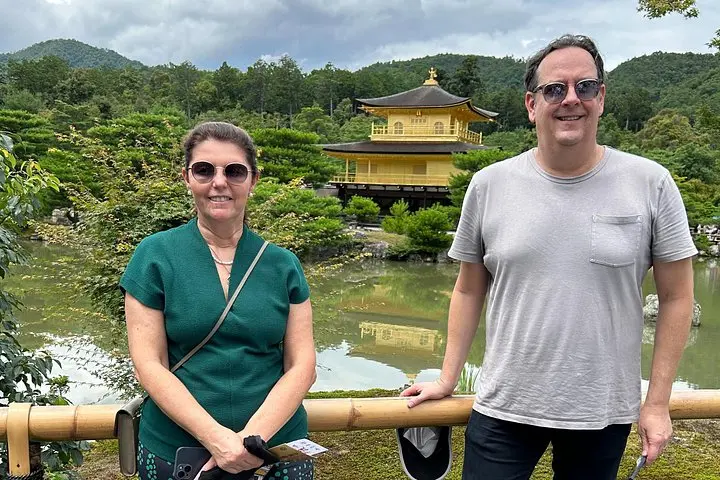
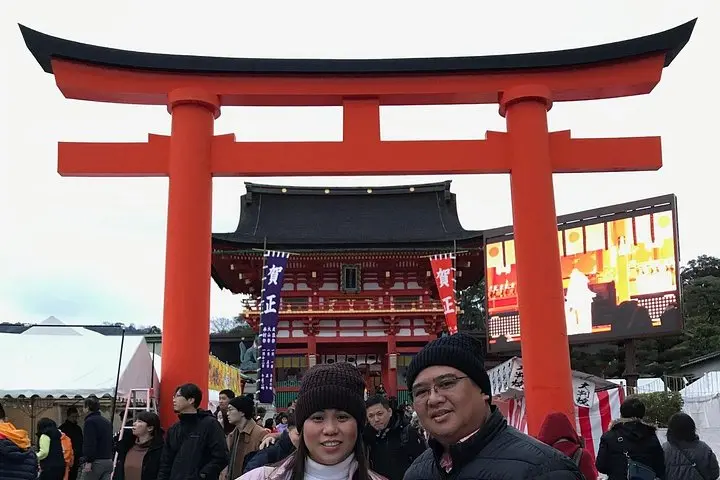
Culturally the tour balances Shinto shrines and Buddhist halls: the vermilion torii of Fushimi Inari, the calm courtyards of Kinkaku-ji, and Nara’s park where sika deer patrol pathways like easygoing hosts. Local insights matter — some side streets around Nara-machi preserve Machiya townhouses and quiet tea houses not visible from main plazas.
Practically, expect multiple short walks from the car (paved steps, gravel courtyards), ten hours on a standard itinerary, and the flexibility to customize stops. Bring comfortable shoes for temple thresholds, a light daypack for water and camera, and plan the sequence to avoid midday crowds at major shrines. The driver-guide handles navigation and parking; travelers should reserve mornings for the busiest UNESCO sites and keep afternoon time for slower streets and tea.
A private car tour turns logistics into background noise so you can focus on the architecture, the deer that ask for no more than a polite bow, and the small details that reveal Japan’s layered past.
Yes — the tour is private and typically allows adjustments to stops and pacing, though confirm any additional entrance fees ahead of time.
Pickup locations are usually flexible within Kyoto, Osaka or Kobe; specify your preferred hotel or meeting point when booking.
The listing indicates wheelchair-accessible transportation, but many temple sites have steps and uneven surfaces — check individual site accessibility with the operator beforehand.
Tipping is not customary in Japan, but a small gesture is appreciated for exceptional service; follow your comfort level.
Mitsuyuki operates guided outdoor trips and adventures with an emphasis on safety, stewardship, and memorable experiences.
Morning light clears the city as the car eases away from Kyoto’s grid and toward a quieter rhythm: temple roofs lift like hands, the Kamo River pushes you forward, and lane-side maples watch the procession.
Morning light clears the city as the car eases away from Kyoto’s grid and toward a quieter rhythm: temple roofs lift like hands, the Kamo River pushes you forward, and lane-side maples watch the procession.
This full-day private drive threads Kyoto’s imperial-era history with Nara’s older capital story — Nara ruled from 710–784, Kyoto from 794–1868 — so travelers move through layers of politics, religion and architecture rather than a single trail. Geologically, the Kyoto Basin sits on alluvial plains ringed by low hills; the stone foundations and wooden temples reflect how builders worked with wet ground and seasonal humidity.
Culturally the tour balances Shinto shrines and Buddhist halls: the vermilion torii of Fushimi Inari, the calm courtyards of Kinkaku-ji, and Nara’s park where sika deer patrol pathways like easygoing hosts. Local insights matter — some side streets around Nara-machi preserve Machiya townhouses and quiet tea houses not visible from main plazas.
Practically, expect multiple short walks from the car (paved steps, gravel courtyards), ten hours on a standard itinerary, and the flexibility to customize stops. Bring comfortable shoes for temple thresholds, a light daypack for water and camera, and plan the sequence to avoid midday crowds at major shrines. The driver-guide handles navigation and parking; travelers should reserve mornings for the busiest UNESCO sites and keep afternoon time for slower streets and tea.
A private car tour turns logistics into background noise so you can focus on the architecture, the deer that ask for no more than a polite bow, and the small details that reveal Japan’s layered past.