THE ADVENTURE COLLECTIVE® · Independent discovery and booking for outdoor travel

A focused two-hour walking tour that stitches together Cardiff’s Roman roots, Victorian boom and modern cultural pulse. Walk Bute Park, the city arcades, and civic landmarks with a local guide.
A focused two-hour walking tour that stitches together Cardiff’s Roman roots, Victorian boom and modern cultural pulse. Walk Bute Park, the city arcades, and civic landmarks with a local guide.
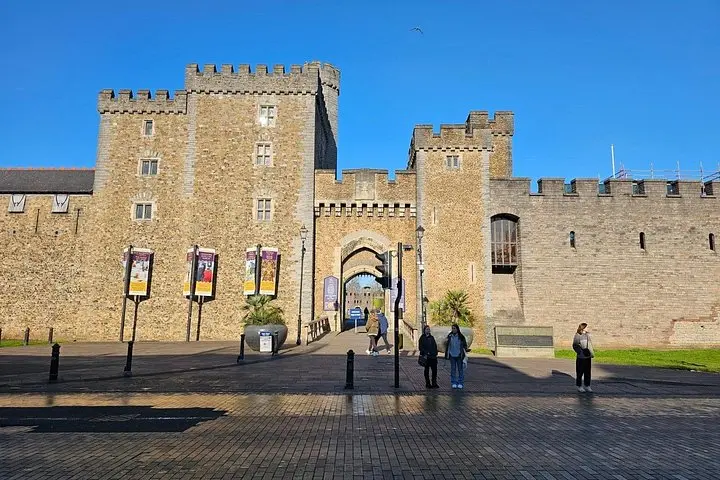
Hands in their pockets against a damp Cardiff wind, walkers move from the green sweep of Bute Park into the compressed, lively streets of the city centre — where Victorian façades meet modern cafés and rugby banners flap across the river. This two-hour walking tour threads those contrasts together: medieval monastic ground, 19th‑century industrial ambition, and a present-day city reshaping itself around independent shops and public spaces.
Verified experiences and guided adventures in the surrounding area.
Operated by The Great Weekender Experiences · Cardiff, Wales
Hands in their pockets against a damp Cardiff wind, walkers move from the green sweep of Bute Park into the compressed, lively streets of the city centre — where Victorian façades meet modern cafés and rugby banners flap across the river. This two-hour walking tour threads those contrasts together: medieval monastic ground, 19th‑century industrial ambition, and a present-day city reshaping itself around independent shops and public spaces.
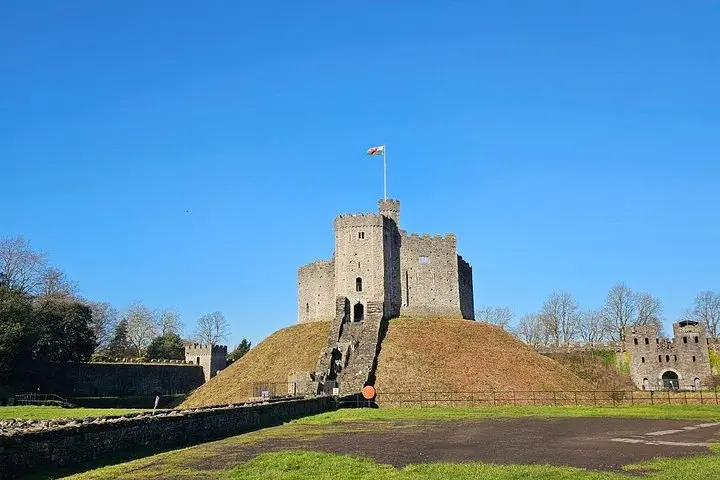
Cardiff’s story is visible in stone and street: Roman and Norman footprints, the Bute family’s park and estates, and the arcades that earned the city its nickname for connected Victorian shopping alleys. Geologically, the region sits near coal-bearing South Wales valleys that fed Cardiff’s rise as a Victorian port; the river and reclaimed docks shaped both industry and culture. Local guides often speak Welsh phrases and point out markers of civic pride — war memorials, rugby lore at the National Stadium, and the evolution of Cardiff from industrial hub to cultural capital.
Practical guidance: expect roughly two hours on mostly flat pavement with intermittent park paths; comfortable walking shoes and a light waterproof layer are sensible year-round. Tours are tailored to the group’s pace and include stops at gardens, arcades, and civic sites — bring a charged phone for photos and notes, and arrive 10–15 minutes early to meet your guide.
For first-time visitors, timing a walk during a dry spell gives the best experience of plazas and arcades; evenings can feel lively but windier beside the river. The tour offers a compact, contextual primer on Cardiff’s past and present — an efficient way to understand the city on foot.
The tour runs about two hours and covers a compact loop through Bute Park, the city centre and arcades — roughly 2–3 kilometres depending on route adaptations.
Yes, the route is flat and family-friendly, but participants should be able to walk for up to two hours; notify the operator of mobility needs in advance.
This walking tour includes a guide but not entry to paid attractions; it’s primarily an outdoor city walk with narrative stops.
Tours are delivered in English by a local Welsh guide who can share Welsh-language insights and local cultural context.
The Great Weekender Experiences operates guided outdoor trips and adventures with an emphasis on safety, stewardship, and memorable experiences.


Hands in their pockets against a damp Cardiff wind, walkers move from the green sweep of Bute Park into the compressed, lively streets of the city centre — where Victorian façades meet modern cafés and rugby banners flap across the river. This two-hour walking tour threads those contrasts together: medieval monastic ground, 19th‑century industrial ambition, and a present-day city reshaping itself around independent shops and public spaces.
Hands in their pockets against a damp Cardiff wind, walkers move from the green sweep of Bute Park into the compressed, lively streets of the city centre — where Victorian façades meet modern cafés and rugby banners flap across the river. This two-hour walking tour threads those contrasts together: medieval monastic ground, 19th‑century industrial ambition, and a present-day city reshaping itself around independent shops and public spaces.
Cardiff’s story is visible in stone and street: Roman and Norman footprints, the Bute family’s park and estates, and the arcades that earned the city its nickname for connected Victorian shopping alleys. Geologically, the region sits near coal-bearing South Wales valleys that fed Cardiff’s rise as a Victorian port; the river and reclaimed docks shaped both industry and culture. Local guides often speak Welsh phrases and point out markers of civic pride — war memorials, rugby lore at the National Stadium, and the evolution of Cardiff from industrial hub to cultural capital.
Practical guidance: expect roughly two hours on mostly flat pavement with intermittent park paths; comfortable walking shoes and a light waterproof layer are sensible year-round. Tours are tailored to the group’s pace and include stops at gardens, arcades, and civic sites — bring a charged phone for photos and notes, and arrive 10–15 minutes early to meet your guide.
For first-time visitors, timing a walk during a dry spell gives the best experience of plazas and arcades; evenings can feel lively but windier beside the river. The tour offers a compact, contextual primer on Cardiff’s past and present — an efficient way to understand the city on foot.