THE ADVENTURE COLLECTIVE® · Independent discovery and booking for outdoor travel

Spend a day away from Chania’s harbor to explore monasteries, underground chapels, and a 19th-century olive mill with a professional historian guide. This private full-day tour pairs short walks with cultural insights and countryside views.
Spend a day away from Chania’s harbor to explore monasteries, underground chapels, and a 19th-century olive mill with a professional historian guide. This private full-day tour pairs short walks with cultural insights and countryside views.
The road climbs out of Chania and the landscape changes: olive trees crowd the terraces, limestone ribs of the White Mountains appear on the horizon, and bell towers puncture open sky. On a private day tour of Chania’s monasteries, travelers move between stone courtyards and hidden chapels, following a historian-guide who threads local stories into the quiet architecture.
Verified experiences and guided adventures in the surrounding area.
Operated by Proper Cretan Guide · Chania, Crete
The road climbs out of Chania and the landscape changes: olive trees crowd the terraces, limestone ribs of the White Mountains appear on the horizon, and bell towers puncture open sky. On a private day tour of Chania’s monasteries, travelers move between stone courtyards and hidden chapels, following a historian-guide who threads local stories into the quiet architecture.
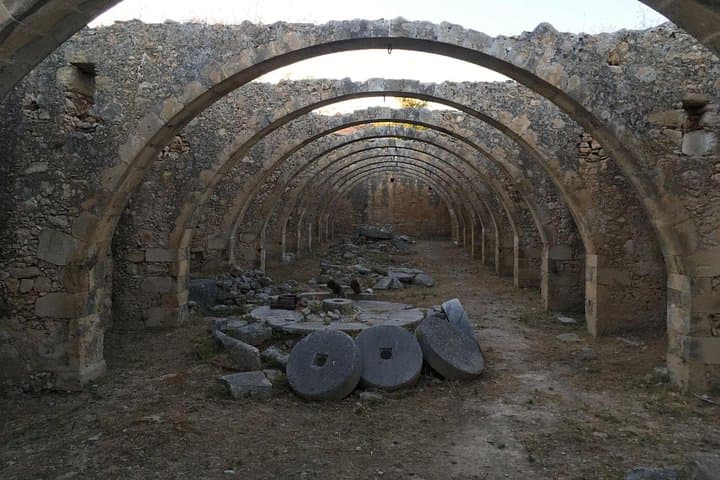
Crete’s monastic sites reflect layers of history — early Byzantine churches with faded fresco fragments, Venetian-era repairs, and Orthodox practices that link the island to Mount Athos. Geologically, the region is defined by karst limestone; many churches and hermitages sit where soft rock allowed cave chapels and underground sanctuaries to form. Agricultural life and the church intersect here: 19th-century olive mills, now preserved, show how ritual and rural economy have co-existed for centuries.
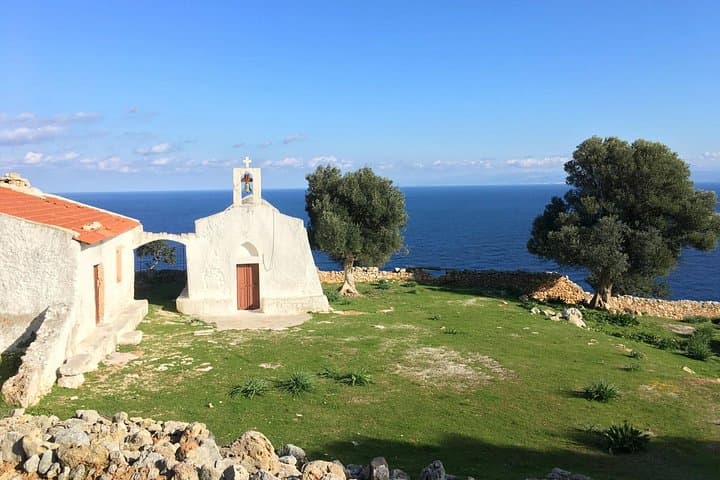
Expect a rhythm of short walks and seated museum visits: a strict, remote monastery set above the coast; a small complex with a working olive press; a whitewashed roadside chapel ideal for photos; and an underground church with surviving frescoes. The guide highlights local customs, monastic production of herbs and oils, and respectful behavior inside sacred spaces.
Practicalities: this is a 6–8 hour private tour with hotel pickup in Chania, air-conditioned transport, and included entrance fees. Modest dress, quiet photography where allowed, and small cash for donations are standard. Comfortable shoes and sun protection matter — many stops require stepping on unpaved paths and climbing short stone steps. The pace is gentle but culturally dense: arrive curious and leave with a clearer sense of Crete’s spiritual landscape.
Yes; private pickup and drop-off from central Chania locations are included in the tour.
Entrance fees are included as noted in the tour inclusions, but donations to monasteries are not covered and are typically cash-only.
The tour is advertised as suitable for all fitness levels; however, some sites have steps or uneven ground—notify the operator about mobility needs when booking.
The tour is led by a professional historian licensed by the Greek Ministry of Tourism & Culture; confirm available languages at booking.
Proper Cretan Guide operates guided outdoor trips and adventures with an emphasis on safety, stewardship, and memorable experiences.
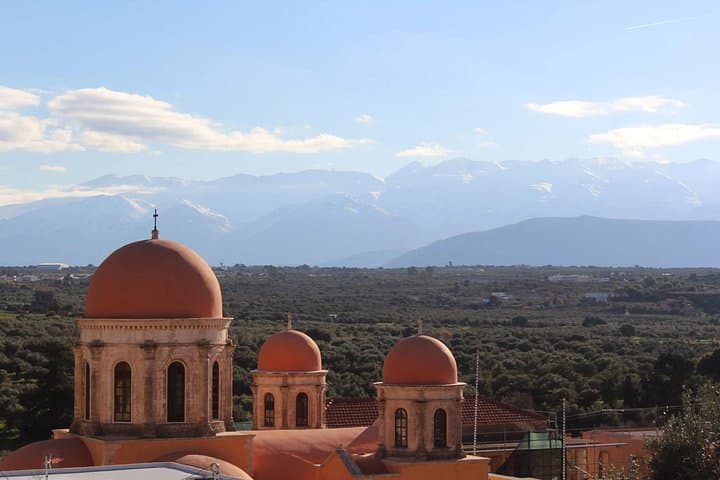
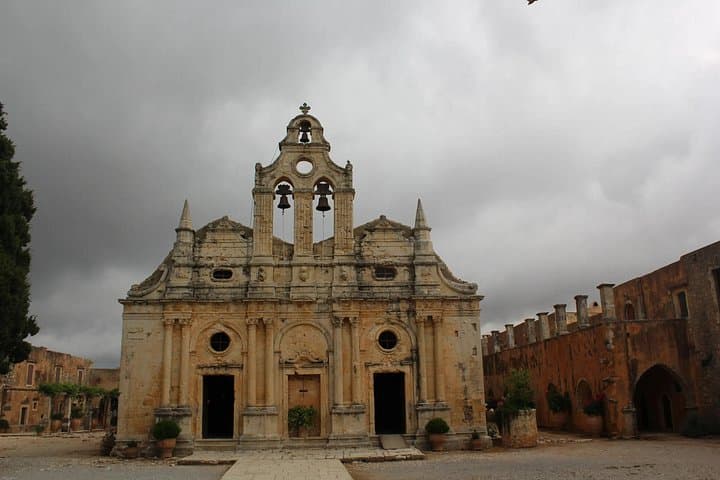
The road climbs out of Chania and the landscape changes: olive trees crowd the terraces, limestone ribs of the White Mountains appear on the horizon, and bell towers puncture open sky. On a private day tour of Chania’s monasteries, travelers move between stone courtyards and hidden chapels, following a historian-guide who threads local stories into the quiet architecture.
The road climbs out of Chania and the landscape changes: olive trees crowd the terraces, limestone ribs of the White Mountains appear on the horizon, and bell towers puncture open sky. On a private day tour of Chania’s monasteries, travelers move between stone courtyards and hidden chapels, following a historian-guide who threads local stories into the quiet architecture.
Crete’s monastic sites reflect layers of history — early Byzantine churches with faded fresco fragments, Venetian-era repairs, and Orthodox practices that link the island to Mount Athos. Geologically, the region is defined by karst limestone; many churches and hermitages sit where soft rock allowed cave chapels and underground sanctuaries to form. Agricultural life and the church intersect here: 19th-century olive mills, now preserved, show how ritual and rural economy have co-existed for centuries.
Expect a rhythm of short walks and seated museum visits: a strict, remote monastery set above the coast; a small complex with a working olive press; a whitewashed roadside chapel ideal for photos; and an underground church with surviving frescoes. The guide highlights local customs, monastic production of herbs and oils, and respectful behavior inside sacred spaces.
Practicalities: this is a 6–8 hour private tour with hotel pickup in Chania, air-conditioned transport, and included entrance fees. Modest dress, quiet photography where allowed, and small cash for donations are standard. Comfortable shoes and sun protection matter — many stops require stepping on unpaved paths and climbing short stone steps. The pace is gentle but culturally dense: arrive curious and leave with a clearer sense of Crete’s spiritual landscape.