THE ADVENTURE COLLECTIVE® · Independent discovery and booking for outdoor travel

Spend two intimate hours in Zermatt this Christmas: a private walking tour that threads Bahnhofstrasse, historic Hinterdorfstrasse, and the Kirchbrücke viewpoint beneath the Matterhorn. Perfect for travelers who want history, geology, and picture-perfect mountain light without the crowds.
Spend two intimate hours in Zermatt this Christmas: a private walking tour that threads Bahnhofstrasse, historic Hinterdorfstrasse, and the Kirchbrücke viewpoint beneath the Matterhorn. Perfect for travelers who want history, geology, and picture-perfect mountain light without the crowds.
The first light on Bahnhofstrasse slices across snow and timber, and Zermatt wakes with the hush of a place where engines yield to horses and electric carts. On a private two-hour Christmas stroll the Matterhorn doesn’t hang in the sky like a postcard—it commands the town, an angular presence that rearranges perspectives with every turn. Your guide meets you at the train station and, within minutes, the rhythm of the village takes over: shop windows fogged with warm breath, the scent of roasting chestnuts, and the distant clink of chapel bells.
Verified experiences and guided adventures in the surrounding area.
Operated by Opatrip Switzerland · Zermatt, Valais
The first light on Bahnhofstrasse slices across snow and timber, and Zermatt wakes with the hush of a place where engines yield to horses and electric carts. On a private two-hour Christmas stroll the Matterhorn doesn’t hang in the sky like a postcard—it commands the town, an angular presence that rearranges perspectives with every turn. Your guide meets you at the train station and, within minutes, the rhythm of the village takes over: shop windows fogged with warm breath, the scent of roasting chestnuts, and the distant clink of chapel bells.
The tour moves from the practical to the profound. Bahnhofstrasse is more than a shopping street; it’s an axis where mountaineering history and alpine commerce intersect. A short walk leads to Eglise St. Mauritius, its stonework bearing marks of Zermatt’s transformation from subsistence hamlet to global climbing hub. Nearby, Zermatlantis (viewed from outside on this itinerary) traces the Matterhorn’s geology—ancient rock carried north by tectonic collisions—and the town’s pivotal role in 19th-century alpinism, culminating in Whymper’s 1865 ascent that reshaped tourism and local identity.
Hinterdorfstrasse is where Zermatt’s architecture speaks loudest: centuries-old wooden houses and barns, darkened by weather and time, lean into alleyways like characters in a lived-in story. Kirchbrücke Bridge offers the obligatory pause; the Matterhorn frames its reflection in the river, and the air feels sharper at 1,620 meters. Guides here are storytellers and realists—able to toggle between folklore about early guides and solid advice about elevation, weather, and how light changes the face of rock.
Practicalities matter in winter. The route is short—about 2–3 kilometers of level cobblestone and paved paths—but surfaces can be icy. Wear waterproof boots with good tread and bring insulated layers; thermal gloves and a hat make a huge difference when you’re posed on the bridge for photos. Payment is largely card-friendly; small vendors may take cash. The tour runs as a private group experience, so the pace is yours, and the guide can adapt stops to suit mobility or weather conditions.
Timing is everything: morning light and late afternoon offer the best contrast on the Matterhorn, while midday brings crowds. For a quieter feel, try the earliest departures and plan for hot drinks afterward in a café on Bahnhofstrasse. In two hours you’ll get the feel of Zermatt—its geology, its mountaineering legacy, and the simple, sharp pleasures of Christmas in the Alps—without racing, just steady discovery.
Yes—the booking reserves the guide for your group only, allowing a customized pace and stops.
Admissions are not required for the listed outdoor sights; the Zermatlantis museum is an outside visit on this itinerary.
Yes—this tour is family-friendly, but strollers may struggle on cobbles; notify the operator if you have young children.
The tour runs in most weather; heavy storms may prompt rescheduling—check the 24‑hour cancellation policy for refunds.
The walk is mostly level but includes cobblestone surfaces and occasional steps; contact the operator if you require special accommodations.
Visibility depends on weather; guides time viewpoints for optimal conditions but clouds can obscure the peak.
Opatrip Switzerland operates guided outdoor trips and adventures with an emphasis on safety, stewardship, and memorable experiences.

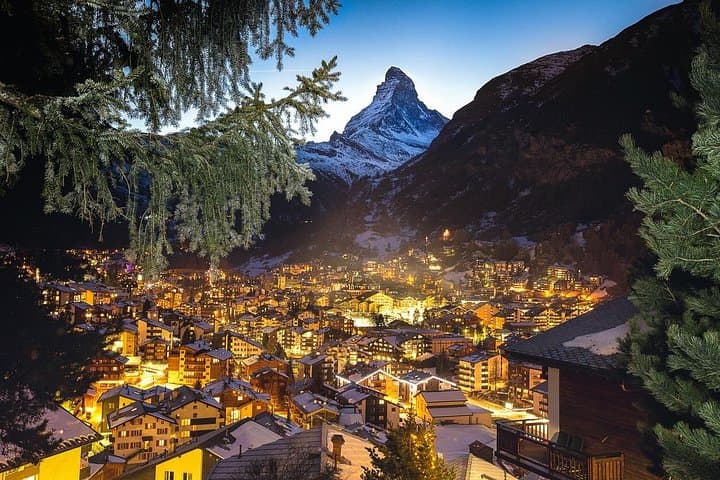


The first light on Bahnhofstrasse slices across snow and timber, and Zermatt wakes with the hush of a place where engines yield to horses and electric carts. On a private two-hour Christmas stroll the Matterhorn doesn’t hang in the sky like a postcard—it commands the town, an angular presence that rearranges perspectives with every turn. Your guide meets you at the train station and, within minutes, the rhythm of the village takes over: shop windows fogged with warm breath, the scent of roasting chestnuts, and the distant clink of chapel bells.
The first light on Bahnhofstrasse slices across snow and timber, and Zermatt wakes with the hush of a place where engines yield to horses and electric carts. On a private two-hour Christmas stroll the Matterhorn doesn’t hang in the sky like a postcard—it commands the town, an angular presence that rearranges perspectives with every turn. Your guide meets you at the train station and, within minutes, the rhythm of the village takes over: shop windows fogged with warm breath, the scent of roasting chestnuts, and the distant clink of chapel bells.
The tour moves from the practical to the profound. Bahnhofstrasse is more than a shopping street; it’s an axis where mountaineering history and alpine commerce intersect. A short walk leads to Eglise St. Mauritius, its stonework bearing marks of Zermatt’s transformation from subsistence hamlet to global climbing hub. Nearby, Zermatlantis (viewed from outside on this itinerary) traces the Matterhorn’s geology—ancient rock carried north by tectonic collisions—and the town’s pivotal role in 19th-century alpinism, culminating in Whymper’s 1865 ascent that reshaped tourism and local identity.
Hinterdorfstrasse is where Zermatt’s architecture speaks loudest: centuries-old wooden houses and barns, darkened by weather and time, lean into alleyways like characters in a lived-in story. Kirchbrücke Bridge offers the obligatory pause; the Matterhorn frames its reflection in the river, and the air feels sharper at 1,620 meters. Guides here are storytellers and realists—able to toggle between folklore about early guides and solid advice about elevation, weather, and how light changes the face of rock.
Practicalities matter in winter. The route is short—about 2–3 kilometers of level cobblestone and paved paths—but surfaces can be icy. Wear waterproof boots with good tread and bring insulated layers; thermal gloves and a hat make a huge difference when you’re posed on the bridge for photos. Payment is largely card-friendly; small vendors may take cash. The tour runs as a private group experience, so the pace is yours, and the guide can adapt stops to suit mobility or weather conditions.
Timing is everything: morning light and late afternoon offer the best contrast on the Matterhorn, while midday brings crowds. For a quieter feel, try the earliest departures and plan for hot drinks afterward in a café on Bahnhofstrasse. In two hours you’ll get the feel of Zermatt—its geology, its mountaineering legacy, and the simple, sharp pleasures of Christmas in the Alps—without racing, just steady discovery.