THE ADVENTURE COLLECTIVE® · Independent discovery and booking for outdoor travel

Explore the Cu Chi tunnels on a guided half‑day tour from Ho Chi Minh City—crawl historic galleries, learn wartime ingenuity, and try a supervised shooting range. This concise trip blends local culture, geology, and clear practical tips for first‑time visitors.
Explore the Cu Chi tunnels on a guided half‑day tour from Ho Chi Minh City—crawl historic galleries, learn wartime ingenuity, and try a supervised shooting range. This concise trip blends local culture, geology, and clear practical tips for first‑time visitors.
The morning light softens the low rubber trees as an air‑conditioned van slips out of Ho Chi Minh City and into the flat countryside toward Cu Chi. Fields open and close like pages; smokers of cassava and small craft villages punctuate the route. At the site, narrow openings lead into the cool, dim tunnels where the air carries the weight of decades and the faint smell of packed earth.
Verified experiences and guided adventures in the surrounding area.
Operated by Lily Tourist · Cu Chi, Ho Chi Minh City
The morning light softens the low rubber trees as an air‑conditioned van slips out of Ho Chi Minh City and into the flat countryside toward Cu Chi. Fields open and close like pages; smokers of cassava and small craft villages punctuate the route. At the site, narrow openings lead into the cool, dim tunnels where the air carries the weight of decades and the faint smell of packed earth.
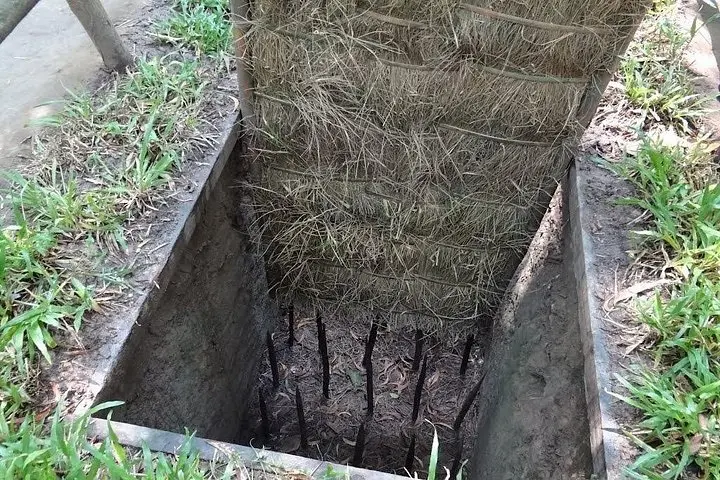
The Cu Chi network—over 200 kilometers of interlocking tunnels—was expanded and refined by Viet Cong fighters during the mid‑20th century as an asymmetric response to better‑equipped forces. Geologically the region is alluvial plain: sandy loam and compacted clay that holds relatively dry voids when properly built, allowing long, narrow galleries, hidden trapdoors, and small two‑man chambers. Local culture remains visible in roadside food stalls serving grilled cassava and in small craft shops producing simple village goods.
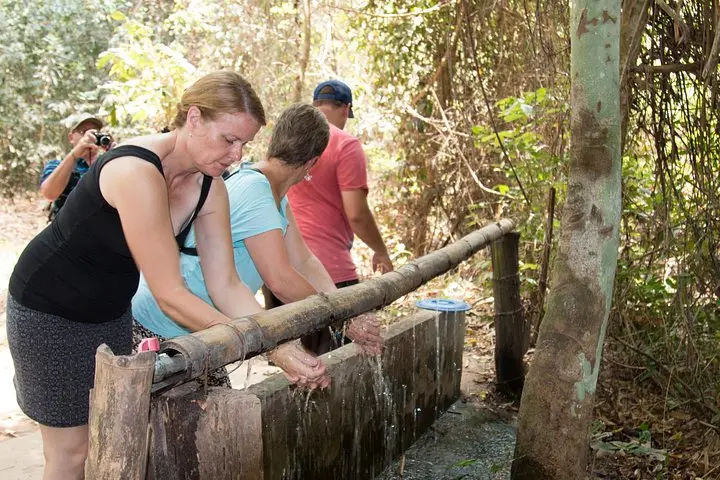
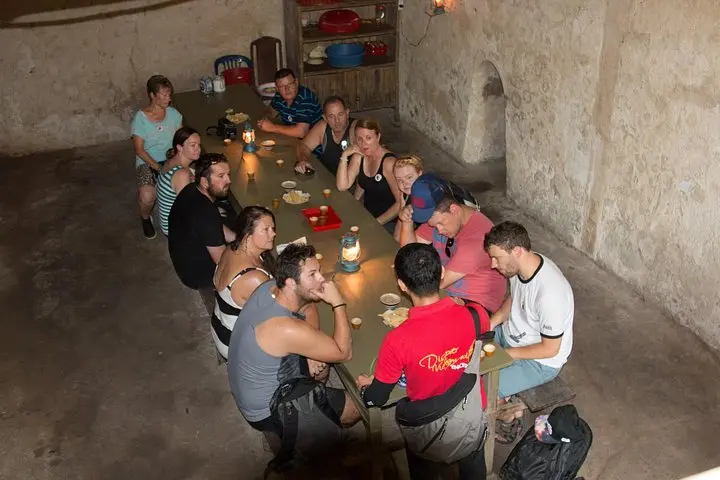
Visitors should expect tight crawling sections, interpretive exhibits, and a short shooting range that demonstrates period weaponry. Guides provide context about tactics, daily life underground, and how the tunnels connected to kitchens, hospitals and supply caches.
Practical guidance: arrive early to avoid midday heat, wear long pants and closed shoes for crawling, and bring insect repellent and sunscreen. Photography is allowed in most areas but follow posted rules and avoid touching fragile tunnel walls. If you opt to fire a rifle at the range, follow the range officer’s instructions closely and have your ID ready. The half‑day format makes this an intense but manageable historical experience for most travelers.
The Cu Chi tunnels are roughly 60 kilometers northwest of central Ho Chi Minh City; the transfer by car typically takes about 1.5 hours each way depending on traffic.
Most sites offer both an original narrow tunnel section and a widened, safer crawlway; visitors can choose to enter only the larger, more accessible passages if they prefer.
Yes—the tour usually offers supervised shooting of period firearms; you must follow the range officer’s safety instructions and present ID as required by the operator.
Yes, there are basic restroom facilities and small food stalls selling local snacks like grilled cassava and drinks near the main visitor areas.
Lily Tourist operates guided outdoor trips and adventures with an emphasis on safety, stewardship, and memorable experiences.

The morning light softens the low rubber trees as an air‑conditioned van slips out of Ho Chi Minh City and into the flat countryside toward Cu Chi. Fields open and close like pages; smokers of cassava and small craft villages punctuate the route. At the site, narrow openings lead into the cool, dim tunnels where the air carries the weight of decades and the faint smell of packed earth.
The morning light softens the low rubber trees as an air‑conditioned van slips out of Ho Chi Minh City and into the flat countryside toward Cu Chi. Fields open and close like pages; smokers of cassava and small craft villages punctuate the route. At the site, narrow openings lead into the cool, dim tunnels where the air carries the weight of decades and the faint smell of packed earth.
The Cu Chi network—over 200 kilometers of interlocking tunnels—was expanded and refined by Viet Cong fighters during the mid‑20th century as an asymmetric response to better‑equipped forces. Geologically the region is alluvial plain: sandy loam and compacted clay that holds relatively dry voids when properly built, allowing long, narrow galleries, hidden trapdoors, and small two‑man chambers. Local culture remains visible in roadside food stalls serving grilled cassava and in small craft shops producing simple village goods.
Visitors should expect tight crawling sections, interpretive exhibits, and a short shooting range that demonstrates period weaponry. Guides provide context about tactics, daily life underground, and how the tunnels connected to kitchens, hospitals and supply caches.
Practical guidance: arrive early to avoid midday heat, wear long pants and closed shoes for crawling, and bring insect repellent and sunscreen. Photography is allowed in most areas but follow posted rules and avoid touching fragile tunnel walls. If you opt to fire a rifle at the range, follow the range officer’s instructions closely and have your ID ready. The half‑day format makes this an intense but manageable historical experience for most travelers.