THE ADVENTURE COLLECTIVE® · Independent discovery and booking for outdoor travel

Explore the Cu Chi Tunnels on a private shore excursion from Phu My. Learn the practical engineering and wartime history of the underground network, with a local guide, a village lunch, and a short, memorable crawl through restored passages.
Explore the Cu Chi Tunnels on a private shore excursion from Phu My. Learn the practical engineering and wartime history of the underground network, with a local guide, a village lunch, and a short, memorable crawl through restored passages.
You step off the air-conditioned van into a strip of lowland jungle and scuffed paddy fields; the smell of wet earth and rice straw hangs close as guides point to a low, nearly hidden hole in the ground. The Cu Chi tunnels don’t reveal themselves at first — they wait, quiet and stubborn, a network of narrow passageways that once carried fighters, supplies, and the pulse of a resistance movement.
Verified experiences and guided adventures in the surrounding area.
Operated by Adventures Travel Vietnam · Củ Chi, Ho Chi Minh City
You step off the air-conditioned van into a strip of lowland jungle and scuffed paddy fields; the smell of wet earth and rice straw hangs close as guides point to a low, nearly hidden hole in the ground. The Cu Chi tunnels don’t reveal themselves at first — they wait, quiet and stubborn, a network of narrow passageways that once carried fighters, supplies, and the pulse of a resistance movement.
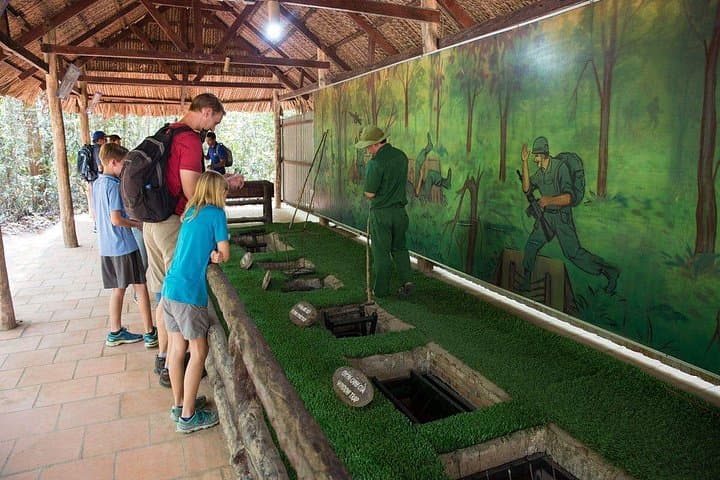
Carved from clay and laterite, the tunnels are an exercise in practical engineering born of necessity. Constructed and expanded by the Viet Cong during the mid-20th century, they include living chambers, kitchens, field hospitals and cleverly concealed trap doors. The surrounding landscape — flat Mekong delta plains dotted with casuarina and rubber trees — played a direct role: soft soil that could be excavated and reworked, paddy irrigation that masked movement above.
Culturally, the site is a raw history lesson as much as a landscape: local rice-paper workshops and village markets along the route provide a sense of daily life that continued alongside conflict. Expect clear explanation from guides about tactical uses of the tunnels and the broader social context of wartime rural Vietnam.
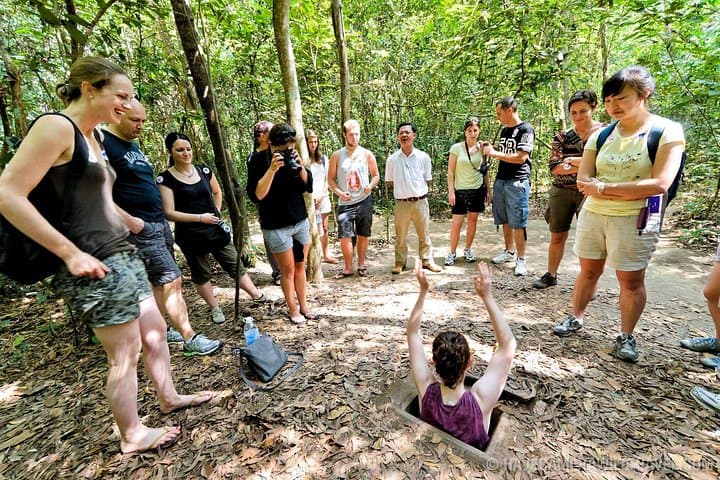
Practical guidance: wear closed-toe shoes and long pants, bring a hat and water, and be prepared for a short, narrow crawl section (50–100 m total through widened demonstration tunnels). Keep passports handy for port pick-up and allow 8–10 hours from Phu My port for round-trip transfer, interpretation, and lunch at a local restaurant.
Children may do the widened demonstration crawl if comfortable in tight spaces; minors should be supervised and some visitors may opt to remain above ground.
This private shore excursion typically includes tunnel admission and a local lunch as described—confirm inclusions with your operator before booking.
Transfer time varies by traffic and exact pickup but plan on roughly 1–2 hours each way to Cu Chi from Phu My port; overall tour time is about 8–10 hours.
Parts of the site are accessible, but the demonstration tunnels require crouching and some uneven walking; check wheelchair-accessible options and notify the operator in advance.
Adventures Travel Vietnam operates guided outdoor trips and adventures with an emphasis on safety, stewardship, and memorable experiences.
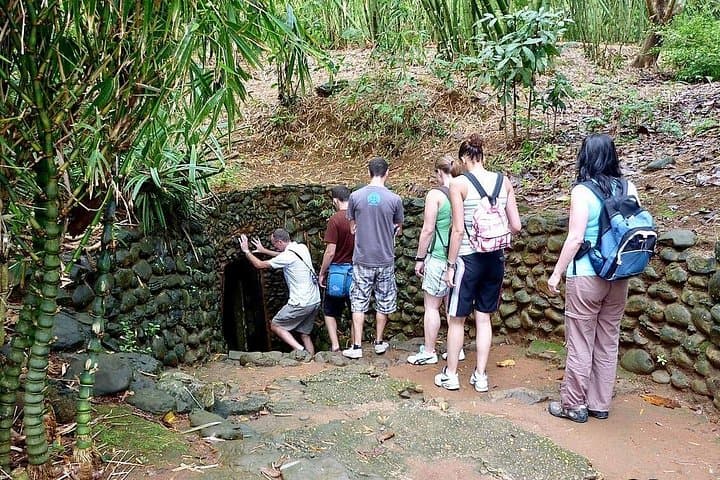

You step off the air-conditioned van into a strip of lowland jungle and scuffed paddy fields; the smell of wet earth and rice straw hangs close as guides point to a low, nearly hidden hole in the ground. The Cu Chi tunnels don’t reveal themselves at first — they wait, quiet and stubborn, a network of narrow passageways that once carried fighters, supplies, and the pulse of a resistance movement.
You step off the air-conditioned van into a strip of lowland jungle and scuffed paddy fields; the smell of wet earth and rice straw hangs close as guides point to a low, nearly hidden hole in the ground. The Cu Chi tunnels don’t reveal themselves at first — they wait, quiet and stubborn, a network of narrow passageways that once carried fighters, supplies, and the pulse of a resistance movement.
Carved from clay and laterite, the tunnels are an exercise in practical engineering born of necessity. Constructed and expanded by the Viet Cong during the mid-20th century, they include living chambers, kitchens, field hospitals and cleverly concealed trap doors. The surrounding landscape — flat Mekong delta plains dotted with casuarina and rubber trees — played a direct role: soft soil that could be excavated and reworked, paddy irrigation that masked movement above.
Culturally, the site is a raw history lesson as much as a landscape: local rice-paper workshops and village markets along the route provide a sense of daily life that continued alongside conflict. Expect clear explanation from guides about tactical uses of the tunnels and the broader social context of wartime rural Vietnam.
Practical guidance: wear closed-toe shoes and long pants, bring a hat and water, and be prepared for a short, narrow crawl section (50–100 m total through widened demonstration tunnels). Keep passports handy for port pick-up and allow 8–10 hours from Phu My port for round-trip transfer, interpretation, and lunch at a local restaurant.