THE ADVENTURE COLLECTIVE® · Independent discovery and booking for outdoor travel

Crawl through 220 km of historic tunnels, learn guerrilla-era engineering, and try a supervised shooting range on a private half-day tour from Ho Chi Minh City. Expect close quarters, rural scenery, and a deeply contextual guide-led experience.
Crawl through 220 km of historic tunnels, learn guerrilla-era engineering, and try a supervised shooting range on a private half-day tour from Ho Chi Minh City. Expect close quarters, rural scenery, and a deeply contextual guide-led experience.
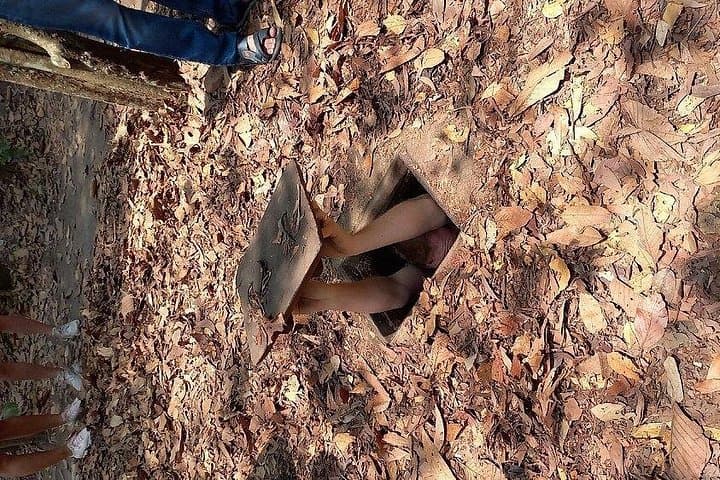
You step out of an air-conditioned van into a narrow stretch of well-trodden dirt where rubber trees shade low entrances carved into the earth. The morning smells faintly of hot metal and cassava smoke; a guide gestures toward a pinhole of black that once hid soldiers and supplied an entire underground world.
Verified experiences and guided adventures in the surrounding area.
Operated by Vinadu · Cu Chi, Ho Chi Minh City
You step out of an air-conditioned van into a narrow stretch of well-trodden dirt where rubber trees shade low entrances carved into the earth. The morning smells faintly of hot metal and cassava smoke; a guide gestures toward a pinhole of black that once hid soldiers and supplied an entire underground world.
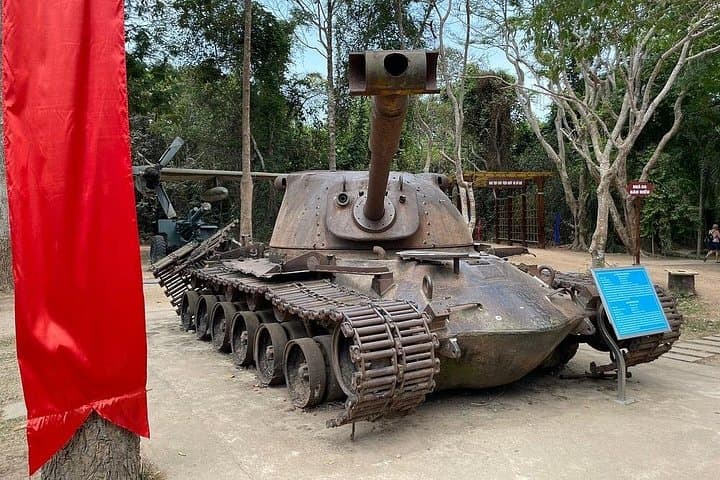
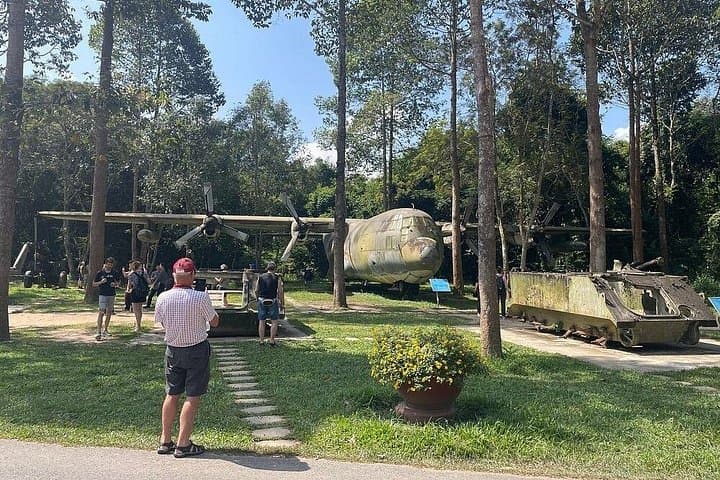
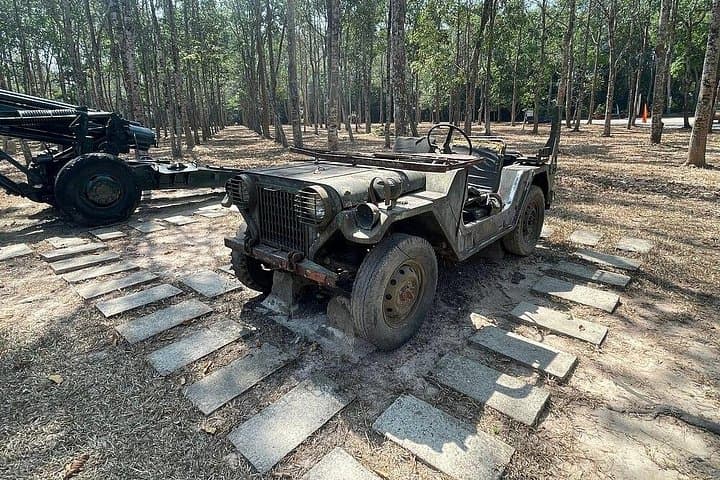
Củ Chi sits roughly 60 km northwest of Ho Chi Minh City and hides more than 220 km of tunnels—war-born engineering that threaded clay, roots and bamboo. Geology here is alluvial clay and laterite, which made digging possible but kept passageways tight; villagers and fighters adapted clever ventilation and trap-door systems. The site mixes wartime artifacts, reconstructed bunkers and shooting ranges where visitors may try modern firearms under supervision.
Local culture is visible in craft villages and simple roadside stalls serving grilled cassava and Củ Chi-style veal; the rhythm of rural life contrasts sharply with the stories of resistance etched into the tunnels. Guides—often former soldiers or local historians—bring personal context that numbers on a plaque cannot.
Practically: expect a private half-day (around 5–6 hours including transfers), hotel pickup and bottled water, and substantial crouching and short crawls. Wear long pants, sturdy shoes and bring sunscreen and a compact daypack. Travelers with spinal, heart, or pregnancy restrictions should avoid crawling sections; closed spaces can feel claustrophobic.
Timing matters—early departures avoid mid-day heat and larger crowds. The experience balances hands-on history with stark reminders of wartime ingenuity; it’s visceral, educational and logistically straightforward for travelers based in Ho Chi Minh City.
The main Cu Chi sites are about 60 km northwest of Ho Chi Minh City; private transfer is typically included and takes roughly 1–1.5 hours each way depending on traffic.
No—you can often observe widened sections and demonstration tunnels; some guests choose to try a short crawl while others remain at surface exhibits.
Many tours offer a supervised shooting range option with weapons like an AK-47; it’s conducted under strict supervision and may be optional or priced separately—ask your operator in advance.
Families can join, but children should be old enough to follow safety instructions; crawling sections and firearms are often restricted by age—confirm specifics with the operator.
Vinadu operates guided outdoor trips and adventures with an emphasis on safety, stewardship, and memorable experiences.
You step out of an air-conditioned van into a narrow stretch of well-trodden dirt where rubber trees shade low entrances carved into the earth. The morning smells faintly of hot metal and cassava smoke; a guide gestures toward a pinhole of black that once hid soldiers and supplied an entire underground world.
You step out of an air-conditioned van into a narrow stretch of well-trodden dirt where rubber trees shade low entrances carved into the earth. The morning smells faintly of hot metal and cassava smoke; a guide gestures toward a pinhole of black that once hid soldiers and supplied an entire underground world.
Củ Chi sits roughly 60 km northwest of Ho Chi Minh City and hides more than 220 km of tunnels—war-born engineering that threaded clay, roots and bamboo. Geology here is alluvial clay and laterite, which made digging possible but kept passageways tight; villagers and fighters adapted clever ventilation and trap-door systems. The site mixes wartime artifacts, reconstructed bunkers and shooting ranges where visitors may try modern firearms under supervision.
Local culture is visible in craft villages and simple roadside stalls serving grilled cassava and Củ Chi-style veal; the rhythm of rural life contrasts sharply with the stories of resistance etched into the tunnels. Guides—often former soldiers or local historians—bring personal context that numbers on a plaque cannot.
Practically: expect a private half-day (around 5–6 hours including transfers), hotel pickup and bottled water, and substantial crouching and short crawls. Wear long pants, sturdy shoes and bring sunscreen and a compact daypack. Travelers with spinal, heart, or pregnancy restrictions should avoid crawling sections; closed spaces can feel claustrophobic.
Timing matters—early departures avoid mid-day heat and larger crowds. The experience balances hands-on history with stark reminders of wartime ingenuity; it’s visceral, educational and logistically straightforward for travelers based in Ho Chi Minh City.