THE ADVENTURE COLLECTIVE® · Independent discovery and booking for outdoor travel

A full-day private tour from Bangkok that follows the Death Railway’s most iconic sections—the Bridge over the River Kwai, the war cemetery, a WWII museum and a cliffside walk to Krasae Cave. Expect historical context, uneven terrain, and vivid riverside views.
A full-day private tour from Bangkok that follows the Death Railway’s most iconic sections—the Bridge over the River Kwai, the war cemetery, a WWII museum and a cliffside walk to Krasae Cave. Expect historical context, uneven terrain, and vivid riverside views.
You step off the air-conditioned minibus into a dry, sun-warmed station and the river calls—slow, brown, and insistent—pushing time forward beneath a steel span tourists still call the ‘Bridge on the River Kwai.’ The crawl of a passing local train, the distant clack of sleepers, and the hollow echo beneath the iron girders place you in a landscape shaped by industry and wartime pressure.
Verified experiences and guided adventures in the surrounding area.
Operated by Guide Bangkok Travel · Kanchanaburi, Kanchanaburi
You step off the air-conditioned minibus into a dry, sun-warmed station and the river calls—slow, brown, and insistent—pushing time forward beneath a steel span tourists still call the ‘Bridge on the River Kwai.’ The crawl of a passing local train, the distant clack of sleepers, and the hollow echo beneath the iron girders place you in a landscape shaped by industry and wartime pressure.
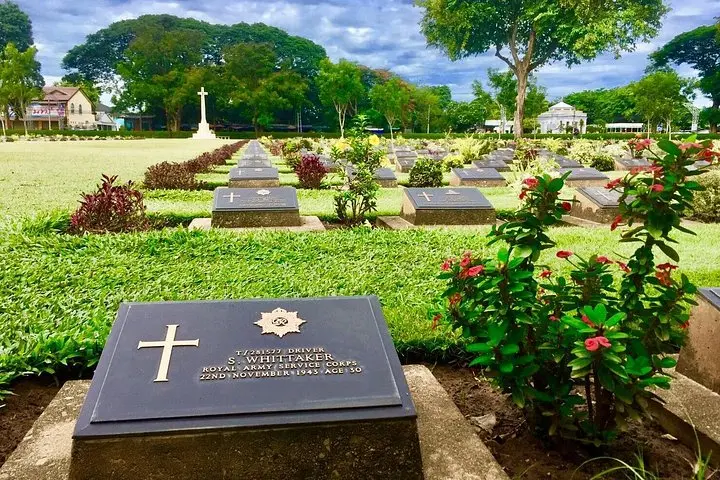
The day traces a clear throughline: the Thailand-Burma War Centre outlines the strategic and human cost of the Japanese occupation; Kanchanaburi War Cemetery lists Allied graves in tidy rows; then the bridge itself, rebuilt after bombing, stands where timber and sweat once met blast. Geologically the route follows valley floors carved by seasonal floods and hemmed by low limestone bluffs—Krasae’s cliffs are a compact example where workers once hewed track into stone.
Culturally the region balances remembrance with daily river commerce; Krasae Cave’s Buddha adds a living, local practice to a site dominated by history. Expect 9–10 hours, moderate walking on uneven ballast, short climbs to viewpoints and a gentle sensory mix of diesel, river air, and temple incense.
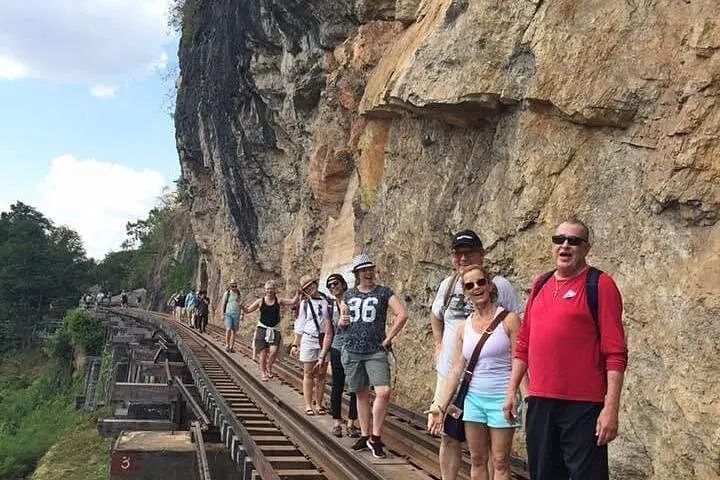
Practical edge: wear comfortable, closed-toe shoes, bring sun protection and a refillable water bottle, and be prepared to step aside for scheduled train movements. The tour is accessible to most fitness levels but includes sections along active tracks and a short cliffside walk where handholds are minimal. Time your visit early in the week or morning to avoid the busiest coach arrivals and allow extra time for Bangkok traffic on the return.
The tour runs about 9–10 hours (approximately 540–600 minutes); return time depends on traffic but typically late afternoon to early evening.
There’s a moderate amount of walking on uneven track and a cliffside section; children and seniors who are steady on their feet can participate but should take care.
Yes—this private tour includes admission fees noted in the itinerary and a Thai buffet lunch.
The itinerary includes viewing and sometimes catching the scheduled local service; train timings vary, so follow your guide’s plan for safe boarding and disembarking.
Guide Bangkok Travel operates guided outdoor trips and adventures with an emphasis on safety, stewardship, and memorable experiences.
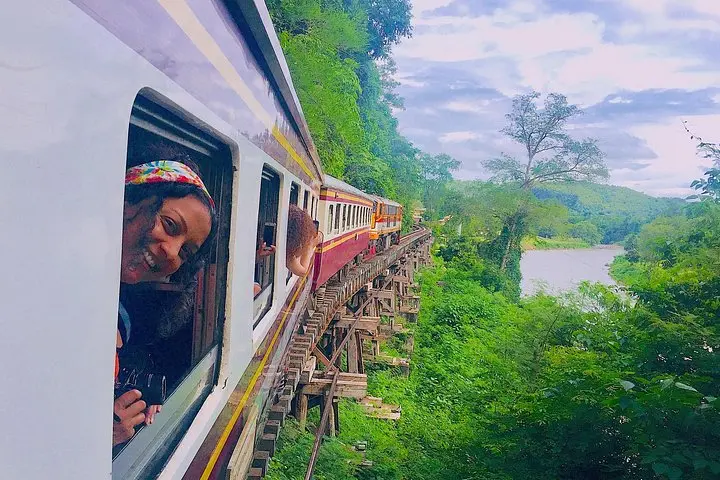
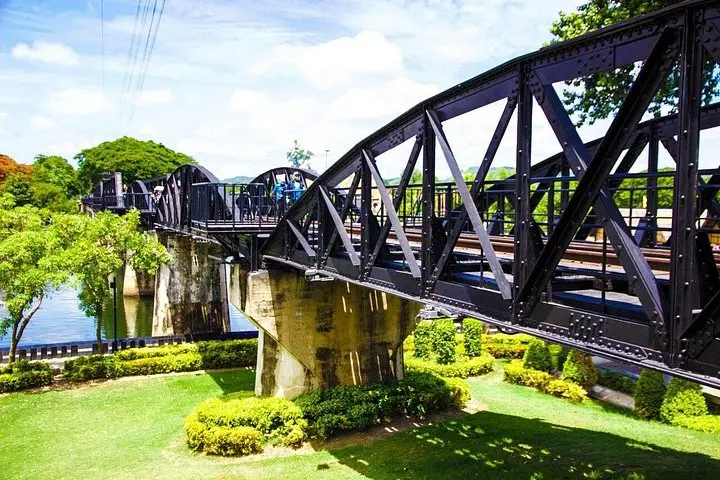
You step off the air-conditioned minibus into a dry, sun-warmed station and the river calls—slow, brown, and insistent—pushing time forward beneath a steel span tourists still call the ‘Bridge on the River Kwai.’ The crawl of a passing local train, the distant clack of sleepers, and the hollow echo beneath the iron girders place you in a landscape shaped by industry and wartime pressure.
You step off the air-conditioned minibus into a dry, sun-warmed station and the river calls—slow, brown, and insistent—pushing time forward beneath a steel span tourists still call the ‘Bridge on the River Kwai.’ The crawl of a passing local train, the distant clack of sleepers, and the hollow echo beneath the iron girders place you in a landscape shaped by industry and wartime pressure.
The day traces a clear throughline: the Thailand-Burma War Centre outlines the strategic and human cost of the Japanese occupation; Kanchanaburi War Cemetery lists Allied graves in tidy rows; then the bridge itself, rebuilt after bombing, stands where timber and sweat once met blast. Geologically the route follows valley floors carved by seasonal floods and hemmed by low limestone bluffs—Krasae’s cliffs are a compact example where workers once hewed track into stone.
Culturally the region balances remembrance with daily river commerce; Krasae Cave’s Buddha adds a living, local practice to a site dominated by history. Expect 9–10 hours, moderate walking on uneven ballast, short climbs to viewpoints and a gentle sensory mix of diesel, river air, and temple incense.
Practical edge: wear comfortable, closed-toe shoes, bring sun protection and a refillable water bottle, and be prepared to step aside for scheduled train movements. The tour is accessible to most fitness levels but includes sections along active tracks and a short cliffside walk where handholds are minimal. Time your visit early in the week or morning to avoid the busiest coach arrivals and allow extra time for Bangkok traffic on the return.