THE ADVENTURE COLLECTIVE® · Independent discovery and booking for outdoor travel

Explore Egypt’s oldest capital sites in a single private day: Giza’s pyramids, the Step Pyramid at Saqqara, and the ruins of Memphis, with a short camel ride and a koshry lunch. A guided Egyptologist frames the ancient engineering and local culture while you move across the limestone plateau.
Explore Egypt’s oldest capital sites in a single private day: Giza’s pyramids, the Step Pyramid at Saqqara, and the ruins of Memphis, with a short camel ride and a koshry lunch. A guided Egyptologist frames the ancient engineering and local culture while you move across the limestone plateau.
You step out of an air-conditioned van and the desert greets you—dry air lifting dust at the edges of the plateau while three pyramid silhouettes hold the skyline like ancient sentries. The Great Pyramid’s shadow crosses packed sand; camel hooves click and the Sphinx watches, patient as stone.
Verified experiences and guided adventures in the surrounding area.
Operated by Excursion Giza Day Tour · Giza, Giza Governorate
You step out of an air-conditioned van and the desert greets you—dry air lifting dust at the edges of the plateau while three pyramid silhouettes hold the skyline like ancient sentries. The Great Pyramid’s shadow crosses packed sand; camel hooves click and the Sphinx watches, patient as stone.
This private eight-hour loop stitches together major chapters of early Egyptian statecraft. At Giza you’ll see the 4th‑Dynasty pyramids—Khufu’s massive tomb, Khafre’s ridge, Menkaure’s smaller pyramid—and the nearby Valley Temple where funerary rites were staged. Saqqara’s Step Pyramid predates Giza, a 3rd‑Dynasty experiment in all‑stone funerary architecture, and Memphis, once the Nile gateway capital, offers colossal remnants like the fallen statue of Ramses II. Geologically you’re on the Giza plateau—a limestone bed scarred by wind and human activity—so surfaces are firm but uneven.
Culturally, the tour blends history with modern rhythms: vendors at small bazaars, a koshry lunch stop, and a short 15‑minute camel ride that puts you at camel-height to scan the plateau. Practicalities matter: expect repeated short walks over gravel and flagstones, intermittent shade, and crowds near key monuments. Bring sun protection and a refillable bottle (bottled water is provided), wear sturdy shoes, and keep small change for tips and market purchases. Photography is allowed in most outdoor areas, but interior tomb access may be ticketed or restricted.
This itinerary is customizable by an Egyptologist guide—use that time to ask about construction methods, burial rites, and how the Nile’s annual rhythm shaped these early capitals. Plan mornings or late afternoons to avoid peak heat and give yourself time to move at a steady pace rather than rush through one of history’s most densely packed landscapes.
Most basic tour prices do not include archaeological site entry tickets; confirm with your operator and be prepared to pay on-site for specific tomb access or optional museum entries.
The scheduled camel experience is approximately 15 minutes—enough for photos and a short circuit around the plateau, but not a long trek.
Yes; the itinerary is labeled suitable for all fitness levels, though there is walking on uneven ground—consider a slower pace for very young children or mobility-restricted guests.
Lunch is typically koshry at a local restaurant; notify your guide in advance for dietary restrictions or special meal requests so they can arrange alternatives.
Excursion Giza Day Tour operates guided outdoor trips and adventures with an emphasis on safety, stewardship, and memorable experiences.
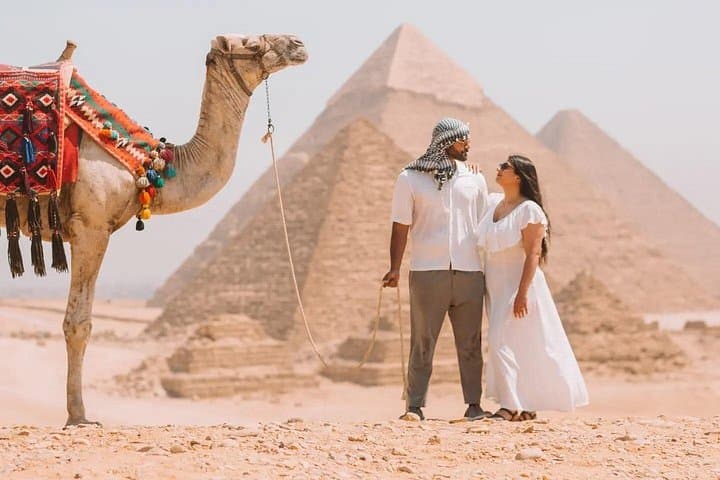
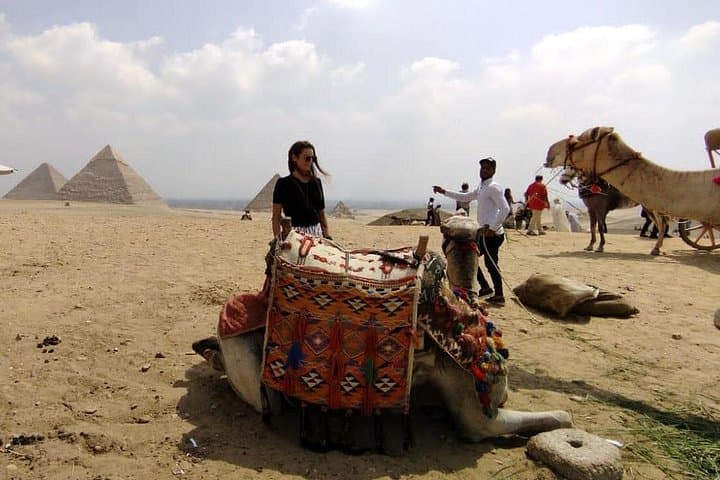
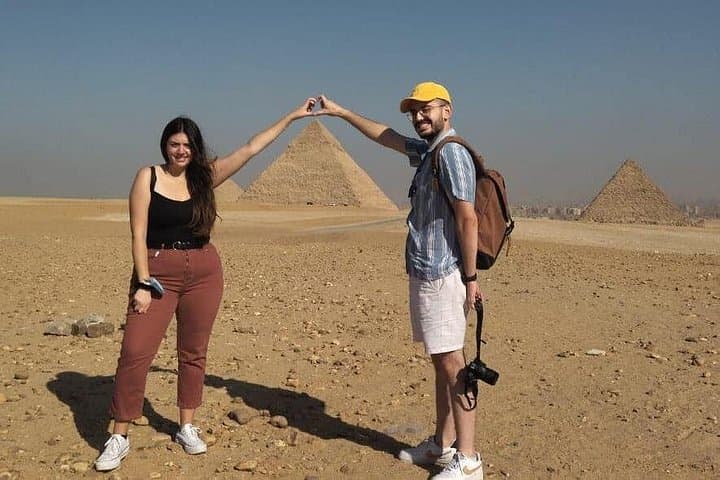
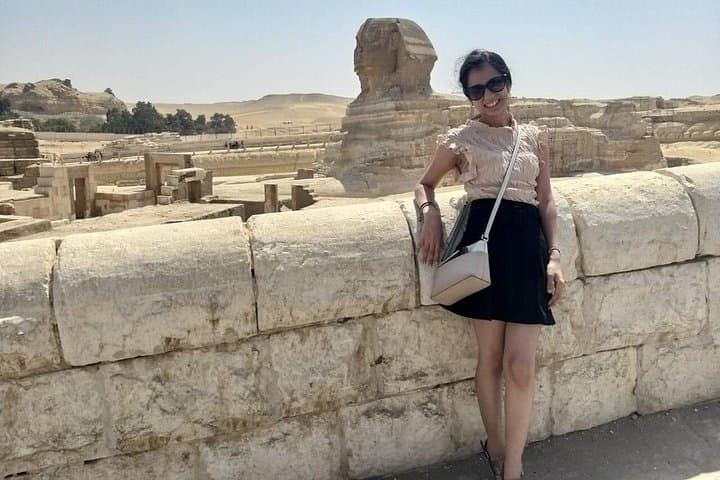
You step out of an air-conditioned van and the desert greets you—dry air lifting dust at the edges of the plateau while three pyramid silhouettes hold the skyline like ancient sentries. The Great Pyramid’s shadow crosses packed sand; camel hooves click and the Sphinx watches, patient as stone.
You step out of an air-conditioned van and the desert greets you—dry air lifting dust at the edges of the plateau while three pyramid silhouettes hold the skyline like ancient sentries. The Great Pyramid’s shadow crosses packed sand; camel hooves click and the Sphinx watches, patient as stone.
This private eight-hour loop stitches together major chapters of early Egyptian statecraft. At Giza you’ll see the 4th‑Dynasty pyramids—Khufu’s massive tomb, Khafre’s ridge, Menkaure’s smaller pyramid—and the nearby Valley Temple where funerary rites were staged. Saqqara’s Step Pyramid predates Giza, a 3rd‑Dynasty experiment in all‑stone funerary architecture, and Memphis, once the Nile gateway capital, offers colossal remnants like the fallen statue of Ramses II. Geologically you’re on the Giza plateau—a limestone bed scarred by wind and human activity—so surfaces are firm but uneven.
Culturally, the tour blends history with modern rhythms: vendors at small bazaars, a koshry lunch stop, and a short 15‑minute camel ride that puts you at camel-height to scan the plateau. Practicalities matter: expect repeated short walks over gravel and flagstones, intermittent shade, and crowds near key monuments. Bring sun protection and a refillable bottle (bottled water is provided), wear sturdy shoes, and keep small change for tips and market purchases. Photography is allowed in most outdoor areas, but interior tomb access may be ticketed or restricted.
This itinerary is customizable by an Egyptologist guide—use that time to ask about construction methods, burial rites, and how the Nile’s annual rhythm shaped these early capitals. Plan mornings or late afternoons to avoid peak heat and give yourself time to move at a steady pace rather than rush through one of history’s most densely packed landscapes.