THE ADVENTURE COLLECTIVE® · Independent discovery and booking for outdoor travel

Stand beneath the Great Pyramid and let the desert wind push you around millennia of stone. This private day tour of the Pyramids of Giza and the Sphinx pairs close-up archaeology with practical logistics for an efficient cultural visit.
Stand beneath the Great Pyramid and let the desert wind push you around millennia of stone. This private day tour of the Pyramids of Giza and the Sphinx pairs close-up archaeology with practical logistics for an efficient cultural visit.
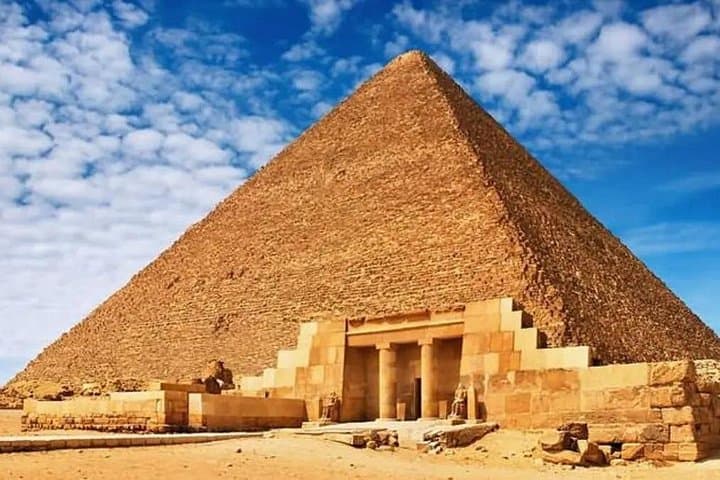
Sand and stone meet in a sun-drenched tableau as you step onto the Giza Plateau — the desert breeze pushes against your hat while the Great Pyramid rises, patient and immense, daring you to circle its base.
Verified experiences and guided adventures in the surrounding area.
Operated by Around the world tours · Giza, Giza Governorate
Sand and stone meet in a sun-drenched tableau as you step onto the Giza Plateau — the desert breeze pushes against your hat while the Great Pyramid rises, patient and immense, daring you to circle its base.
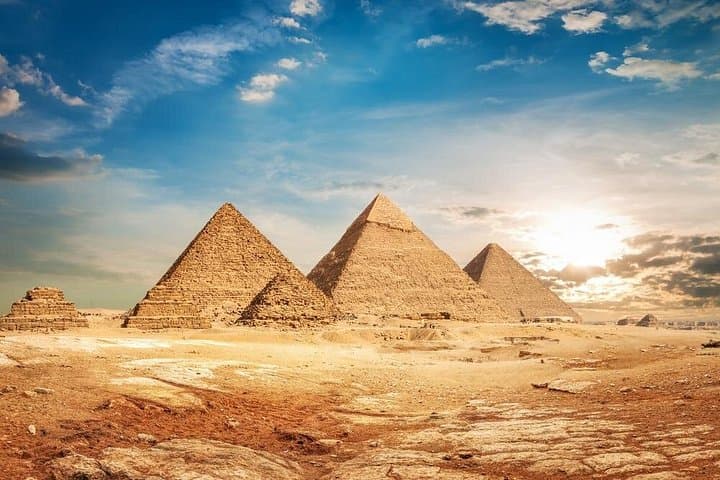
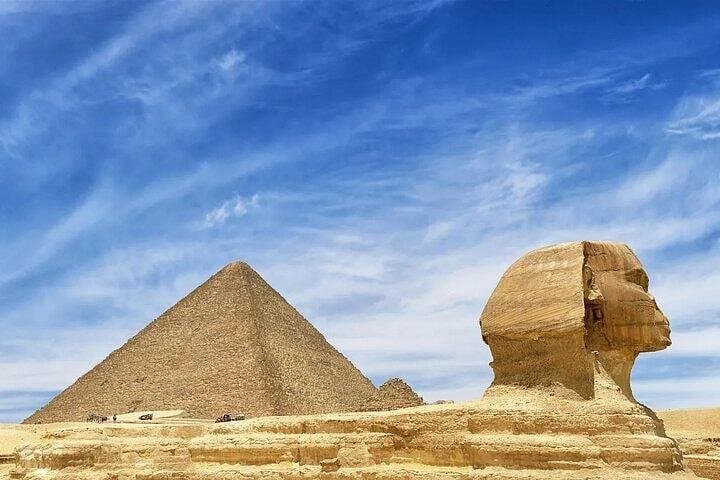
The three main pyramids — Khufu, Khafre and Menkaure — sit on bedrock of Eocene limestone, their geometry a record of ancient surveying and labor. Nearby, the Sphinx keeps a silent watch, its face worn by millennia of wind and dust. These monuments anchor a history that spans the Old Kingdom and the royal ambitions of pharaohs, but the site also tells a geological story: the plateau’s limestone quarried to stack millions of blocks now grinds into dust beneath touring feet.
Local culture threads through the visit: camel handlers pacing the edges, street vendors offering cold drinks, and a long tradition of Egyptian storytelling about the monuments’ purpose and construction.
Practical guidance is straightforward. Expect three hours on a private, air‑conditioned circuit with on-site walking over uneven, sandy surfaces; comfortable shoes and sun protection are essential. Photography is easy outside but limited inside some galleries; bring water and plan for midday heat if visiting in summer. Respect signage around fragile areas, and keep small change ready for tipping or quick purchases.
This is a compact, powerful visit — equal parts archaeology, landscape, and lived urban edge — suitable for first-time visitors and those returning to take the measure of one of humanity’s oldest ambitions.
Yes — the Giza Plateau requires a site entry ticket; your private tour may include entrance fees or advise how to purchase them on arrival.
Access inside the Great Pyramid is limited and subject to separate tickets and availability; confirm with the tour operator in advance.
Accessibility is limited: many paths are uneven and there are steps; contact the operator to arrange special assistance or vehicle access points.
Photography is allowed across the plateau; flash and tripods may be restricted in interior spaces and for ticketed chambers.
Around the world tours operates guided outdoor trips and adventures with an emphasis on safety, stewardship, and memorable experiences.

Sand and stone meet in a sun-drenched tableau as you step onto the Giza Plateau — the desert breeze pushes against your hat while the Great Pyramid rises, patient and immense, daring you to circle its base.
Sand and stone meet in a sun-drenched tableau as you step onto the Giza Plateau — the desert breeze pushes against your hat while the Great Pyramid rises, patient and immense, daring you to circle its base.
The three main pyramids — Khufu, Khafre and Menkaure — sit on bedrock of Eocene limestone, their geometry a record of ancient surveying and labor. Nearby, the Sphinx keeps a silent watch, its face worn by millennia of wind and dust. These monuments anchor a history that spans the Old Kingdom and the royal ambitions of pharaohs, but the site also tells a geological story: the plateau’s limestone quarried to stack millions of blocks now grinds into dust beneath touring feet.
Local culture threads through the visit: camel handlers pacing the edges, street vendors offering cold drinks, and a long tradition of Egyptian storytelling about the monuments’ purpose and construction.
Practical guidance is straightforward. Expect three hours on a private, air‑conditioned circuit with on-site walking over uneven, sandy surfaces; comfortable shoes and sun protection are essential. Photography is easy outside but limited inside some galleries; bring water and plan for midday heat if visiting in summer. Respect signage around fragile areas, and keep small change ready for tipping or quick purchases.
This is a compact, powerful visit — equal parts archaeology, landscape, and lived urban edge — suitable for first-time visitors and those returning to take the measure of one of humanity’s oldest ambitions.