THE ADVENTURE COLLECTIVE® · Independent discovery and booking for outdoor travel

Spend a full day with an Egyptologist exploring the Giza Plateau and Saqqara’s Step Pyramid. This private tour mixes close-up archaeology, desert geology, and practical guidance for navigating heat, crowds, and antiquities in one concentrated day.
Spend a full day with an Egyptologist exploring the Giza Plateau and Saqqara’s Step Pyramid. This private tour mixes close-up archaeology, desert geology, and practical guidance for navigating heat, crowds, and antiquities in one concentrated day.
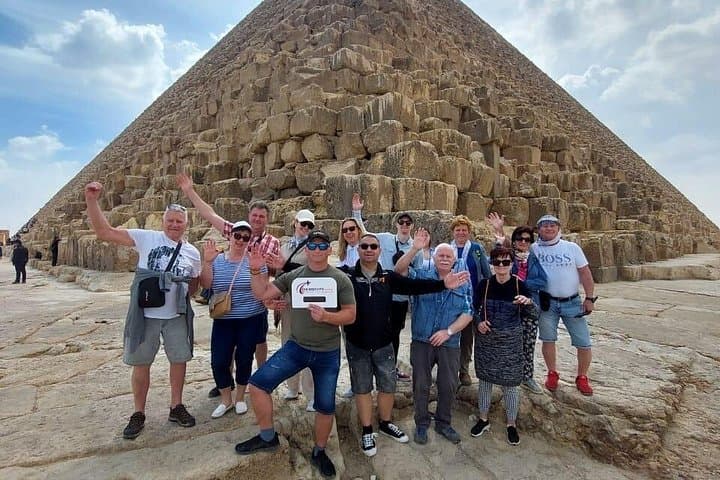
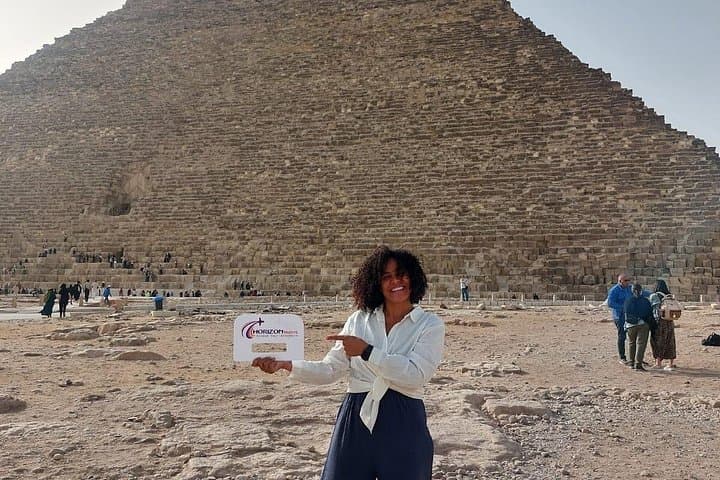
You step out of an air‑conditioned vehicle into sun-warmed stone and the low scramble of vendors; dune-scented wind pushes across the plateau as the Great Pyramid rises ahead, geometric and stubborn against the sky.
Verified experiences and guided adventures in the surrounding area.
Operated by HorizonTravel · Giza, Giza Governorate
You step out of an air‑conditioned vehicle into sun-warmed stone and the low scramble of vendors; dune-scented wind pushes across the plateau as the Great Pyramid rises ahead, geometric and stubborn against the sky.
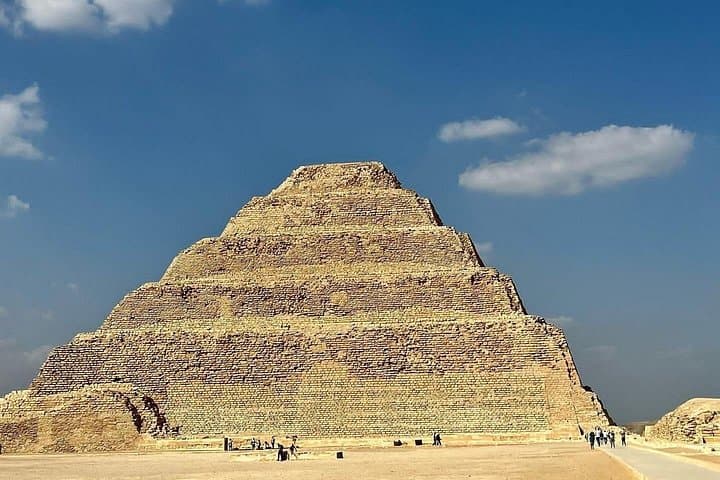
The Giza Plateau and nearby Saqqara trace the arc of early Egyptian statecraft: Khufu’s fourth‑dynasty engineering at Giza—blocks of local limestone laid with near-astronomical precision—and Djoser’s Step Pyramid at Saqqara, the first large-scale stone structure that marks the move from mudbrick to masonry. Geology is plain here: Tura limestone and Giza limestone beds shaped the monuments and continue to flake under wind and sun; the plateau’s hardness made quarrying both possible and visible.
Culturally, these sites are living places—pilgrimage, film crews, and daily prayers mingle with the weight of hieroglyphs carved into burial chapels and tombs. A private Egyptologist guide translates the iconography, points out alignments to cardinal points, and explains how tomb reliefs advertised status and afterlife beliefs.
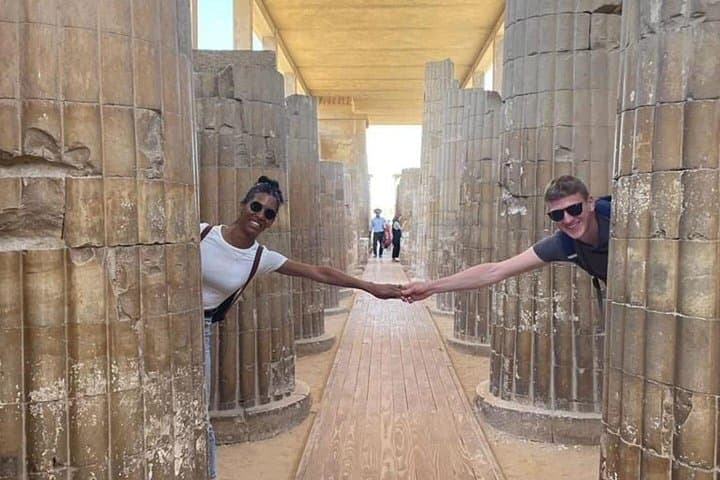
Practically: this is a long, mostly flat day with short stretches of uneven sand, stone steps, and open exposure. Expect several hours of walking between viewpoints, close-up encounters with the Sphinx, and a guided exploration of Saqqara’s courtyards and mastabas.
Bring sun protection, steady shoes, and small bills for entrances or tips. Start early to avoid the heat and pack patience—crowds and local vendors are part of the scene. With a private guide and transport, you’ll cover major monuments in a single, concentrated day that balances spectacle with archaeological detail.
No; most basic tour itineraries exclude national site entrance fees—confirm with the operator and carry cash or card as advised.
Interior access to the Great Pyramid is often limited and may require a separate ticket; the Sphinx interior is not open—your guide can clarify current regulations.
Yes; the tour includes private air‑conditioned transportation and pickup details are arranged at booking.
The tour is rated easy and family-friendly; infants must sit on an adult’s lap for transport and expect long stretches of walking and heat exposure.
HorizonTravel operates guided outdoor trips and adventures with an emphasis on safety, stewardship, and memorable experiences.
You step out of an air‑conditioned vehicle into sun-warmed stone and the low scramble of vendors; dune-scented wind pushes across the plateau as the Great Pyramid rises ahead, geometric and stubborn against the sky.
You step out of an air‑conditioned vehicle into sun-warmed stone and the low scramble of vendors; dune-scented wind pushes across the plateau as the Great Pyramid rises ahead, geometric and stubborn against the sky.
The Giza Plateau and nearby Saqqara trace the arc of early Egyptian statecraft: Khufu’s fourth‑dynasty engineering at Giza—blocks of local limestone laid with near-astronomical precision—and Djoser’s Step Pyramid at Saqqara, the first large-scale stone structure that marks the move from mudbrick to masonry. Geology is plain here: Tura limestone and Giza limestone beds shaped the monuments and continue to flake under wind and sun; the plateau’s hardness made quarrying both possible and visible.
Culturally, these sites are living places—pilgrimage, film crews, and daily prayers mingle with the weight of hieroglyphs carved into burial chapels and tombs. A private Egyptologist guide translates the iconography, points out alignments to cardinal points, and explains how tomb reliefs advertised status and afterlife beliefs.
Practically: this is a long, mostly flat day with short stretches of uneven sand, stone steps, and open exposure. Expect several hours of walking between viewpoints, close-up encounters with the Sphinx, and a guided exploration of Saqqara’s courtyards and mastabas.
Bring sun protection, steady shoes, and small bills for entrances or tips. Start early to avoid the heat and pack patience—crowds and local vendors are part of the scene. With a private guide and transport, you’ll cover major monuments in a single, concentrated day that balances spectacle with archaeological detail.