THE ADVENTURE COLLECTIVE® · Independent discovery and booking for outdoor travel

Explore Segovia’s Roman aqueduct and the fountains of La Granja on a private day tour from Madrid. This guided 9-hour trip pairs monumental history with hands-on cultural insights — perfect for travelers who want context as they roam.
Explore Segovia’s Roman aqueduct and the fountains of La Granja on a private day tour from Madrid. This guided 9-hour trip pairs monumental history with hands-on cultural insights — perfect for travelers who want context as they roam.
You step into the cool shade of a plane-tree avenue as the minivan eases into the small square outside La Granja—fountains hiss, stone balustrades stand like older, quieter sentries, and the air carries a faint scent of roast meat from Segovia’s old town.
Verified experiences and guided adventures in the surrounding area.
Operated by Amigo Tours Spain · Segovia, Castile and León
You step into the cool shade of a plane-tree avenue as the minivan eases into the small square outside La Granja—fountains hiss, stone balustrades stand like older, quieter sentries, and the air carries a faint scent of roast meat from Segovia’s old town.
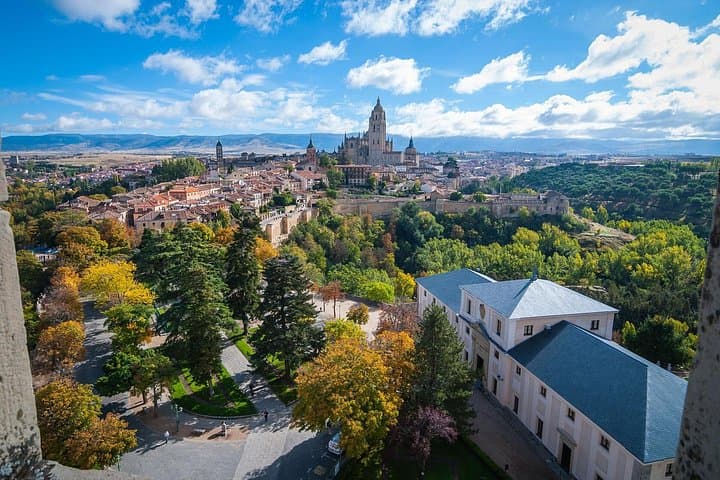
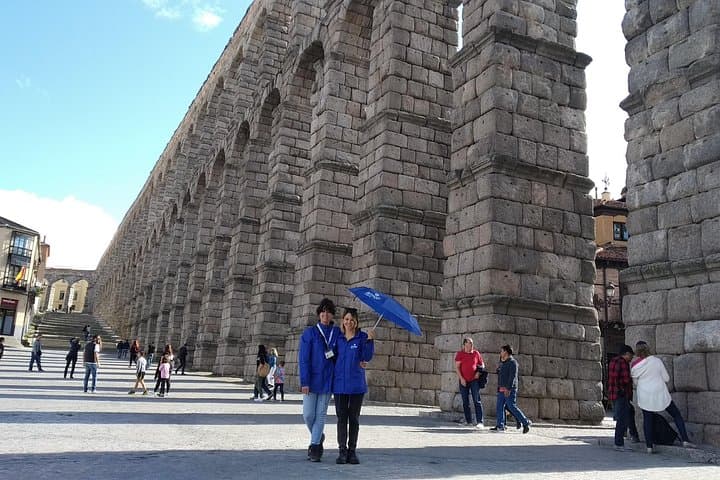
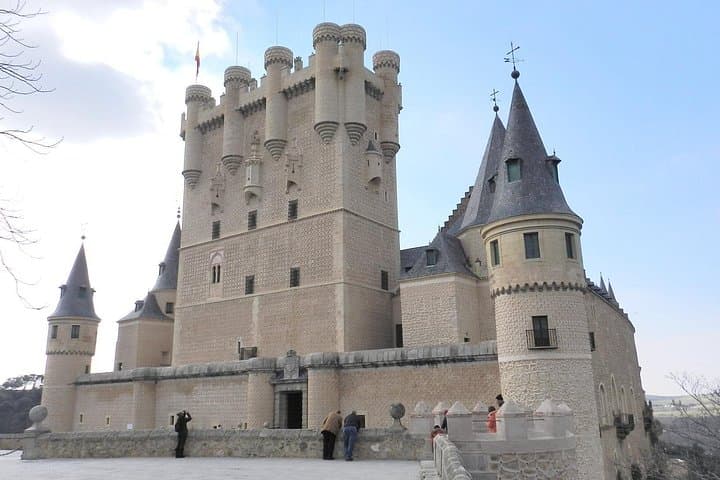
The tour threads two distinct chapters of Castile and León together: La Granja de San Ildefonso, Felipe V’s 18th-century royal retreat inspired by Versailles, and Segovia, whose vaulted Roman aqueduct has held the skyline for nearly two millennia. The granite streets of Segovia climb toward the Alcázar, a fortress-turned-palace that reads like a medieval storybook against the skyline. La Granja’s formal French-baroque gardens and gravity-driven fountains reveal engineering and court culture—water here was power and pageantry.
Geologically, the region sits on old metamorphic and granite bedrock; the hard stone explains the aqueduct’s longevity and the city’s compact street network. Culturally, Segovia is as much about ritual food—cochinillo asado and local wines—as it is about monuments: markets, artisanal bakeries, and small plazas where everyday life happens between tourist peaks.
Practically: expect 9 hours with several periods of walking on uneven cobbles, short stair climbs, and garden paths. Entrance to some sites is optional; opt in for La Granja’s palace if you want interior period rooms and fountain mechanics. Bring sturdy shoes, sun protection, a refillable bottle, and a light layer for breezy high-plateau mornings. Start early to avoid midday crowds in Segovia and leave space for a leisurely lunch—this route rewards slow exploration as much as guided context.
Yes—hotel pickup and drop-off in Madrid are included; confirm your pickup point when booking.
Admission is optional for La Granja’s palace and not automatically included; specify if you want tickets arranged.
No—this itinerary involves cobbled streets and steps and is not wheelchair accessible.
Private format allows lunch choices and stops to accommodate dietary restrictions—notify the operator in advance.
Amigo Tours Spain operates guided outdoor trips and adventures with an emphasis on safety, stewardship, and memorable experiences.

You step into the cool shade of a plane-tree avenue as the minivan eases into the small square outside La Granja—fountains hiss, stone balustrades stand like older, quieter sentries, and the air carries a faint scent of roast meat from Segovia’s old town.
You step into the cool shade of a plane-tree avenue as the minivan eases into the small square outside La Granja—fountains hiss, stone balustrades stand like older, quieter sentries, and the air carries a faint scent of roast meat from Segovia’s old town.
The tour threads two distinct chapters of Castile and León together: La Granja de San Ildefonso, Felipe V’s 18th-century royal retreat inspired by Versailles, and Segovia, whose vaulted Roman aqueduct has held the skyline for nearly two millennia. The granite streets of Segovia climb toward the Alcázar, a fortress-turned-palace that reads like a medieval storybook against the skyline. La Granja’s formal French-baroque gardens and gravity-driven fountains reveal engineering and court culture—water here was power and pageantry.
Geologically, the region sits on old metamorphic and granite bedrock; the hard stone explains the aqueduct’s longevity and the city’s compact street network. Culturally, Segovia is as much about ritual food—cochinillo asado and local wines—as it is about monuments: markets, artisanal bakeries, and small plazas where everyday life happens between tourist peaks.
Practically: expect 9 hours with several periods of walking on uneven cobbles, short stair climbs, and garden paths. Entrance to some sites is optional; opt in for La Granja’s palace if you want interior period rooms and fountain mechanics. Bring sturdy shoes, sun protection, a refillable bottle, and a light layer for breezy high-plateau mornings. Start early to avoid midday crowds in Segovia and leave space for a leisurely lunch—this route rewards slow exploration as much as guided context.