THE ADVENTURE COLLECTIVE® · Independent discovery and booking for outdoor travel

Fly from Cairo to Aswan and drive to Abu Simbel on a private full-day tour to stand beneath Ramses II’s colossal façades. This compact, carefully curated visit combines UNESCO-era engineering history with close-up views of two rock-cut temples on Lake Nasser’s shore.
Fly from Cairo to Aswan and drive to Abu Simbel on a private full-day tour to stand beneath Ramses II’s colossal façades. This compact, carefully curated visit combines UNESCO-era engineering history with close-up views of two rock-cut temples on Lake Nasser’s shore.
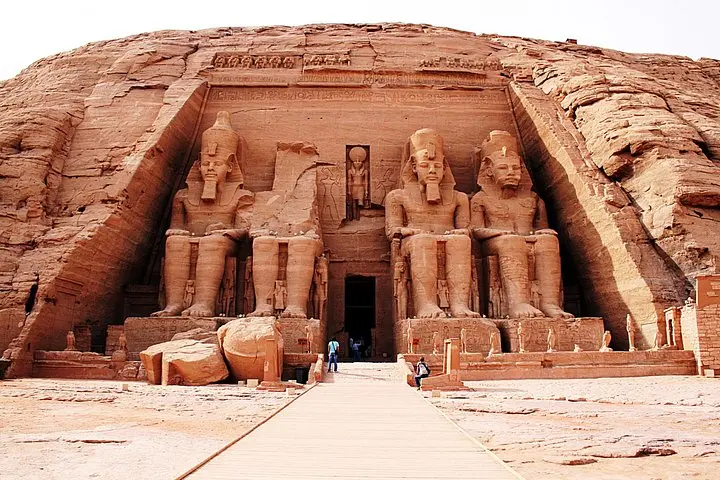
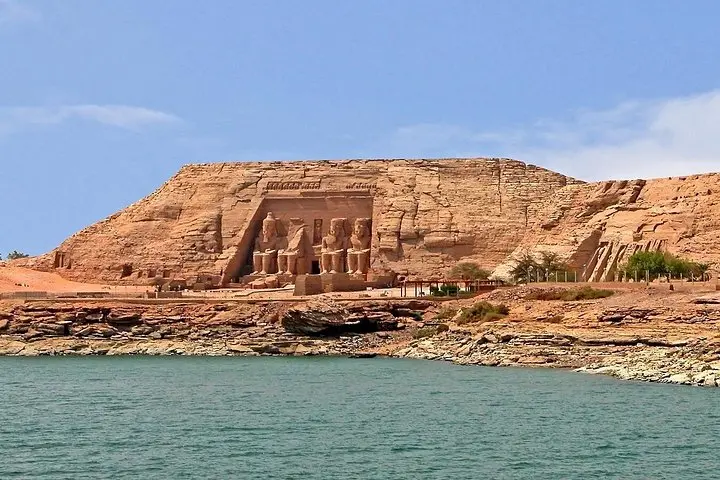
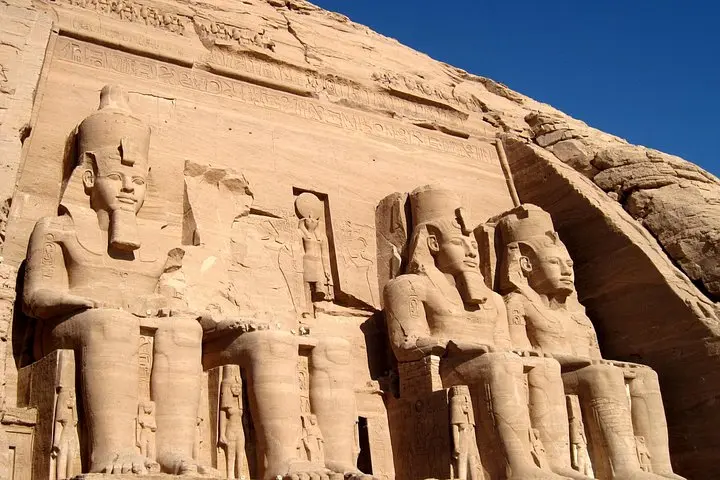
Morning light slices across Lake Nasser and the colossal faces of Ramses II glare back, eleven meters tall and uncompromising. On a private day tour from Cairo, travelers step from a short flight into Aswan’s warm air, then drive deeper south where the desert cliffs give way to two rock-cut temples that seem to challenge the horizon.
Verified experiences and guided adventures in the surrounding area.
Operated by Magic Life Tours · Abu Simbel, Aswan Governorate
Morning light slices across Lake Nasser and the colossal faces of Ramses II glare back, eleven meters tall and uncompromising. On a private day tour from Cairo, travelers step from a short flight into Aswan’s warm air, then drive deeper south where the desert cliffs give way to two rock-cut temples that seem to challenge the horizon.
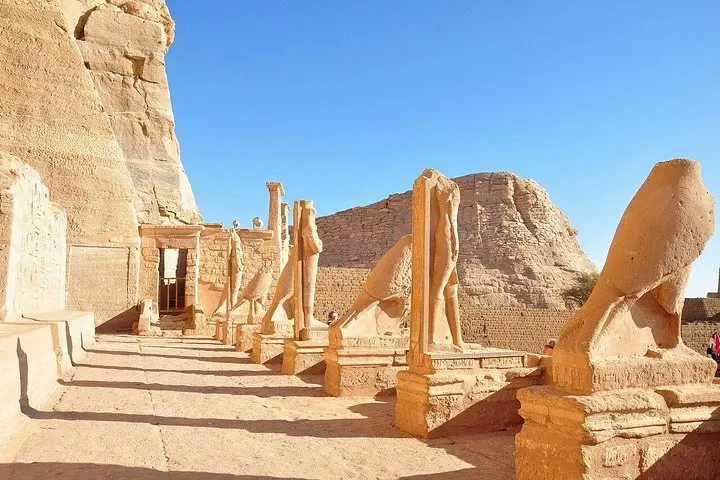
Carved directly into a sandstone bluff on the lake’s western bank, the Great Temple of Ramses II and the smaller Temple of Nefertari date to the 13th century BCE and celebrate royal power and devotion. In the 1960s UNESCO and Egyptian engineers moved both temples, stone by numbered stone, to escape flooding after the High Dam created Lake Nasser — a rare example of modern international archaeological rescue.
Culturally, the site reads as both monument and message: Ramses’s reliefs commemorate the Kadesh battle and royal ritual, while Nefertari’s intimate reliefs underline her elevated status. Geologically, the warm-hued sandstone that allowed precise carving also weathers quickly; stone surfaces bear the slow work of wind and sun.
Practical notes: expect an early pickup in Cairo, a domestic flight to Aswan, then a roughly 3–4 hour round drive each way from Aswan. The on-site visit is compact but exposed — bring sun protection, water, and steady shoes for steps and uneven thresholds. Tours typically include entrance fees, an Egyptologist guide, bottled water, and a late lunch. Time your visit for morning light on the façade and allow extra minutes for security and photo stops. The trip balances history, engineering, and raw desert presence — direct, manageable, and unforgettable.
The full-day itinerary runs about 12 hours including domestic flights, transfers, and the round-trip drive between Aswan and Abu Simbel.
This private tour typically includes domestic flights (Cairo–Aswan–Cairo), entrance fees, bottled water, an Egyptologist guide, and a late lunch as listed in the inclusions.
The tour is rated easy overall, but the temples have steps and uneven flooring; some transfers and vehicle options are wheelchair accessible—confirm specific needs when booking.
Yes; standard visits include both the Great Temple of Ramses II and the nearby Temple of Nefertari, with time to inspect main reliefs and inner chambers.
Magic Life Tours operates guided outdoor trips and adventures with an emphasis on safety, stewardship, and memorable experiences.
Morning light slices across Lake Nasser and the colossal faces of Ramses II glare back, eleven meters tall and uncompromising. On a private day tour from Cairo, travelers step from a short flight into Aswan’s warm air, then drive deeper south where the desert cliffs give way to two rock-cut temples that seem to challenge the horizon.
Morning light slices across Lake Nasser and the colossal faces of Ramses II glare back, eleven meters tall and uncompromising. On a private day tour from Cairo, travelers step from a short flight into Aswan’s warm air, then drive deeper south where the desert cliffs give way to two rock-cut temples that seem to challenge the horizon.
Carved directly into a sandstone bluff on the lake’s western bank, the Great Temple of Ramses II and the smaller Temple of Nefertari date to the 13th century BCE and celebrate royal power and devotion. In the 1960s UNESCO and Egyptian engineers moved both temples, stone by numbered stone, to escape flooding after the High Dam created Lake Nasser — a rare example of modern international archaeological rescue.
Culturally, the site reads as both monument and message: Ramses’s reliefs commemorate the Kadesh battle and royal ritual, while Nefertari’s intimate reliefs underline her elevated status. Geologically, the warm-hued sandstone that allowed precise carving also weathers quickly; stone surfaces bear the slow work of wind and sun.
Practical notes: expect an early pickup in Cairo, a domestic flight to Aswan, then a roughly 3–4 hour round drive each way from Aswan. The on-site visit is compact but exposed — bring sun protection, water, and steady shoes for steps and uneven thresholds. Tours typically include entrance fees, an Egyptologist guide, bottled water, and a late lunch. Time your visit for morning light on the façade and allow extra minutes for security and photo stops. The trip balances history, engineering, and raw desert presence — direct, manageable, and unforgettable.