THE ADVENTURE COLLECTIVE® · Independent discovery and booking for outdoor travel

Leave Luxor before dawn and trace the Nile to Aswan on a full-day private tour that links Edfu’s Temple of Horus, Kom Ombo’s double temple, the Aswan High Dam and Philae island. Expect long travel, short walks and unforgettable stone reliefs.
Leave Luxor before dawn and trace the Nile to Aswan on a full-day private tour that links Edfu’s Temple of Horus, Kom Ombo’s double temple, the Aswan High Dam and Philae island. Expect long travel, short walks and unforgettable stone reliefs.
The bus eases out of Luxor before dawn, the Nile a black ribbon beside the road and date palms cutting silhouettes against a copper sky. Over the course of a long day you'll move through layers of Egyptian history: Ptolemaic pylons at Edfu, the twin sanctuaries of Kom Ombo, the industrial scale of the Aswan High Dam, and the island-temple of Philae where stone reliefs still hold light like a memory.
Verified experiences and guided adventures in the surrounding area.
Operated by Camel Ride at Giza Pyramids · Aswan, Aswan Governorate
The bus eases out of Luxor before dawn, the Nile a black ribbon beside the road and date palms cutting silhouettes against a copper sky. Over the course of a long day you'll move through layers of Egyptian history: Ptolemaic pylons at Edfu, the twin sanctuaries of Kom Ombo, the industrial scale of the Aswan High Dam, and the island-temple of Philae where stone reliefs still hold light like a memory.
Edfu’s Temple of Horus, built over nearly two centuries, stands in remarkably preserved stone — expect high relief carvings, broad causeways and uneven flagstones. Kom Ombo’s “double” plan reflects Greco-Roman religious fusion and sits on the Nile’s edge; the Aswan High Dam, completed in the 1960s, is modern engineering that reshaped the river’s flow and the region’s ecology. Philae was relocated to its current island to save it from inundation and still carries Coptic and ancient Egyptian layers in its chapels and colonnades.
Practicalities: the route covers roughly 220–240 km one-way and the full tour is about 12 hours with multiple short walks, temple steps and a short motorboat transfer at Philae. Surfaces are mostly flat paved roads and stone temple floors; sandals are common but closed-toe shoes are safer on steps. Bring sun protection, a refillable water bottle and local cash for small vendors and tips.
Timing matters: start early to avoid midday heat, plan for photography at low-angle light, and budget energy for several stair climbs. The day trades strenuous hiking for cultural mileage — a long, rewarding stretch through ancient stones and modern Nile life.
Yes — this tour’s inclusions list entrance fees to the mentioned sites as part of the package.
The route covers about 220–240 km; expect roughly 3–4 hours one-way depending on stops and traffic, contributing to a roughly 12-hour day.
Access to Philae requires a short motorboat transfer and there are steps at the island temples; travelers with severe mobility restrictions should consult the operator beforehand.
Yes — the itinerary includes lunch at a local restaurant as noted in the tour inclusions.
Camel Ride at Giza Pyramids operates guided outdoor trips and adventures with an emphasis on safety, stewardship, and memorable experiences.

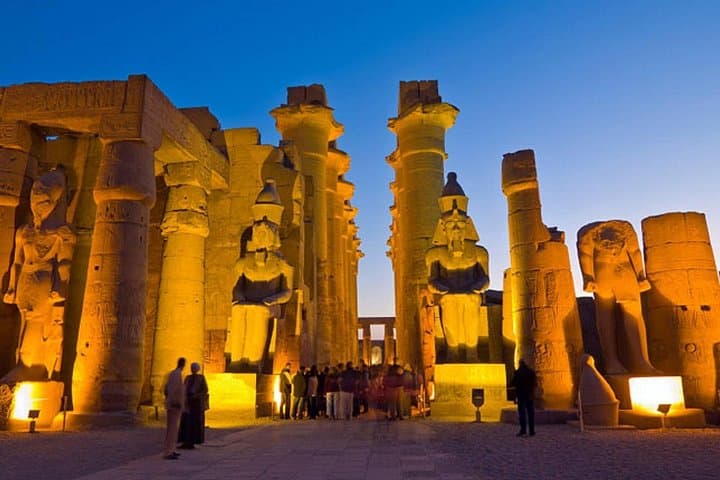


The bus eases out of Luxor before dawn, the Nile a black ribbon beside the road and date palms cutting silhouettes against a copper sky. Over the course of a long day you'll move through layers of Egyptian history: Ptolemaic pylons at Edfu, the twin sanctuaries of Kom Ombo, the industrial scale of the Aswan High Dam, and the island-temple of Philae where stone reliefs still hold light like a memory.
The bus eases out of Luxor before dawn, the Nile a black ribbon beside the road and date palms cutting silhouettes against a copper sky. Over the course of a long day you'll move through layers of Egyptian history: Ptolemaic pylons at Edfu, the twin sanctuaries of Kom Ombo, the industrial scale of the Aswan High Dam, and the island-temple of Philae where stone reliefs still hold light like a memory.
Edfu’s Temple of Horus, built over nearly two centuries, stands in remarkably preserved stone — expect high relief carvings, broad causeways and uneven flagstones. Kom Ombo’s “double” plan reflects Greco-Roman religious fusion and sits on the Nile’s edge; the Aswan High Dam, completed in the 1960s, is modern engineering that reshaped the river’s flow and the region’s ecology. Philae was relocated to its current island to save it from inundation and still carries Coptic and ancient Egyptian layers in its chapels and colonnades.
Practicalities: the route covers roughly 220–240 km one-way and the full tour is about 12 hours with multiple short walks, temple steps and a short motorboat transfer at Philae. Surfaces are mostly flat paved roads and stone temple floors; sandals are common but closed-toe shoes are safer on steps. Bring sun protection, a refillable water bottle and local cash for small vendors and tips.
Timing matters: start early to avoid midday heat, plan for photography at low-angle light, and budget energy for several stair climbs. The day trades strenuous hiking for cultural mileage — a long, rewarding stretch through ancient stones and modern Nile life.