THE ADVENTURE COLLECTIVE® · Independent discovery and booking for outdoor travel

Combine wartime history and slow-water charm on a private day trip from Ho Chi Minh City. Explore the Cu Chi Tunnels’ subterranean network, then cruise coconut-lined Mekong channels, sample local sweets, and meet village artisans.
Combine wartime history and slow-water charm on a private day trip from Ho Chi Minh City. Explore the Cu Chi Tunnels’ subterranean network, then cruise coconut-lined Mekong channels, sample local sweets, and meet village artisans.
Morning light slices between skyscrapers as a minivan eases out of District 1 and the city’s din recedes. Roads open into rubber plantations and rice paddies, and by mid-morning you’re crouched at a narrow tunnel entrance beneath a camouflage of earth — Cu Chi’s underground world that once sheltered fighters and supplies. The tunnels are tight, cool, and tactile; each squeeze gives a direct sense of wartime ingenuity.
Verified experiences and guided adventures in the surrounding area.
Operated by Asia Green Travel · Ho Chi Minh City, Ho Chi Minh
Morning light slices between skyscrapers as a minivan eases out of District 1 and the city’s din recedes. Roads open into rubber plantations and rice paddies, and by mid-morning you’re crouched at a narrow tunnel entrance beneath a camouflage of earth — Cu Chi’s underground world that once sheltered fighters and supplies. The tunnels are tight, cool, and tactile; each squeeze gives a direct sense of wartime ingenuity.
By afternoon the landscape softens: motorboat wake chases sun glint along the Mekong’s braided channels. Coconuts lean over narrow tributaries that seem to dare you to explore further. On Ben Tre’s islands you step off the boat into family-run workshops where coconut candy is flattened by rhythmic hands and honey tea steams under a thatched roof.
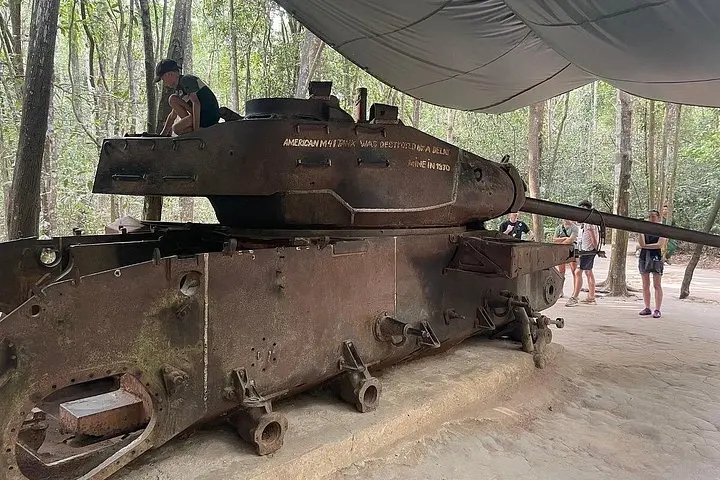
Historically, Cu Chi was part of strategic wartime networks; the tunnels combine wartime engineering and peasant resilience. Geologically the Mekong Delta is young alluvium — a low, fertile plain that floods seasonally and supports dense rice and fruit cultivation. Culturally, visits emphasize local hospitality: songs, home-cooked lunch, and markets that run on local rhythm rather than a clock.
Practical guide: expect an 11-hour day with hotel pickup in District 1, all entrance fees, and lunch included. Wear closed-toe shoes with good traction for muddy island paths and tunnel walkways; bring sun protection, insect repellent, and a small dry bag for camera gear. Toilets are available at main stops but can be basic on islands. If you’re claustrophobic, skip the narrowed tunnel sections and observe the displays aboveground. Aim to start early to avoid peak heat and river traffic — the trip is an accessible mix of history and gentle riverine adventure.
Pickup and drop-off are included for hotels in District 1, Ho Chi Minh City; confirm exact pickup time when you book.
Children can visit but some tunnel sections are cramped; parents should supervise and may choose aboveground exhibits instead.
Yes — the provided Vietnamese lunch can typically be adapted for vegetarians if requested in advance.
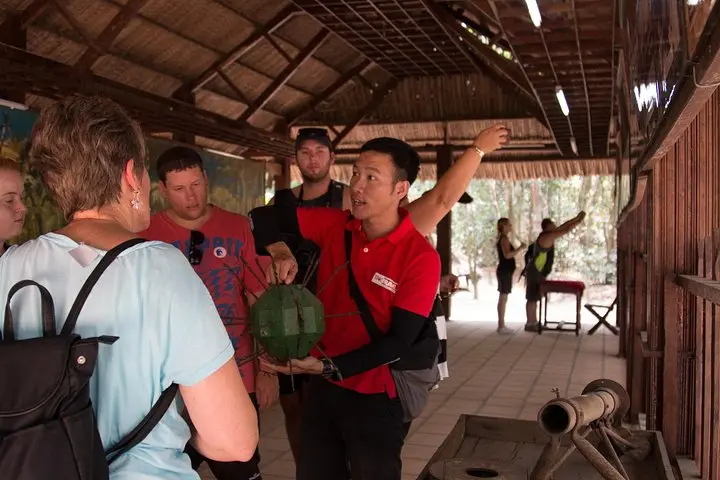
Absolutely — guides will show aboveground displays and traps; entry into narrow sections is optional.
Asia Green Travel operates guided outdoor trips and adventures with an emphasis on safety, stewardship, and memorable experiences.
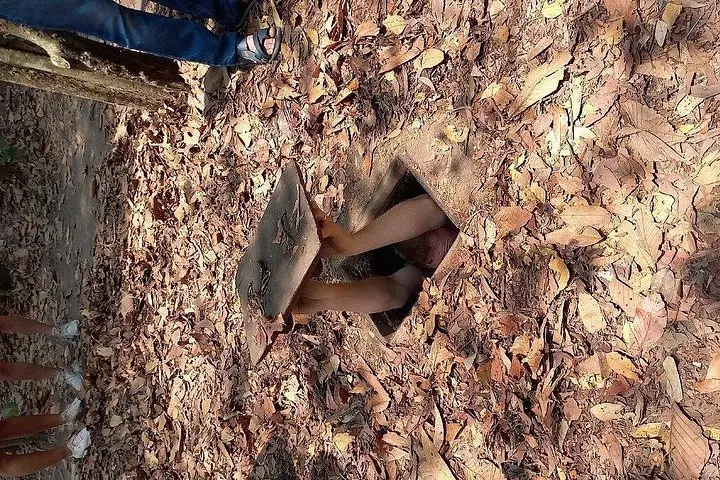
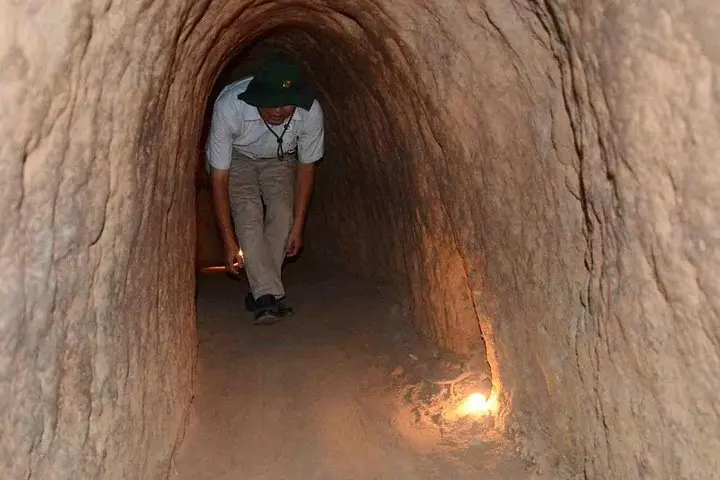
Morning light slices between skyscrapers as a minivan eases out of District 1 and the city’s din recedes. Roads open into rubber plantations and rice paddies, and by mid-morning you’re crouched at a narrow tunnel entrance beneath a camouflage of earth — Cu Chi’s underground world that once sheltered fighters and supplies. The tunnels are tight, cool, and tactile; each squeeze gives a direct sense of wartime ingenuity.
Morning light slices between skyscrapers as a minivan eases out of District 1 and the city’s din recedes. Roads open into rubber plantations and rice paddies, and by mid-morning you’re crouched at a narrow tunnel entrance beneath a camouflage of earth — Cu Chi’s underground world that once sheltered fighters and supplies. The tunnels are tight, cool, and tactile; each squeeze gives a direct sense of wartime ingenuity.
By afternoon the landscape softens: motorboat wake chases sun glint along the Mekong’s braided channels. Coconuts lean over narrow tributaries that seem to dare you to explore further. On Ben Tre’s islands you step off the boat into family-run workshops where coconut candy is flattened by rhythmic hands and honey tea steams under a thatched roof.
Historically, Cu Chi was part of strategic wartime networks; the tunnels combine wartime engineering and peasant resilience. Geologically the Mekong Delta is young alluvium — a low, fertile plain that floods seasonally and supports dense rice and fruit cultivation. Culturally, visits emphasize local hospitality: songs, home-cooked lunch, and markets that run on local rhythm rather than a clock.
Practical guide: expect an 11-hour day with hotel pickup in District 1, all entrance fees, and lunch included. Wear closed-toe shoes with good traction for muddy island paths and tunnel walkways; bring sun protection, insect repellent, and a small dry bag for camera gear. Toilets are available at main stops but can be basic on islands. If you’re claustrophobic, skip the narrowed tunnel sections and observe the displays aboveground. Aim to start early to avoid peak heat and river traffic — the trip is an accessible mix of history and gentle riverine adventure.