THE ADVENTURE COLLECTIVE® · Independent discovery and booking for outdoor travel

Take a private day trip from Athens to two of Greece’s most evocative archaeological sites: the Bronze Age stronghold of Mycenae and the perfectly proportioned theater of Epidaurus. Expect limestone ruins, dramatic hilltop views, and one of antiquity’s finest acoustical feats.
Take a private day trip from Athens to two of Greece’s most evocative archaeological sites: the Bronze Age stronghold of Mycenae and the perfectly proportioned theater of Epidaurus. Expect limestone ruins, dramatic hilltop views, and one of antiquity’s finest acoustical feats.
You roll out of Athens before the heat gathers, the private van threading past low olive groves and then pausing at the razor-straight cut of the Corinth Canal. The water dares you to bridge eras: modern engineering giving way to Bronze Age stone.
Verified experiences and guided adventures in the surrounding area.
Operated by Open Top Bus hellas M.E.P.E. · Mycenae, Argolis (Peloponnese)
You roll out of Athens before the heat gathers, the private van threading past low olive groves and then pausing at the razor-straight cut of the Corinth Canal. The water dares you to bridge eras: modern engineering giving way to Bronze Age stone.
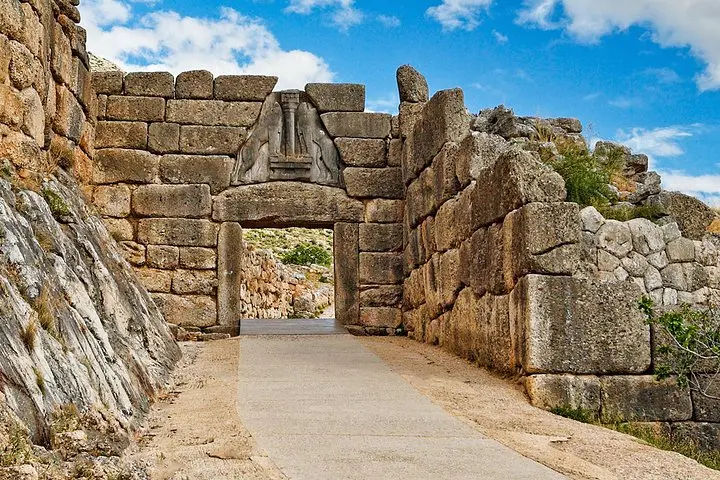
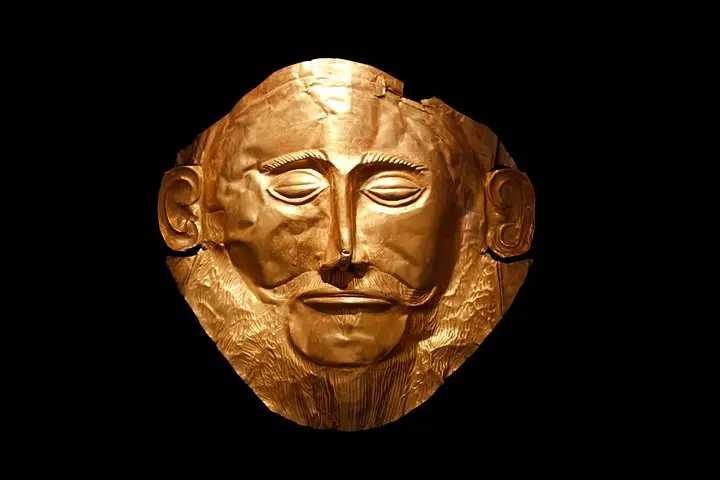
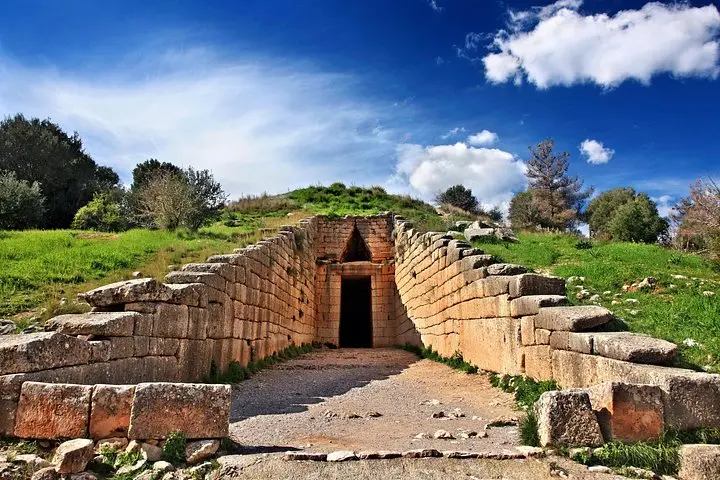
At Mycenae the hill rises like a fortress from limestone—Cyclopean walls of irregular boulders that read as the handwriting of a very old power. You move through the Lion Gate and stand where Homeric names—Agamemnon, Atreus—are more than stories; they are stratified layers in the earth. Nearby, the Grave Circle and the Acropolis terraces reveal funerary art and fortification remains that anchor the late Bronze Age (c. 1600–1100 BC) to later Greek memory.
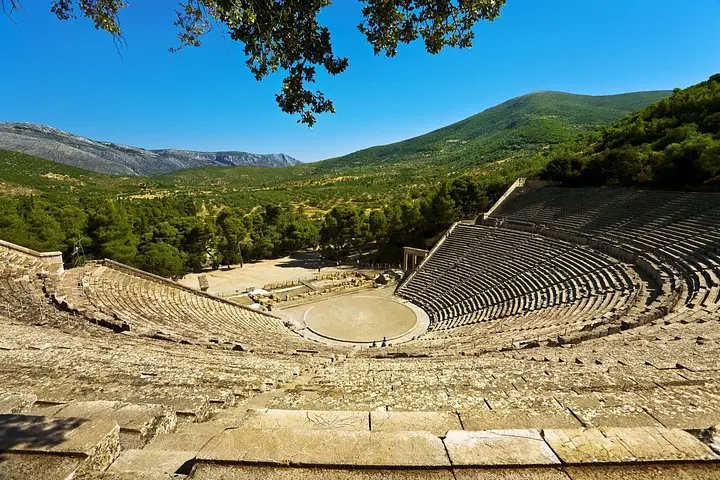
The drive to Epidaurus climbs gently into pine-scented hills; the theater sits cut into the slope, its limestone seats polished by millennia of wind and feet. The fourth-century BC theater is a study in geometry and acoustics—drop a coin at center and the hillside listens. It seats roughly 14,000 and still hosts performances during the Hellenic Festival.
History here is tactile—stone steps, sacrificial altars, and carved lintels—and the geology of the Peloponnese explains why these sites command their locations: solid limestone promontories gave defensive advantage and durable building material.
Practical side: this private eight-hour tour includes short photo stops at the Corinth Canal, about 90 minutes at Mycenae and an hour at Epidaurus. Expect uneven terrain, exposed sun at mid-day, and basic walking between ruins. Bring water, sturdy shoes, sun protection, and a camera; admission fees are typically not included, and the driver will drop you back in central Athens or Piraeus.
No—admissions to archaeological sites are typically not included; bring cash or card to purchase tickets at each site.
Mycenae is roughly a one-hour drive from Athens depending on traffic; Epidaurus is about 40–60 minutes from Mycenae by car.
The tour is marketed as suitable for all fitness levels, but Mycenae and Epidaurus have uneven surfaces and steps; mobility assistance may be limited at the sites.
Yes—there’s usually time to stop at a nearby village for snacks or a quick lunch; confirm preferences with the driver when booking.
Open Top Bus hellas M.E.P.E. operates guided outdoor trips and adventures with an emphasis on safety, stewardship, and memorable experiences.
You roll out of Athens before the heat gathers, the private van threading past low olive groves and then pausing at the razor-straight cut of the Corinth Canal. The water dares you to bridge eras: modern engineering giving way to Bronze Age stone.
You roll out of Athens before the heat gathers, the private van threading past low olive groves and then pausing at the razor-straight cut of the Corinth Canal. The water dares you to bridge eras: modern engineering giving way to Bronze Age stone.
At Mycenae the hill rises like a fortress from limestone—Cyclopean walls of irregular boulders that read as the handwriting of a very old power. You move through the Lion Gate and stand where Homeric names—Agamemnon, Atreus—are more than stories; they are stratified layers in the earth. Nearby, the Grave Circle and the Acropolis terraces reveal funerary art and fortification remains that anchor the late Bronze Age (c. 1600–1100 BC) to later Greek memory.
The drive to Epidaurus climbs gently into pine-scented hills; the theater sits cut into the slope, its limestone seats polished by millennia of wind and feet. The fourth-century BC theater is a study in geometry and acoustics—drop a coin at center and the hillside listens. It seats roughly 14,000 and still hosts performances during the Hellenic Festival.
History here is tactile—stone steps, sacrificial altars, and carved lintels—and the geology of the Peloponnese explains why these sites command their locations: solid limestone promontories gave defensive advantage and durable building material.
Practical side: this private eight-hour tour includes short photo stops at the Corinth Canal, about 90 minutes at Mycenae and an hour at Epidaurus. Expect uneven terrain, exposed sun at mid-day, and basic walking between ruins. Bring water, sturdy shoes, sun protection, and a camera; admission fees are typically not included, and the driver will drop you back in central Athens or Piraeus.