THE ADVENTURE COLLECTIVE® · Independent discovery and booking for outdoor travel

Leave Marrakech for an 11-hour private exploration of Casablanca’s Atlantic waterfront, Hassan II Mosque, and French-influenced boulevards. This bespoke day trip blends urban history with practical comfort and flexible timing.
Leave Marrakech for an 11-hour private exploration of Casablanca’s Atlantic waterfront, Hassan II Mosque, and French-influenced boulevards. This bespoke day trip blends urban history with practical comfort and flexible timing.
You leave Marrakech before dawn, the city’s ochre walls shrinking behind you as the road unfurls toward the Atlantic. Olive groves and roadside towns blur into a flat coastal plain; by mid-morning the air takes on a salt edge and the minarets of Casablanca appear against a wide blue horizon.
Verified experiences and guided adventures in the surrounding area.
Operated by Marrakech day Trip · Casablanca, Casablanca-Settat
You leave Marrakech before dawn, the city’s ochre walls shrinking behind you as the road unfurls toward the Atlantic. Olive groves and roadside towns blur into a flat coastal plain; by mid-morning the air takes on a salt edge and the minarets of Casablanca appear against a wide blue horizon.
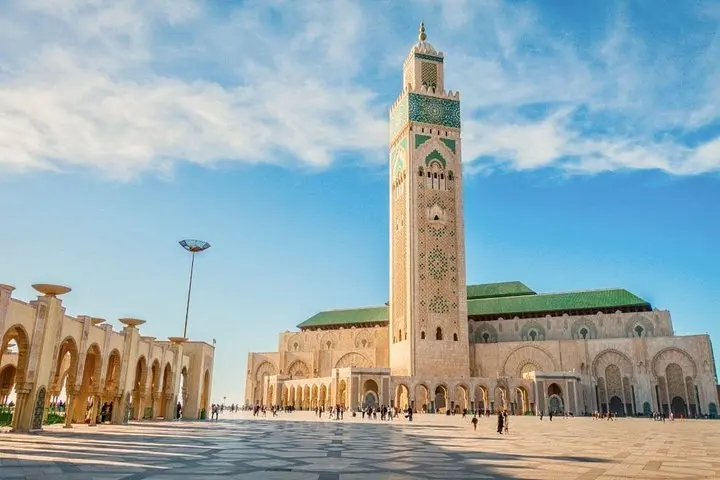
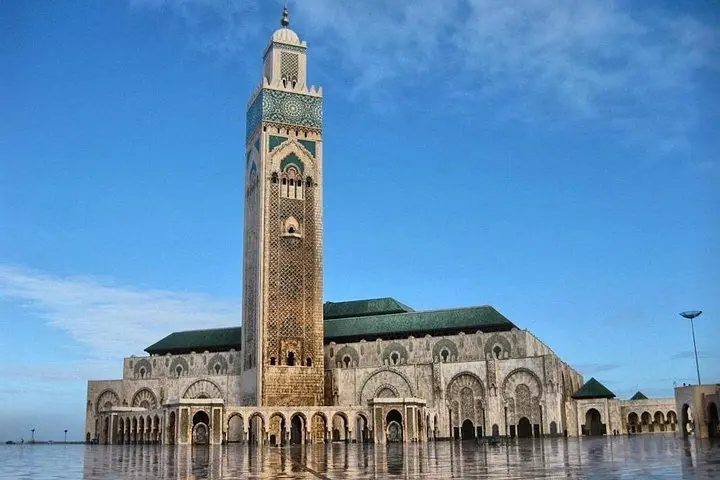
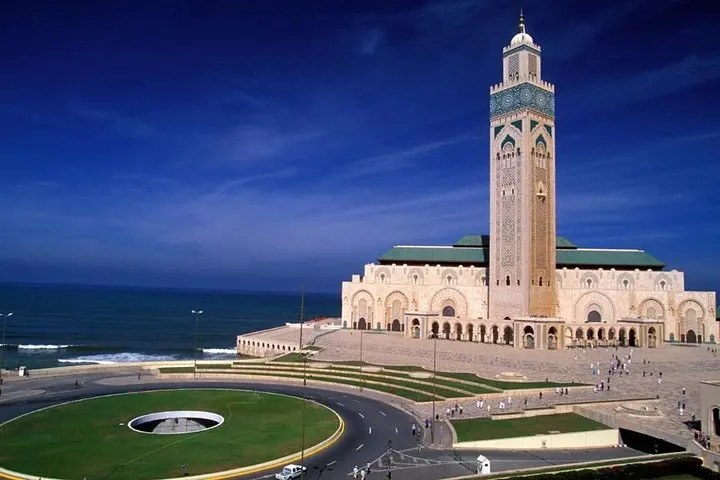
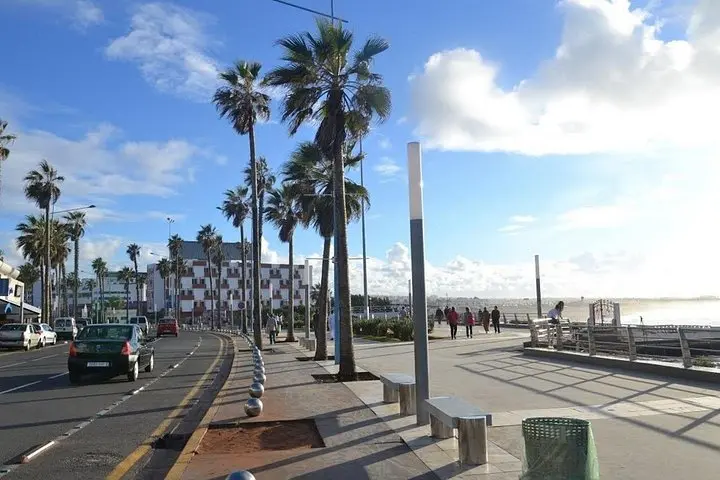
Casablanca is Morocco’s largest port and a 20th-century urban experiment — French Protectorate boulevards sit beside traditional markets. The city’s most visible landmark, the Hassan II Mosque, perches on the water with a 210-meter minaret and intricately carved wood and tile that reflect both Andalusian and Moroccan artisanship. The Corniche pushes out along the Atlantic with cafés, sculptural promenades and surf-buffed beaches, while the Habous Quarter folds in quieter souks and bakeries producing msemen and freshly baked bread.
Geologically, the coastline is young—Atlantic abrasion shaping sandy beaches and rocky headlands—while the hinterland is semi-arid plains. Culturally, Casablanca is contemporary Morocco: business, seafood, and a mix of Arab, Berber and French influences.
Practical guidance: the drive from Marrakech is roughly 240 km (about 2.5–3 hours each way); expect an 11-hour day when combined with stops. Dress conservatively for mosque visits (knees and shoulders covered); shoes are required to be removed in prayer areas. Carry Moroccan dirhams for small purchases, bring sunscreen and a refillable water bottle, and plan for traffic around city center exits. Private transport offers flexibility — ask your guide to prioritize the mosque, Corniche, and a quick market walk to get the most from the day.
The road distance is about 240 km; driving time is typically 2.5–3 hours each way depending on traffic.
Yes—non-Muslim visitors can join guided visits at set times; modest dress and shoe removal in prayer areas are required.
Lunch is typically not included; most private tours can arrange a restaurant stop or recommend seaside seafood cafés at your request.
Yes—this private excursion usually includes round-trip pickup and drop-off from Marrakech hotels; confirm the pickup point when booking.
Marrakech day Trip operates guided outdoor trips and adventures with an emphasis on safety, stewardship, and memorable experiences.
You leave Marrakech before dawn, the city’s ochre walls shrinking behind you as the road unfurls toward the Atlantic. Olive groves and roadside towns blur into a flat coastal plain; by mid-morning the air takes on a salt edge and the minarets of Casablanca appear against a wide blue horizon.
You leave Marrakech before dawn, the city’s ochre walls shrinking behind you as the road unfurls toward the Atlantic. Olive groves and roadside towns blur into a flat coastal plain; by mid-morning the air takes on a salt edge and the minarets of Casablanca appear against a wide blue horizon.
Casablanca is Morocco’s largest port and a 20th-century urban experiment — French Protectorate boulevards sit beside traditional markets. The city’s most visible landmark, the Hassan II Mosque, perches on the water with a 210-meter minaret and intricately carved wood and tile that reflect both Andalusian and Moroccan artisanship. The Corniche pushes out along the Atlantic with cafés, sculptural promenades and surf-buffed beaches, while the Habous Quarter folds in quieter souks and bakeries producing msemen and freshly baked bread.
Geologically, the coastline is young—Atlantic abrasion shaping sandy beaches and rocky headlands—while the hinterland is semi-arid plains. Culturally, Casablanca is contemporary Morocco: business, seafood, and a mix of Arab, Berber and French influences.
Practical guidance: the drive from Marrakech is roughly 240 km (about 2.5–3 hours each way); expect an 11-hour day when combined with stops. Dress conservatively for mosque visits (knees and shoulders covered); shoes are required to be removed in prayer areas. Carry Moroccan dirhams for small purchases, bring sunscreen and a refillable water bottle, and plan for traffic around city center exits. Private transport offers flexibility — ask your guide to prioritize the mosque, Corniche, and a quick market walk to get the most from the day.