THE ADVENTURE COLLECTIVE® · Independent discovery and booking for outdoor travel

Travel from Aswan to Abu Simbel in a private, air‑conditioned vehicle with a licensed Egyptologist and flexible time on site. Experience the relocated temples of Ramses II and Nefertari with fewer crowds and detailed historical context.
Travel from Aswan to Abu Simbel in a private, air‑conditioned vehicle with a licensed Egyptologist and flexible time on site. Experience the relocated temples of Ramses II and Nefertari with fewer crowds and detailed historical context.
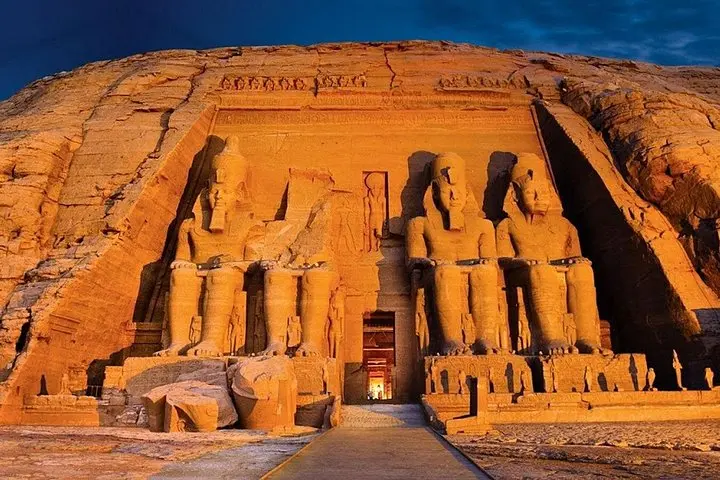
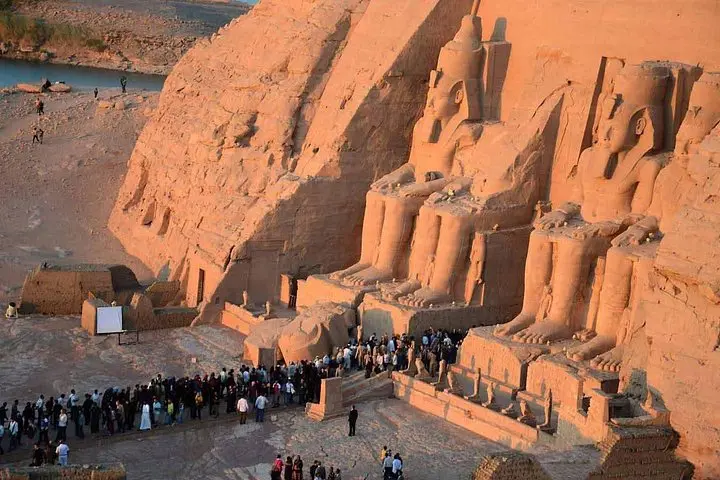
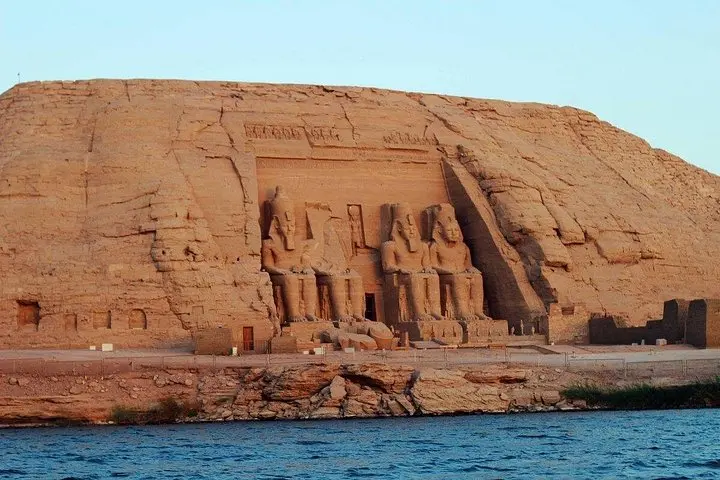
A pre-dawn pick-up from a Nile cruise pier or Aswan hotel sets the tone: headlights trace the desert’s low ridges while the air-conditioning hums and your Egyptologist guide begins a slow, human-scale narration of pharaohs and engineering feats. By mid-morning the cliffs of Abu Simbel appear, abrupt and monumental, four granite colossi of Ramses II staring across the sand as if daring the sun to outshine them.
Verified experiences and guided adventures in the surrounding area.
Operated by Saray El-Nile · Abu Simbel, Aswan Governorate
A pre-dawn pick-up from a Nile cruise pier or Aswan hotel sets the tone: headlights trace the desert’s low ridges while the air-conditioning hums and your Egyptologist guide begins a slow, human-scale narration of pharaohs and engineering feats. By mid-morning the cliffs of Abu Simbel appear, abrupt and monumental, four granite colossi of Ramses II staring across the sand as if daring the sun to outshine them.
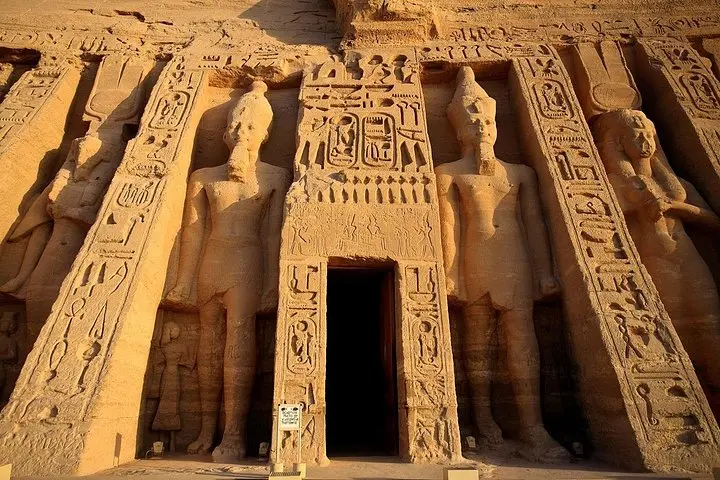
Carved in the 13th century BCE and dedicated to Amun, Ra-Horakhty and Ptah, the twin temples honor Ramses II and Queen Nefertari and record military campaigns in precise bas-relief. In the 1960s the rising waters of Lake Nasser threatened to drown them; an international UNESCO campaign disassembled and re-erected the sites on higher ground, a modern engineering chapter that now shares the stage with ancient craftsmanship.
Geologically the temples are cut into Nubian sandstone that holds sharp detail but reacts to humidity and salts, which is why access and behavior at the site are regulated. Local Nubian culture and vendors offer handmade goods by the visitor center; browsing supports communities that now rely on tourism.
Practically, expect a long but comfortable round trip—about 10 hours total with 4–5 hours on site—and alternating stretches of driving and walking on packed sand and paved approaches. Bring sun protection, water, and a charged camera battery; windows frame the desert as it slides by, and the light at early morning or late afternoon is when the stone reveals its finest lines. The private format gives time for questions, pauses for photos, and a measured pace that makes a day in the desert feel both manageable and memorable.
The drive is about 3 hours each way by private car, depending on traffic and stops; the itinerary typically totals around 10 hours.
Entrance is usually included by tour operators as part of the private tour—confirm at booking or on your voucher.
Yes; the temple complex requires walking on level and stair sections but is accessible for most ages; request specific mobility assistance when booking.
Photography is generally allowed in exterior areas and many interiors, but flash or tripods may be restricted—follow onsite signage and guide instructions.
Saray El-Nile operates guided outdoor trips and adventures with an emphasis on safety, stewardship, and memorable experiences.
A pre-dawn pick-up from a Nile cruise pier or Aswan hotel sets the tone: headlights trace the desert’s low ridges while the air-conditioning hums and your Egyptologist guide begins a slow, human-scale narration of pharaohs and engineering feats. By mid-morning the cliffs of Abu Simbel appear, abrupt and monumental, four granite colossi of Ramses II staring across the sand as if daring the sun to outshine them.
A pre-dawn pick-up from a Nile cruise pier or Aswan hotel sets the tone: headlights trace the desert’s low ridges while the air-conditioning hums and your Egyptologist guide begins a slow, human-scale narration of pharaohs and engineering feats. By mid-morning the cliffs of Abu Simbel appear, abrupt and monumental, four granite colossi of Ramses II staring across the sand as if daring the sun to outshine them.
Carved in the 13th century BCE and dedicated to Amun, Ra-Horakhty and Ptah, the twin temples honor Ramses II and Queen Nefertari and record military campaigns in precise bas-relief. In the 1960s the rising waters of Lake Nasser threatened to drown them; an international UNESCO campaign disassembled and re-erected the sites on higher ground, a modern engineering chapter that now shares the stage with ancient craftsmanship.
Geologically the temples are cut into Nubian sandstone that holds sharp detail but reacts to humidity and salts, which is why access and behavior at the site are regulated. Local Nubian culture and vendors offer handmade goods by the visitor center; browsing supports communities that now rely on tourism.
Practically, expect a long but comfortable round trip—about 10 hours total with 4–5 hours on site—and alternating stretches of driving and walking on packed sand and paved approaches. Bring sun protection, water, and a charged camera battery; windows frame the desert as it slides by, and the light at early morning or late afternoon is when the stone reveals its finest lines. The private format gives time for questions, pauses for photos, and a measured pace that makes a day in the desert feel both manageable and memorable.