THE ADVENTURE COLLECTIVE® · Independent discovery and booking for outdoor travel

Spend a full day where emerald alpine water meets a glittering underground world. This private tour from Munich combines a serene Königssee boat ride to St. Bartholomä with a hands-on descent into the historic Berchtesgaden salt mine.
Spend a full day where emerald alpine water meets a glittering underground world. This private tour from Munich combines a serene Königssee boat ride to St. Bartholomä with a hands-on descent into the historic Berchtesgaden salt mine.
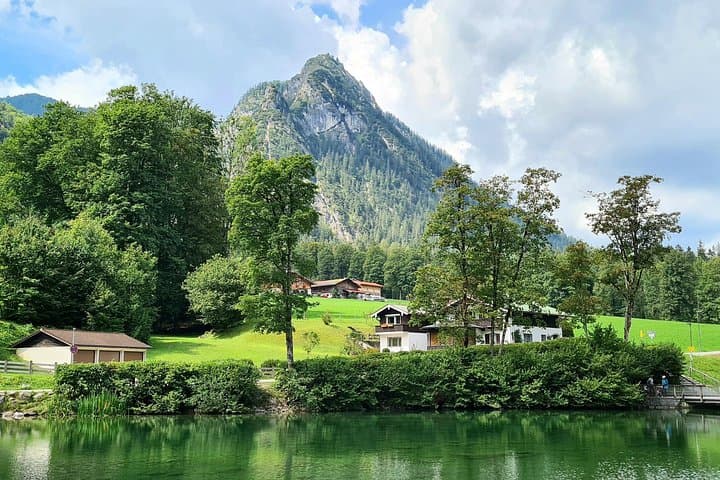
You step out of the van and the air changes — cooler, clean, the mountains pressing in like pages of a map folded into depth. The first sight is Königssee’s water: a narrow, polished sheet of green that seems to hold the halting light of the Alps. On the short walk from the dock the trees hush, and the wooden boats, guided by calm voices and practiced strokes, cut a precise line toward St. Bartholomä and the jagged silhouette beyond.
Verified experiences and guided adventures in the surrounding area.
Operated by FastTrack · Berchtesgaden, Bavaria
You step out of the van and the air changes — cooler, clean, the mountains pressing in like pages of a map folded into depth. The first sight is Königssee’s water: a narrow, polished sheet of green that seems to hold the halting light of the Alps. On the short walk from the dock the trees hush, and the wooden boats, guided by calm voices and practiced strokes, cut a precise line toward St. Bartholomä and the jagged silhouette beyond.
Königssee has long been read as a place of contrasts: a royal hunting ground for Bavarian courts, and part of the raw geology of the Northern Limestone Alps. Glacial action carved the steep walls that now throw sound back at you; historically, these same cliffs kept settlements low and conservative, giving rise to a culture shaped by lake fishing, salt, and mountain transport. The salt beneath Berchtesgaden, mined since medieval times, financed towns and fed an industry that once set the region’s rhythms — miners, trains, and the smell of brine are part myth, part industrial heritage.
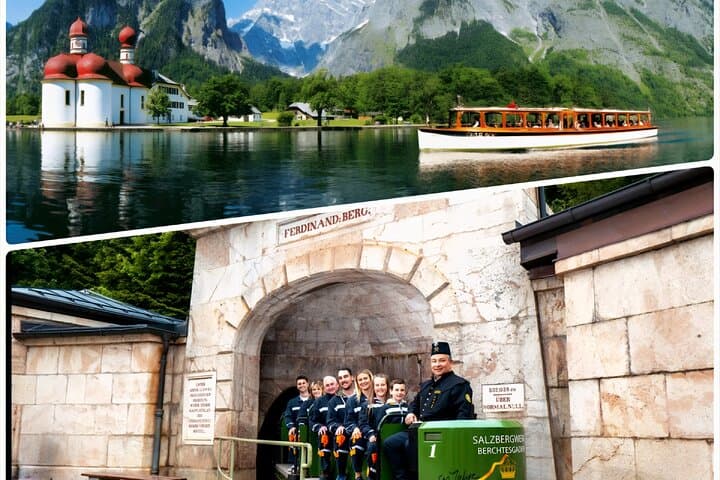
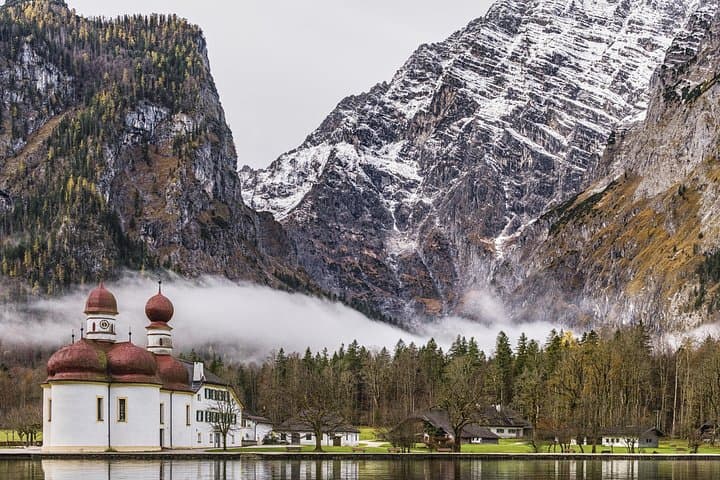
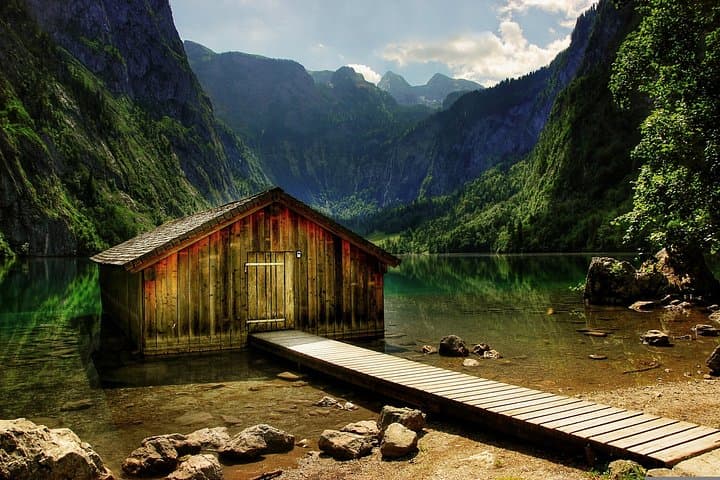
The day pairs two distinct experiences. On the lake, expect a gentle cruise: calm water reflections, the small red-domed church of St. Bartholomä, and a short hike at Salet to reach the placid Obersee and the viewpoint for Röthbachfall, Germany’s tallest waterfall. Trails here are short and mostly level, with modest elevation gain on the Salet approach — hikers should plan on a combined 1–2 miles of walking with uneven wooden boardwalks at Obersee.
Under the mountain, the salt mine offers a different tempo. Dressed in miners’ overalls, visitors ride a narrow-gauge train, descend wooden slides the miners once used, and float across an underground saline lake lit in soft colors. The descent is physically easy but can be damp and cool; the tour covers staircases and short tunnels, so stable footwear and a light layer matter.
Practical planning: the full private tour runs about 10–12 hours round trip from Munich, so leave space in your schedule for pickup and drive time. Bookings typically include boat and mine admission and private transport; confirm pickup time and ticket delivery ahead of travel. Bring a waterproof shell, comfortable walking shoes, and a reusable water bottle — water is provided, but you’ll want hands free for photography. Aim to arrive at the dock in the morning if you want mirror-like water and fewer boats.
For conservation-minded travelers: Königssee lies inside Berchtesgaden National Park, where motor rules are strict and trails are protected. Stay on marked paths, carry out waste, and avoid feeding wildlife — the landscape is fragile and the best views last when visitors leave them intact.
The transfer is roughly 2–2.5 hours each way depending on traffic; factor in total tour time of about 10–12 hours.
Yes — admission for the Königssee boat cruise and the Berchtesgaden salt mine are included in the tour price.
Yes; the mine’s train and slides are family-friendly, though younger children should be supervised on stairs and near water.
Space in the tour vehicle is limited; leave large luggage in Munich or arrange separate storage.
There’s a traditional Bavarian restaurant near the lake (the former royal hunting lodge) offering fish, stews, and pastries; mine visits may have minimal refreshments.
The lake cruise is typically smooth but narrow; sit near the center, face forward, and consider motion-sickness medication if sensitive.
FastTrack operates guided outdoor trips and adventures with an emphasis on safety, stewardship, and memorable experiences.
You step out of the van and the air changes — cooler, clean, the mountains pressing in like pages of a map folded into depth. The first sight is Königssee’s water: a narrow, polished sheet of green that seems to hold the halting light of the Alps. On the short walk from the dock the trees hush, and the wooden boats, guided by calm voices and practiced strokes, cut a precise line toward St. Bartholomä and the jagged silhouette beyond.
You step out of the van and the air changes — cooler, clean, the mountains pressing in like pages of a map folded into depth. The first sight is Königssee’s water: a narrow, polished sheet of green that seems to hold the halting light of the Alps. On the short walk from the dock the trees hush, and the wooden boats, guided by calm voices and practiced strokes, cut a precise line toward St. Bartholomä and the jagged silhouette beyond.
Königssee has long been read as a place of contrasts: a royal hunting ground for Bavarian courts, and part of the raw geology of the Northern Limestone Alps. Glacial action carved the steep walls that now throw sound back at you; historically, these same cliffs kept settlements low and conservative, giving rise to a culture shaped by lake fishing, salt, and mountain transport. The salt beneath Berchtesgaden, mined since medieval times, financed towns and fed an industry that once set the region’s rhythms — miners, trains, and the smell of brine are part myth, part industrial heritage.
The day pairs two distinct experiences. On the lake, expect a gentle cruise: calm water reflections, the small red-domed church of St. Bartholomä, and a short hike at Salet to reach the placid Obersee and the viewpoint for Röthbachfall, Germany’s tallest waterfall. Trails here are short and mostly level, with modest elevation gain on the Salet approach — hikers should plan on a combined 1–2 miles of walking with uneven wooden boardwalks at Obersee.
Under the mountain, the salt mine offers a different tempo. Dressed in miners’ overalls, visitors ride a narrow-gauge train, descend wooden slides the miners once used, and float across an underground saline lake lit in soft colors. The descent is physically easy but can be damp and cool; the tour covers staircases and short tunnels, so stable footwear and a light layer matter.
Practical planning: the full private tour runs about 10–12 hours round trip from Munich, so leave space in your schedule for pickup and drive time. Bookings typically include boat and mine admission and private transport; confirm pickup time and ticket delivery ahead of travel. Bring a waterproof shell, comfortable walking shoes, and a reusable water bottle — water is provided, but you’ll want hands free for photography. Aim to arrive at the dock in the morning if you want mirror-like water and fewer boats.
For conservation-minded travelers: Königssee lies inside Berchtesgaden National Park, where motor rules are strict and trails are protected. Stay on marked paths, carry out waste, and avoid feeding wildlife — the landscape is fragile and the best views last when visitors leave them intact.