THE ADVENTURE COLLECTIVE® · Independent discovery and booking for outdoor travel

Explore the ruined temple towers of My Son and the lantern-lit streets of Hoi An in a single private day trip. This guided tour combines archaeological insight with a relaxed walking tour of one of Vietnam's best-preserved port towns.
Explore the ruined temple towers of My Son and the lantern-lit streets of Hoi An in a single private day trip. This guided tour combines archaeological insight with a relaxed walking tour of one of Vietnam's best-preserved port towns.
A humid morning opens over the valley as the minibus drops travelers at the edge of My Son Sanctuary, where stone towers rise from ferns and the jungle seems to press closer with each step. The air smells of damp earth and old stone; temple walls bear lichen and bas-reliefs that still hold the outlines of lost rituals. Walking the shaded paths, visitors hear birds and distant water, the landscape daring them to look for details carved eight centuries ago.
Verified experiences and guided adventures in the surrounding area.
Operated by Andy hoi an online Tours · Hoi An, Quang Nam
A humid morning opens over the valley as the minibus drops travelers at the edge of My Son Sanctuary, where stone towers rise from ferns and the jungle seems to press closer with each step. The air smells of damp earth and old stone; temple walls bear lichen and bas-reliefs that still hold the outlines of lost rituals. Walking the shaded paths, visitors hear birds and distant water, the landscape daring them to look for details carved eight centuries ago.
My Son was the religious center of the Cham kingdom from roughly the 4th to 13th centuries; its temple-towers show Indian-influenced Hindu architecture adapted to local brick techniques. Across the plain, Hoi An tells a different story: a coastal trading port whose timber-framed houses and covered bridge reflect Chinese, Japanese, and European ties from the 16th to 19th centuries.
Expect mostly flat, uneven trails at My Son, short stone stairways and open plazas; Hoi An is a compact walking town with narrow alleys and riverfront lanes. Guides typically spend 1–2 hours at each site; transit between Hoi An and My Son is roughly 40–45 km and takes about an hour each way depending on traffic.
Practical tips: wear sturdy, breathable shoes for uneven brick and mud, carry sun protection and insect repellent, and bring cash for small vendors. Plan for a relaxed pace — both sites reward time spent noticing carved details and the everyday rhythms of local villages. The day pairs outdoor exploration with cultural context, making it suitable for travelers who want history on foot without technical hiking demands.
Yes; private air-conditioned transport and driver are included for the round-trip between Hoi An/Da Nang, My Son, and the Hoi An walking tour.
Yes; entrance tickets for My Son and Hoi An sites listed on the itinerary are included in the tour price.
Yes; the tour notes stroller accessibility and infant seats are available, though some temple paths are uneven.
Lunch with local food is provided and guides can usually accommodate common dietary restrictions if notified in advance during booking.
Andy hoi an online Tours operates guided outdoor trips and adventures with an emphasis on safety, stewardship, and memorable experiences.
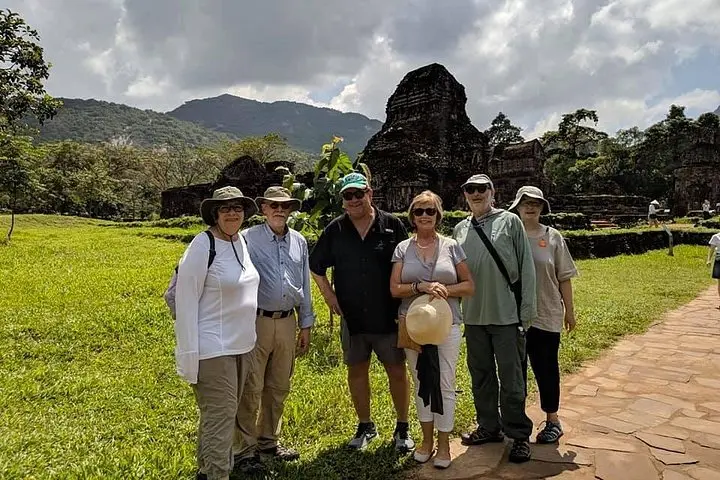
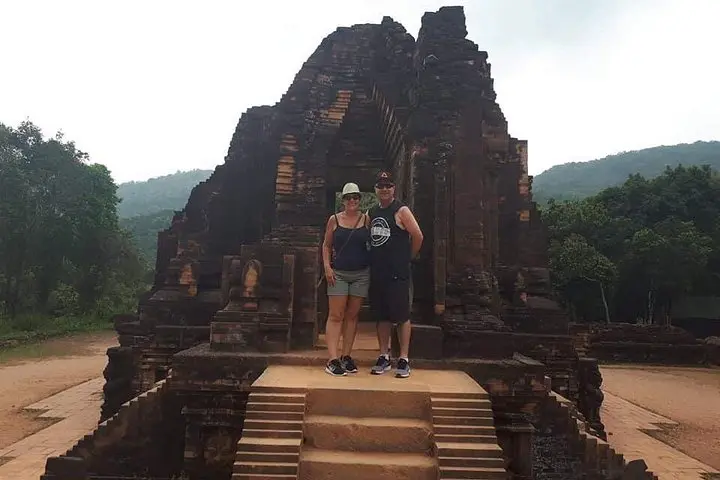
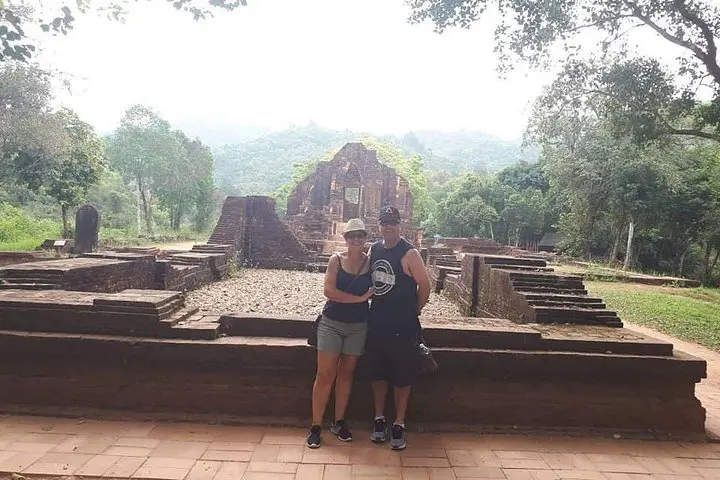
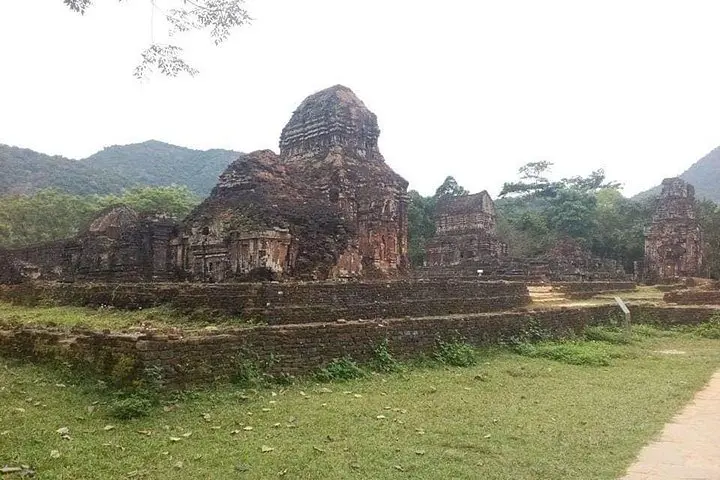
A humid morning opens over the valley as the minibus drops travelers at the edge of My Son Sanctuary, where stone towers rise from ferns and the jungle seems to press closer with each step. The air smells of damp earth and old stone; temple walls bear lichen and bas-reliefs that still hold the outlines of lost rituals. Walking the shaded paths, visitors hear birds and distant water, the landscape daring them to look for details carved eight centuries ago.
A humid morning opens over the valley as the minibus drops travelers at the edge of My Son Sanctuary, where stone towers rise from ferns and the jungle seems to press closer with each step. The air smells of damp earth and old stone; temple walls bear lichen and bas-reliefs that still hold the outlines of lost rituals. Walking the shaded paths, visitors hear birds and distant water, the landscape daring them to look for details carved eight centuries ago.
My Son was the religious center of the Cham kingdom from roughly the 4th to 13th centuries; its temple-towers show Indian-influenced Hindu architecture adapted to local brick techniques. Across the plain, Hoi An tells a different story: a coastal trading port whose timber-framed houses and covered bridge reflect Chinese, Japanese, and European ties from the 16th to 19th centuries.
Expect mostly flat, uneven trails at My Son, short stone stairways and open plazas; Hoi An is a compact walking town with narrow alleys and riverfront lanes. Guides typically spend 1–2 hours at each site; transit between Hoi An and My Son is roughly 40–45 km and takes about an hour each way depending on traffic.
Practical tips: wear sturdy, breathable shoes for uneven brick and mud, carry sun protection and insect repellent, and bring cash for small vendors. Plan for a relaxed pace — both sites reward time spent noticing carved details and the everyday rhythms of local villages. The day pairs outdoor exploration with cultural context, making it suitable for travelers who want history on foot without technical hiking demands.