THE ADVENTURE COLLECTIVE® · Independent discovery and booking for outdoor travel

Spend a full day navigating Old and New Delhi with a private guide—see Jama Masjid and Red Fort, then cross into Lutyens’ New Delhi to visit India Gate, Humayun’s Tomb and Qutub Minar. Practical, skip-the-line access makes an intensive eight-hour itinerary manageable for most walkers.
Spend a full day navigating Old and New Delhi with a private guide—see Jama Masjid and Red Fort, then cross into Lutyens’ New Delhi to visit India Gate, Humayun’s Tomb and Qutub Minar. Practical, skip-the-line access makes an intensive eight-hour itinerary manageable for most walkers.
Morning in Delhi arrives like a slow, insistent drum—street vendors setting out their wares, a guide waiting with a cool bottle of water, and the city’s layered skyline unrolling from red-sandstone domes to the broad lawns of India Gate.
Verified experiences and guided adventures in the surrounding area.
Operated by Discover Amazing India · New Delhi, Delhi
Morning in Delhi arrives like a slow, insistent drum—street vendors setting out their wares, a guide waiting with a cool bottle of water, and the city’s layered skyline unrolling from red-sandstone domes to the broad lawns of India Gate.
This private, eight-hour circuit threads through two eras: the winding alleys and call-to-prayer of Old Delhi—Jama Masjid, Red Fort, the spice-scented bazaars—and the planned avenues of New Delhi where Lutyens’ architecture, Rashtrapati Bhawan and Parliament trace the British imperial imprint. Geologically the city sits on the Yamuna’s alluvial plain; the land is flat, walking distances are short but continuous, and elevation gain is negligible. Humayun’s Tomb and Qutub Minar offer early Mughal stonework that influenced later monuments like the Taj Mahal.
Culturally the tour balances solemn memorials (Raj Ghat), bustling markets (Chandni Chowk) and modern devotional spaces (Lotus Temple), with local guides who add context about Mughal, Sikh and British chapters of the city’s history. Note: several sites can be closed on Mondays and summer heat can be intense.
Practical guidance: expect mostly paved surfaces, short stair sections inside monuments, and a paced schedule—short guided stops of 20–80 minutes. Carry photo ID or passport, dress modestly for religious sites, and sip water regularly; the tour’s skip-the-line access minimizes queue time but not walking. Start early to avoid midday traffic and heat, and leave room for a market detour if you want to sample street chaat. This tour is flat, accessible for most walkers, and gives a compact, context-rich view of Delhi in a single day.
Entrance fees are included only if that option is selected at booking; basic tour price typically covers transport, guide and bottled water.
Pickup and drop-off are included; you’ll arrange a pickup point in New Delhi when booking (hotel or central meet-up).
Many central monuments and transport are wheelchair accessible, but some historic sites have stairs and uneven surfaces—check specific access needs in advance.
Yes—Lotus Temple, Akshardham and Red Fort can be closed on Mondays; check the itinerary and local calendar before you go.
Discover Amazing India operates guided outdoor trips and adventures with an emphasis on safety, stewardship, and memorable experiences.
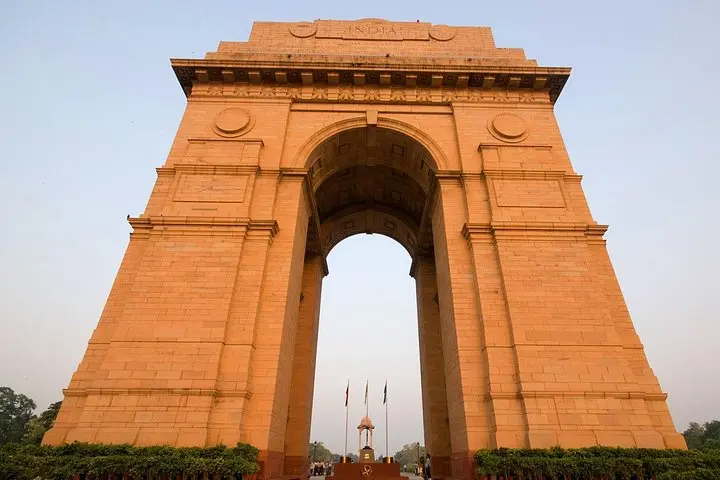



Morning in Delhi arrives like a slow, insistent drum—street vendors setting out their wares, a guide waiting with a cool bottle of water, and the city’s layered skyline unrolling from red-sandstone domes to the broad lawns of India Gate.
Morning in Delhi arrives like a slow, insistent drum—street vendors setting out their wares, a guide waiting with a cool bottle of water, and the city’s layered skyline unrolling from red-sandstone domes to the broad lawns of India Gate.
This private, eight-hour circuit threads through two eras: the winding alleys and call-to-prayer of Old Delhi—Jama Masjid, Red Fort, the spice-scented bazaars—and the planned avenues of New Delhi where Lutyens’ architecture, Rashtrapati Bhawan and Parliament trace the British imperial imprint. Geologically the city sits on the Yamuna’s alluvial plain; the land is flat, walking distances are short but continuous, and elevation gain is negligible. Humayun’s Tomb and Qutub Minar offer early Mughal stonework that influenced later monuments like the Taj Mahal.
Culturally the tour balances solemn memorials (Raj Ghat), bustling markets (Chandni Chowk) and modern devotional spaces (Lotus Temple), with local guides who add context about Mughal, Sikh and British chapters of the city’s history. Note: several sites can be closed on Mondays and summer heat can be intense.
Practical guidance: expect mostly paved surfaces, short stair sections inside monuments, and a paced schedule—short guided stops of 20–80 minutes. Carry photo ID or passport, dress modestly for religious sites, and sip water regularly; the tour’s skip-the-line access minimizes queue time but not walking. Start early to avoid midday traffic and heat, and leave room for a market detour if you want to sample street chaat. This tour is flat, accessible for most walkers, and gives a compact, context-rich view of Delhi in a single day.