THE ADVENTURE COLLECTIVE® · Independent discovery and booking for outdoor travel
A private half-day tour to Dendera’s Hathor Temple offers up-close access to the famed Dendera Zodiac and painted ceilings with an Egyptologist guide. Ideal for travelers staying in Luxor who want a compact, historically rich excursion away from larger crowds.
A private half-day tour to Dendera’s Hathor Temple offers up-close access to the famed Dendera Zodiac and painted ceilings with an Egyptologist guide. Ideal for travelers staying in Luxor who want a compact, historically rich excursion away from larger crowds.
You step out of an air-conditioned vehicle into a wide, sun-baked courtyard where columns and painted reliefs hold centuries of sound and silence. The stone smells faintly of dust and time; sunlight slices across raised hieroglyphs, throwing shallow shadows that make the carvings look almost alive. Your Egyptologist guide opens a door into the central hall, and the vaulted ceiling, painted and precise, draws your gaze: the Dendera Zodiac tilts above you like a mapped sky.
Verified experiences and guided adventures in the surrounding area.
Operated by Egypt Sunny Tours · Dendera, Qena Governorate
You step out of an air-conditioned vehicle into a wide, sun-baked courtyard where columns and painted reliefs hold centuries of sound and silence. The stone smells faintly of dust and time; sunlight slices across raised hieroglyphs, throwing shallow shadows that make the carvings look almost alive. Your Egyptologist guide opens a door into the central hall, and the vaulted ceiling, painted and precise, draws your gaze: the Dendera Zodiac tilts above you like a mapped sky.
Dendera’s Hathor Temple is a late Ptolemaic–Roman sanctuary built on older foundations. Its reliefs celebrate music, childbirth and celestial cycles—Hathor’s domains—and the complex includes a small mammisi (birth house) and a site museum that traces the site’s use through Greek and Roman rule.
Geologically the temple perches on Nile silt plain; stone blocks were quarried and transported along the river, which still shapes local life and agriculture. Culturally, the site remains a living classroom: local guides interpret ritual scenes while nearby villages maintain crafts and markets.
Practically, the private half-day format gives time to move deliberately through inner sanctums and open courts without the crush of larger groups. Wear breathable clothing, a sun hat and sturdy shoes—steps and thresholds are uneven. Photography is allowed but avoid flash on painted surfaces; respect rope lines and do not touch carved reliefs. The tour includes hotel pickup, bottled water and admission; plan for roughly five hours including transfers to and from Luxor, and book morning or late-afternoon slots to avoid peak heat.
This is less a hike than a walking exploration of architecture, astronomy and ritual life—compact, intimate and rich with visible history.
Yes — admission to the Dendera Temple Complex is included in this private half‑day tour.
Flash is discouraged and sometimes restricted on painted ceilings and reliefs to protect pigments; your guide will advise on-site rules.
The operator notes wheelchair-accessible options for key areas and transport, but some thresholds and relief platforms may have limited access—notify pickup details in advance.
Tipping is customary in Egypt; plan a modest tip for your Egyptologist guide and driver if service was good.
Egypt Sunny Tours operates guided outdoor trips and adventures with an emphasis on safety, stewardship, and memorable experiences.
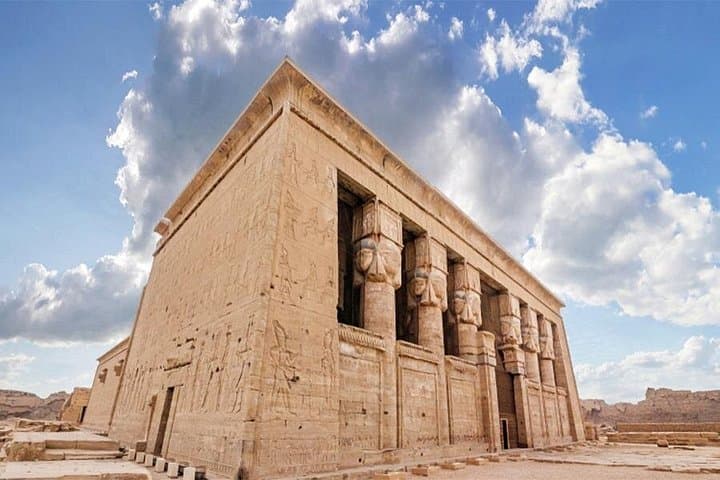
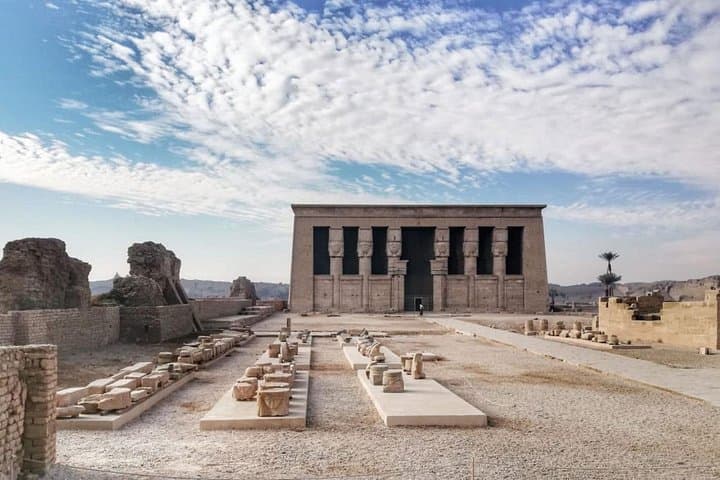
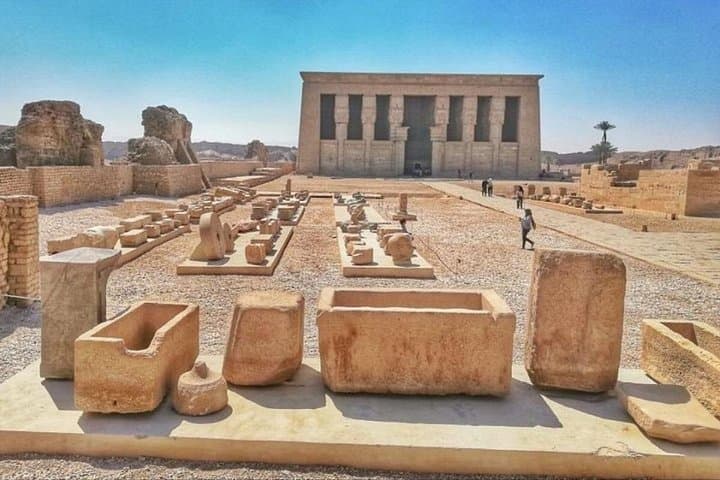
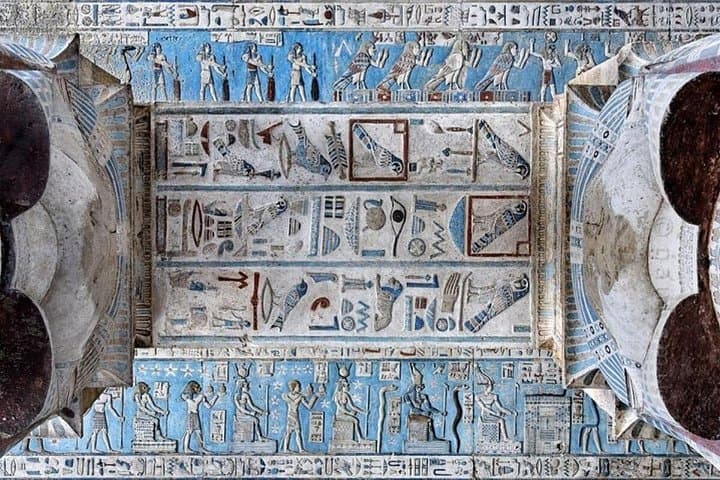
You step out of an air-conditioned vehicle into a wide, sun-baked courtyard where columns and painted reliefs hold centuries of sound and silence. The stone smells faintly of dust and time; sunlight slices across raised hieroglyphs, throwing shallow shadows that make the carvings look almost alive. Your Egyptologist guide opens a door into the central hall, and the vaulted ceiling, painted and precise, draws your gaze: the Dendera Zodiac tilts above you like a mapped sky.
You step out of an air-conditioned vehicle into a wide, sun-baked courtyard where columns and painted reliefs hold centuries of sound and silence. The stone smells faintly of dust and time; sunlight slices across raised hieroglyphs, throwing shallow shadows that make the carvings look almost alive. Your Egyptologist guide opens a door into the central hall, and the vaulted ceiling, painted and precise, draws your gaze: the Dendera Zodiac tilts above you like a mapped sky.
Dendera’s Hathor Temple is a late Ptolemaic–Roman sanctuary built on older foundations. Its reliefs celebrate music, childbirth and celestial cycles—Hathor’s domains—and the complex includes a small mammisi (birth house) and a site museum that traces the site’s use through Greek and Roman rule.
Geologically the temple perches on Nile silt plain; stone blocks were quarried and transported along the river, which still shapes local life and agriculture. Culturally, the site remains a living classroom: local guides interpret ritual scenes while nearby villages maintain crafts and markets.
Practically, the private half-day format gives time to move deliberately through inner sanctums and open courts without the crush of larger groups. Wear breathable clothing, a sun hat and sturdy shoes—steps and thresholds are uneven. Photography is allowed but avoid flash on painted surfaces; respect rope lines and do not touch carved reliefs. The tour includes hotel pickup, bottled water and admission; plan for roughly five hours including transfers to and from Luxor, and book morning or late-afternoon slots to avoid peak heat.
This is less a hike than a walking exploration of architecture, astronomy and ritual life—compact, intimate and rich with visible history.
