THE ADVENTURE COLLECTIVE® · Independent discovery and booking for outdoor travel

Spend a private night in the Sahara with a small desert bivouac near Douz—tents, wood‑fired dinner, and unfiltered starfields. This two‑day experience pairs simple camping with local oases and salt‑flat views.
Spend a private night in the Sahara with a small desert bivouac near Douz—tents, wood‑fired dinner, and unfiltered starfields. This two‑day experience pairs simple camping with local oases and salt‑flat views.
You arrive as daylight thins and the desert shifts from gold to deep umber—wind smoothing the dunes, silhouettes of thorny acacias cutting against a wide sky. A private camp is already set: low canvas tents, camp beds, and a wood-fired cooking area. The only lights are the fire and the slow sweep of stars.
Verified experiences and guided adventures in the surrounding area.
Operated by Caravane du sahara · Douz, Kebili Governorate
You arrive as daylight thins and the desert shifts from gold to deep umber—wind smoothing the dunes, silhouettes of thorny acacias cutting against a wide sky. A private camp is already set: low canvas tents, camp beds, and a wood-fired cooking area. The only lights are the fire and the slow sweep of stars.
This stretch of central Tunisia marks the edge of the Sahara where ancient caravan routes met salt pans and oasis towns. Geologically the region is defined by wind‑sculpted dunes and the nearby Chott el Jerid, a seasonal salt flat that plays tricks on the eye with mirages. Culturally, Douz is a gateway to Saharan berber traditions—date palm agriculture, oral music, and camel transport survive alongside modern tourism.
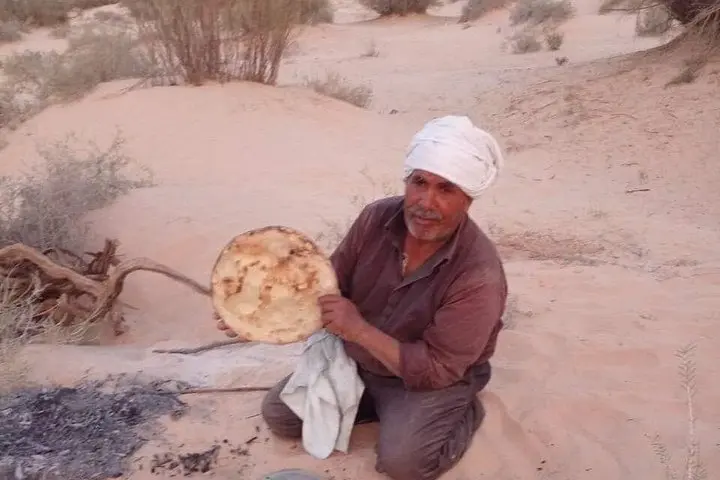
Expect a quiet night under the stars, a simple hearty dinner cooked over wood flame, and an early breakfast before a morning transfer. The bivouac experience focuses on low-impact camping: limited light, rustic sleeping arrangements, and social time around a communal fire. Temperatures swing widely—hot by day, very cool after midnight—so layers matter.
Practical notes: pack a headlamp, warm midlayer, sun protection, and a refillable water bottle; expect sand underfoot and short walks to dune crests. Accessibility varies by operator; vehicles may be 4x4 and pick‑up points are commonly arranged from Hammamet, Tozeur, or Douz. Respect local customs—ask before photographing people—and follow guides’ instructions around fires and fragile desert plants. A night here is less about luxury and more about scale: the landscape asking for quiet, attention, and a good sleeping bag.
Most operators include pickup from Douz, Tozeur, or arranged points in Hammamet; transfers are commonly in 4x4 vehicles and exact pickup is confirmed at booking.
Camps provide canvas tents and camp beds or mattresses; bedding varies so bring a warm sleeping bag if you prefer extra insulation.
The tour lists wheelchair accessibility for some logistics, but desert terrain and vehicle transfers may limit mobility—check operator details when booking.
Dinner and breakfast are provided—operators can usually accommodate common dietary needs if informed in advance during booking.
Caravane du sahara operates guided outdoor trips and adventures with an emphasis on safety, stewardship, and memorable experiences.
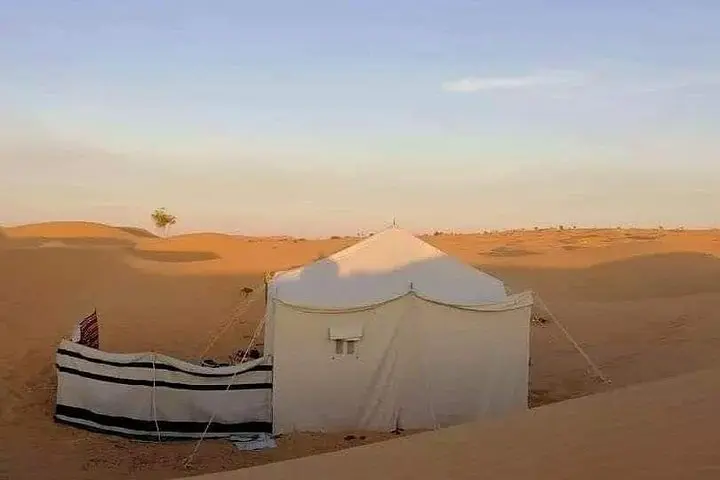
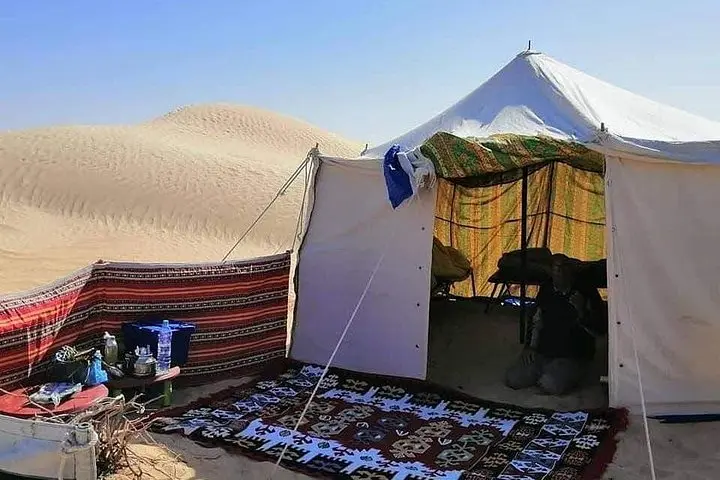
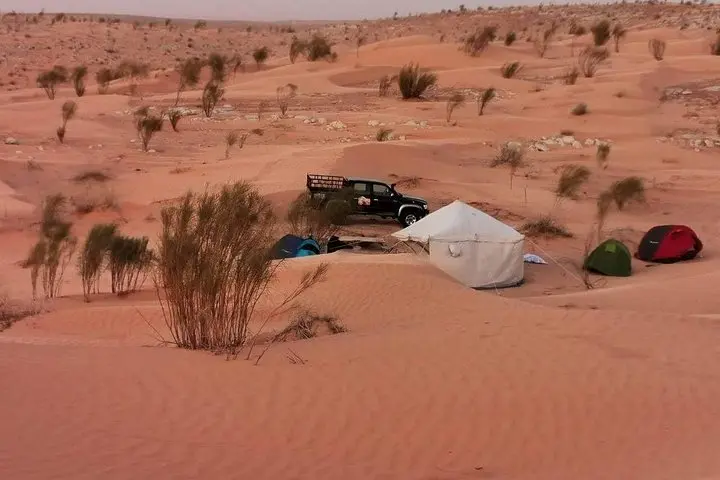
You arrive as daylight thins and the desert shifts from gold to deep umber—wind smoothing the dunes, silhouettes of thorny acacias cutting against a wide sky. A private camp is already set: low canvas tents, camp beds, and a wood-fired cooking area. The only lights are the fire and the slow sweep of stars.
You arrive as daylight thins and the desert shifts from gold to deep umber—wind smoothing the dunes, silhouettes of thorny acacias cutting against a wide sky. A private camp is already set: low canvas tents, camp beds, and a wood-fired cooking area. The only lights are the fire and the slow sweep of stars.
This stretch of central Tunisia marks the edge of the Sahara where ancient caravan routes met salt pans and oasis towns. Geologically the region is defined by wind‑sculpted dunes and the nearby Chott el Jerid, a seasonal salt flat that plays tricks on the eye with mirages. Culturally, Douz is a gateway to Saharan berber traditions—date palm agriculture, oral music, and camel transport survive alongside modern tourism.
Expect a quiet night under the stars, a simple hearty dinner cooked over wood flame, and an early breakfast before a morning transfer. The bivouac experience focuses on low-impact camping: limited light, rustic sleeping arrangements, and social time around a communal fire. Temperatures swing widely—hot by day, very cool after midnight—so layers matter.
Practical notes: pack a headlamp, warm midlayer, sun protection, and a refillable water bottle; expect sand underfoot and short walks to dune crests. Accessibility varies by operator; vehicles may be 4x4 and pick‑up points are commonly arranged from Hammamet, Tozeur, or Douz. Respect local customs—ask before photographing people—and follow guides’ instructions around fires and fragile desert plants. A night here is less about luxury and more about scale: the landscape asking for quiet, attention, and a good sleeping bag.