THE ADVENTURE COLLECTIVE® · Independent discovery and booking for outdoor travel

A focused, half-day private tour from central Seoul to the DMZ: descend the narrow 3rd Tunnel, scan North Korea from Dora Observatory, and visit Dorasan Station. Expect security checks, historical depth, and clear logistical rules.
A focused, half-day private tour from central Seoul to the DMZ: descend the narrow 3rd Tunnel, scan North Korea from Dora Observatory, and visit Dorasan Station. Expect security checks, historical depth, and clear logistical rules.
You step off the air‑conditioned van into a flat, wind-cut landscape where concrete observation platforms stare across a fenced ribbon of land toward a stranger country.
Verified experiences and guided adventures in the surrounding area.
Operated by I Love Seoul Tour · Paju, Gyeonggi-do
You step off the air‑conditioned van into a flat, wind-cut landscape where concrete observation platforms stare across a fenced ribbon of land toward a stranger country.
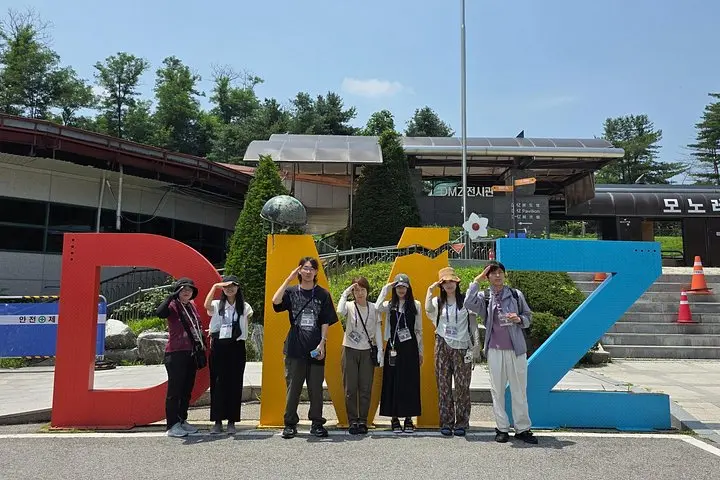
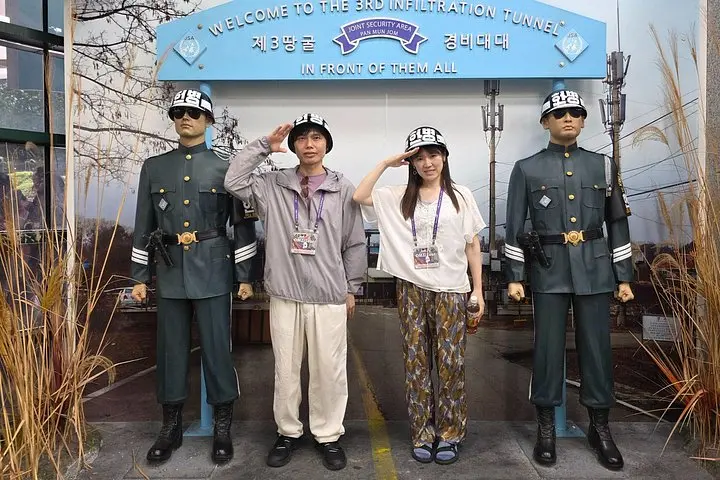
This half-day private DMZ tour moves deliberately: Imjingak Park's relics and peace monuments frame public memory, the Dora Observatory lets you peer at North Korea's buildings and farmland, the narrow, low-browed 3rd Infiltration Tunnel forces you to stoop and imagine movement beneath the border, and Dorasan Station stands as an unfinished promise — rail tracks ended, waiting.
The DMZ itself was created in 1953 as a military buffer after the Korean War; its geology is simple rolling plains and river terraces cut by the Imjin River, but its human story is complex — a split nation, wartime scars, and decades of tense diplomacy. Local culture around Paju has evolved with checkpoints and memorials becoming civic landmarks; small museums and artists’ spaces repurpose wartime narratives into public reflection.
Practically, expect strict ID checks, luggage restrictions, and military timing that can alter the schedule. Bring a valid passport, dress in layers for strong winds on the observatory, and prepare for modest walking and some stooping in the tunnel. Photography is allowed in designated areas only, and guides provide context that turns metal fences and watchtowers into chapters of recent history.
This tour suits anyone curious about borderlands and modern history: it’s immersive, focused, and governed by procedure — the kind of trip where logistics are part of the experience.
Yes — a current valid passport is required and will be checked at boarding and by military personnel at DMZ checkpoints.
Yes — the Dora Observatory and other viewpoints offer clear line-of-sight views into North Korea when weather permits; photography rules apply in certain spots.
You must crouch and walk down a steep man-made tunnel for a short distance; people with spinal or severe mobility issues are advised not to enter.
Yes — military operations, weather, or government orders can alter or cancel access without prior notice; alternative itineraries may be offered.
I Love Seoul Tour operates guided outdoor trips and adventures with an emphasis on safety, stewardship, and memorable experiences.
You step off the air‑conditioned van into a flat, wind-cut landscape where concrete observation platforms stare across a fenced ribbon of land toward a stranger country.
You step off the air‑conditioned van into a flat, wind-cut landscape where concrete observation platforms stare across a fenced ribbon of land toward a stranger country.
This half-day private DMZ tour moves deliberately: Imjingak Park's relics and peace monuments frame public memory, the Dora Observatory lets you peer at North Korea's buildings and farmland, the narrow, low-browed 3rd Infiltration Tunnel forces you to stoop and imagine movement beneath the border, and Dorasan Station stands as an unfinished promise — rail tracks ended, waiting.
The DMZ itself was created in 1953 as a military buffer after the Korean War; its geology is simple rolling plains and river terraces cut by the Imjin River, but its human story is complex — a split nation, wartime scars, and decades of tense diplomacy. Local culture around Paju has evolved with checkpoints and memorials becoming civic landmarks; small museums and artists’ spaces repurpose wartime narratives into public reflection.
Practically, expect strict ID checks, luggage restrictions, and military timing that can alter the schedule. Bring a valid passport, dress in layers for strong winds on the observatory, and prepare for modest walking and some stooping in the tunnel. Photography is allowed in designated areas only, and guides provide context that turns metal fences and watchtowers into chapters of recent history.
This tour suits anyone curious about borderlands and modern history: it’s immersive, focused, and governed by procedure — the kind of trip where logistics are part of the experience.