THE ADVENTURE COLLECTIVE® · Independent discovery and booking for outdoor travel

Explore two of ancient Thebes’ greatest monuments on a private East Bank tour. Travel in an air‑conditioned vehicle to Karnak and Luxor Temples with a licensed guide and included entry fees.
Explore two of ancient Thebes’ greatest monuments on a private East Bank tour. Travel in an air‑conditioned vehicle to Karnak and Luxor Temples with a licensed guide and included entry fees.
You step from the air‑conditioned car into a sun‑bright courtyard; stone columns throw long, cool shadows and the air smells faintly of dust and incense. The guide folds a map and points to a row of towering pylons—the entrance to Karnak—where history leans close and the city of Thebes once held court.
Verified experiences and guided adventures in the surrounding area.
Operated by Egypt Travel Planning · Luxor, Luxor Governorate
You step from the air‑conditioned car into a sun‑bright courtyard; stone columns throw long, cool shadows and the air smells faintly of dust and incense. The guide folds a map and points to a row of towering pylons—the entrance to Karnak—where history leans close and the city of Thebes once held court.
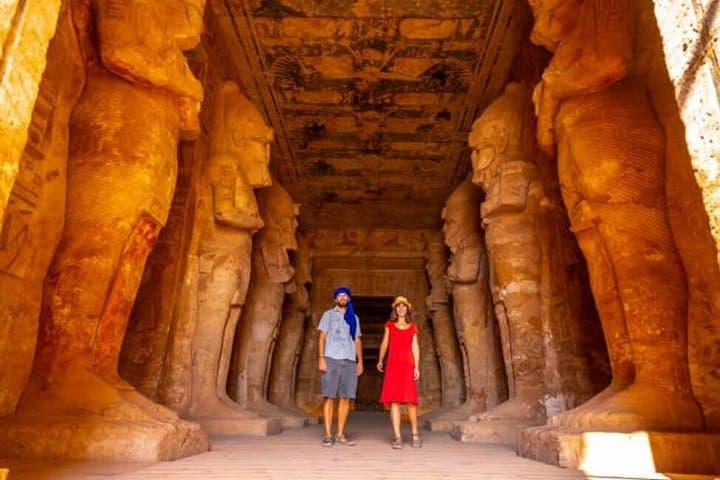
Karnak and Luxor temples sit on the Nile’s eastern floodplain, carved from local sandstone and rebuilt across centuries. Karnak is a sprawling complex dedicated to Amun, Mut and Khonsu, its hypostyle hall of columns a deliberate architectural roar from the New Kingdom. Luxor Temple, begun by Amenhotep III and finished by Ramesses II, occupies a more intimate, axial plan used historically for coronation processions and the Opet Festival.
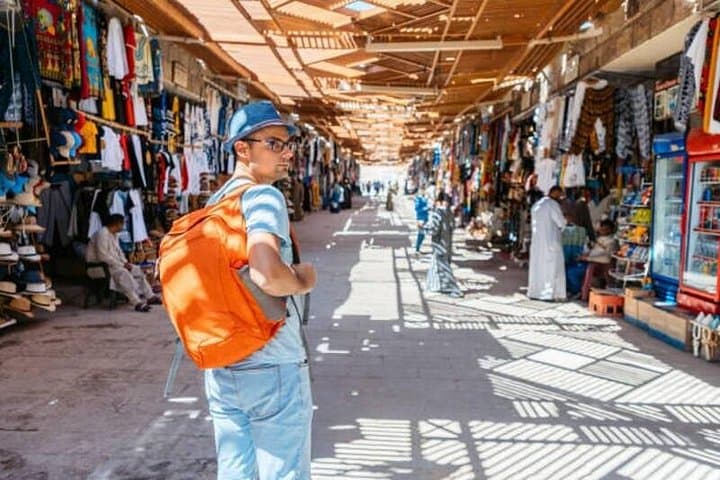
Culturally the East Bank is where civic ritual met royal power; expect reliefs scraped by time, hieroglyphs that hint at ceremonial movement, and modern vendors threading between ruins. Geology here is simple: Nile alluvium underlies the city, while the monuments rise on compacted sand and limestone. The Nile itself, visible nearby, continues to dare travelers with slow current and a promise of shade at river level.
Practical guidance: tours typically last about five hours including hotel pickup, with roughly 2–3 hours walking over uneven, sun‑exposed surfaces. Wear sturdy shoes, sun protection and carry water; entrance fees are usually included in private packages, but keep small local currency for tips and photos with vendors. Midday can be extreme—schedule mornings or late afternoons to avoid heat. The private AC vehicle makes logistics simple, but allow time to absorb the scale of each temple; these sites reward slow, observational walking more than a hurried checklist.
This private tour lists entry fees as included, but confirm at booking and carry a small amount of cash for incidental charges.
Expect roughly 2–3 hours of walking across the two sites, interspersed with vehicle transfers and resting stops.
Yes—round‑trip pickup and drop‑off from Luxor hotels or Nile cruises is included in the standard package.
Both temples have uneven surfaces and steps; while the tour is labeled suitable for most fitness levels, travelers with significant mobility limitations should check accessibility options in advance.
Egypt Travel Planning operates guided outdoor trips and adventures with an emphasis on safety, stewardship, and memorable experiences.


You step from the air‑conditioned car into a sun‑bright courtyard; stone columns throw long, cool shadows and the air smells faintly of dust and incense. The guide folds a map and points to a row of towering pylons—the entrance to Karnak—where history leans close and the city of Thebes once held court.
You step from the air‑conditioned car into a sun‑bright courtyard; stone columns throw long, cool shadows and the air smells faintly of dust and incense. The guide folds a map and points to a row of towering pylons—the entrance to Karnak—where history leans close and the city of Thebes once held court.
Karnak and Luxor temples sit on the Nile’s eastern floodplain, carved from local sandstone and rebuilt across centuries. Karnak is a sprawling complex dedicated to Amun, Mut and Khonsu, its hypostyle hall of columns a deliberate architectural roar from the New Kingdom. Luxor Temple, begun by Amenhotep III and finished by Ramesses II, occupies a more intimate, axial plan used historically for coronation processions and the Opet Festival.
Culturally the East Bank is where civic ritual met royal power; expect reliefs scraped by time, hieroglyphs that hint at ceremonial movement, and modern vendors threading between ruins. Geology here is simple: Nile alluvium underlies the city, while the monuments rise on compacted sand and limestone. The Nile itself, visible nearby, continues to dare travelers with slow current and a promise of shade at river level.
Practical guidance: tours typically last about five hours including hotel pickup, with roughly 2–3 hours walking over uneven, sun‑exposed surfaces. Wear sturdy shoes, sun protection and carry water; entrance fees are usually included in private packages, but keep small local currency for tips and photos with vendors. Midday can be extreme—schedule mornings or late afternoons to avoid heat. The private AC vehicle makes logistics simple, but allow time to absorb the scale of each temple; these sites reward slow, observational walking more than a hurried checklist.