THE ADVENTURE COLLECTIVE® · Independent discovery and booking for outdoor travel

Spend a private day with an Egyptologist tracing the arc of ancient Egypt from the Step Pyramid at Saqqara to the Great Pyramids and Sphinx at Giza, finishing at the open-air museum of Memphis. Expect guided insights, short walks on sandy terrain, and practical logistics handled for you.
Spend a private day with an Egyptologist tracing the arc of ancient Egypt from the Step Pyramid at Saqqara to the Great Pyramids and Sphinx at Giza, finishing at the open-air museum of Memphis. Expect guided insights, short walks on sandy terrain, and practical logistics handled for you.
A pale desert wind moves dust along the broad stone faces of the Giza Plateau as you arrive by private car—an intimate half-day with an Egyptologist placing the scale of the Great Pyramid and the Sphinx into human measure.
Verified experiences and guided adventures in the surrounding area.
Operated by Go Kemet · Giza, Giza Governorate
A pale desert wind moves dust along the broad stone faces of the Giza Plateau as you arrive by private car—an intimate half-day with an Egyptologist placing the scale of the Great Pyramid and the Sphinx into human measure.
The tour threads Giza’s triangular giants with Saqqara’s stepped Djoser pyramid and the open-air ruins of Memphis. These sites span Egypt’s Old Kingdom to later dynasties: Saqqara holds the earliest large-scale stone architecture in Egypt, the Step Pyramid (c. 27th century BCE); Giza displays the precise geometry of Khufu, Khafre and Menkaure; Memphis preserves colossal statuary including a fallen Ramses II. Geology is plain—the limestone bedrock of the Nile’s western bank was quarried here for millennia, giving the monuments their warm, sunburnt hues.
Cultural context comes from the guide: funerary beliefs, the role of necropolises, and how agriculture along the Nile underpinned monumental building. You’ll see reliefs and hieroglyphs at Saqqara that hint at daily life lost to time.
Practical guidance: expect an 8‑hour day with several short walks on uneven, sandy ground and optional camel rides. Morning light is best for photography and cooler walking; carry water, sun protection and modest clothing for temple approaches. Tickets and private transport are included per the tour; bring small bills for tips and on-site purchases.
This is a full-day, archaeology-focused circuit that pairs sweeping ancient architecture with accessible logistics—ideal for travelers seeking concentrated history with minimal guesswork.
Admissions are handled per the tour’s description—confirm which specific internal access (e.g., entering a pyramid) is included or optional at booking.
Sites are clustered around Giza and Saqqara with short drives of 20–45 minutes; the full itinerary runs about 8 hours including transfers and visits.
Camel rides are typically offered and included on this tour; they are short, optional, and provided with basic handling—ask your guide if you have mobility concerns.
Wear clothing that covers shoulders and knees when visiting temples and religious sites; a light scarf is useful for sun and modesty.
Go Kemet operates guided outdoor trips and adventures with an emphasis on safety, stewardship, and memorable experiences.
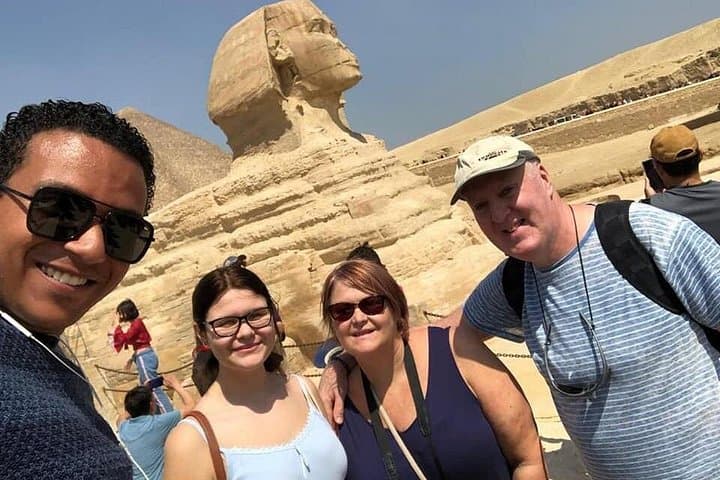
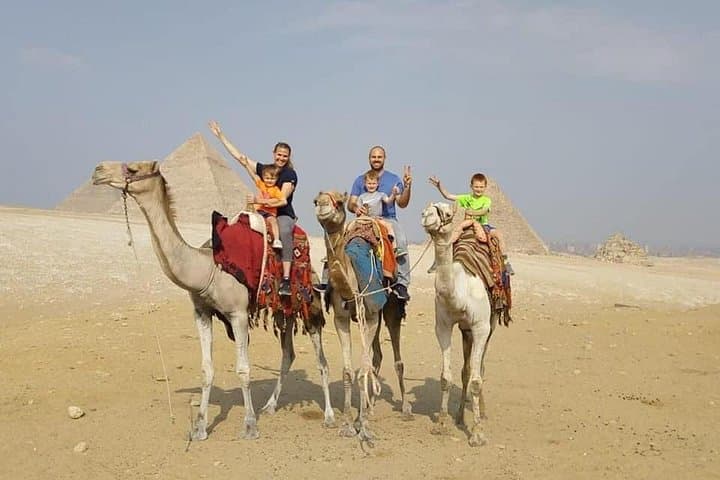
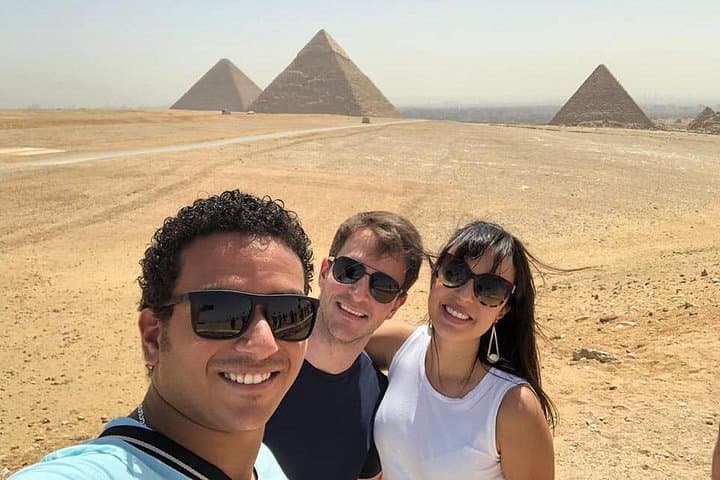
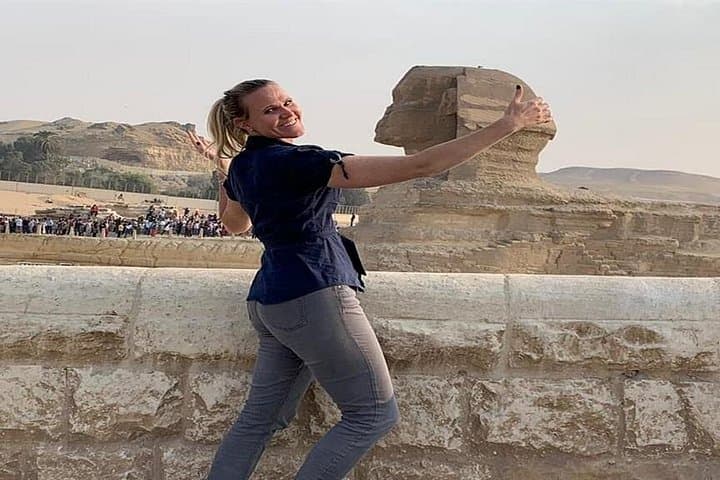
A pale desert wind moves dust along the broad stone faces of the Giza Plateau as you arrive by private car—an intimate half-day with an Egyptologist placing the scale of the Great Pyramid and the Sphinx into human measure.
A pale desert wind moves dust along the broad stone faces of the Giza Plateau as you arrive by private car—an intimate half-day with an Egyptologist placing the scale of the Great Pyramid and the Sphinx into human measure.
The tour threads Giza’s triangular giants with Saqqara’s stepped Djoser pyramid and the open-air ruins of Memphis. These sites span Egypt’s Old Kingdom to later dynasties: Saqqara holds the earliest large-scale stone architecture in Egypt, the Step Pyramid (c. 27th century BCE); Giza displays the precise geometry of Khufu, Khafre and Menkaure; Memphis preserves colossal statuary including a fallen Ramses II. Geology is plain—the limestone bedrock of the Nile’s western bank was quarried here for millennia, giving the monuments their warm, sunburnt hues.
Cultural context comes from the guide: funerary beliefs, the role of necropolises, and how agriculture along the Nile underpinned monumental building. You’ll see reliefs and hieroglyphs at Saqqara that hint at daily life lost to time.
Practical guidance: expect an 8‑hour day with several short walks on uneven, sandy ground and optional camel rides. Morning light is best for photography and cooler walking; carry water, sun protection and modest clothing for temple approaches. Tickets and private transport are included per the tour; bring small bills for tips and on-site purchases.
This is a full-day, archaeology-focused circuit that pairs sweeping ancient architecture with accessible logistics—ideal for travelers seeking concentrated history with minimal guesswork.