THE ADVENTURE COLLECTIVE® · Independent discovery and booking for outdoor travel

Explore New Orleans on a private three‑hour combo tour that pairs walking in the French Quarter with a scenic drive through the Garden District. Expect architecture, local history, and cemetery insights with convenient van transfers between neighborhoods.
Explore New Orleans on a private three‑hour combo tour that pairs walking in the French Quarter with a scenic drive through the Garden District. Expect architecture, local history, and cemetery insights with convenient van transfers between neighborhoods.
The tour opens on the worn stone steps near the Louisiana Supreme Court, where the French Quarter exhales history into the humid air. Cobbled alleys unfurl toward Jackson Square; street musicians trade time with masked wrought-iron balconies while guide and group move at a human pace. The city’s layers—French, Spanish, Creole, American—are readable in brick, shutters, and gallery porches.
Verified experiences and guided adventures in the surrounding area.
Operated by Soul of Nola · New Orleans, Louisiana
The tour opens on the worn stone steps near the Louisiana Supreme Court, where the French Quarter exhales history into the humid air. Cobbled alleys unfurl toward Jackson Square; street musicians trade time with masked wrought-iron balconies while guide and group move at a human pace. The city’s layers—French, Spanish, Creole, American—are readable in brick, shutters, and gallery porches.
Beginners to New Orleans learn why the Crescent City sits above a river and below sea level: the Mississippi and surrounding bayous shaped settlement patterns, causing the distinctive above‑ground tombs seen at Lafayette Cemetery #1. The Garden District that follows tells a different story—mid‑19th‑century American wealth, oak‑lined avenues, and mansions set back from the street, a political and cultural counterpoint to the Quarter.
Expect a measured mix of short walks and van transfers over roughly three hours. Guides cover architecture, local folklore, and the burial traditions that grew from geology and climate; they explain conservation pressures—tourism vs. preservation—and point out working‑class neighborhoods alongside opulent estates.
Practical edge: wear supportive shoes for uneven sidewalks, plan morning or late‑afternoon starts to avoid peak heat, and carry a refillable bottle—the van provides transport but not constant shade. Photography stops are frequent; cemetery access is external only, so the guide elaborates on tomb styles from the curb. This private combo balances storytelling and context, giving travelers both sensory moments and clear navigation through New Orleans’ most photographed districts.
No—Lafayette Cemetery #1 is observed from outside the walls; guides explain burial traditions and tomb architecture from public vantage points.
The operator notes stroller accessibility; wheelchair users should contact the provider in advance to discuss curb cuts and vehicle accommodations.
Expect several short walks of 10–20 minutes each around Jackson Square, along Royal Street, and near the Garden District mansions; most movement between neighborhoods is by van.
Yes—private van transportation between the French Quarter and Garden District is included; the trip combines guided walking with drive segments.
Soul of Nola operates guided outdoor trips and adventures with an emphasis on safety, stewardship, and memorable experiences.
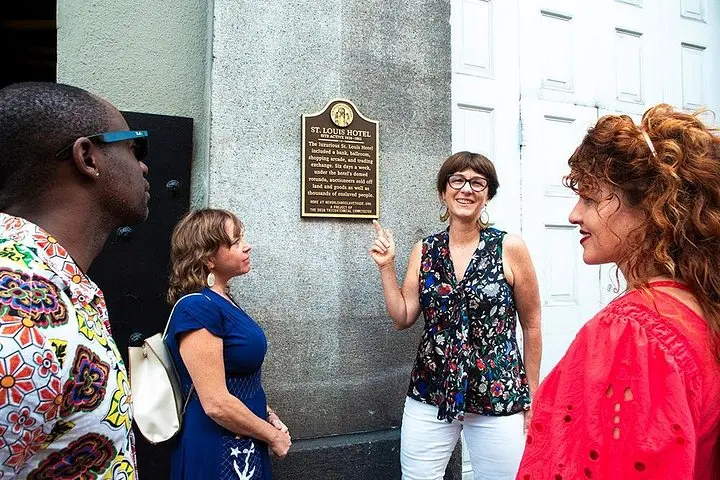
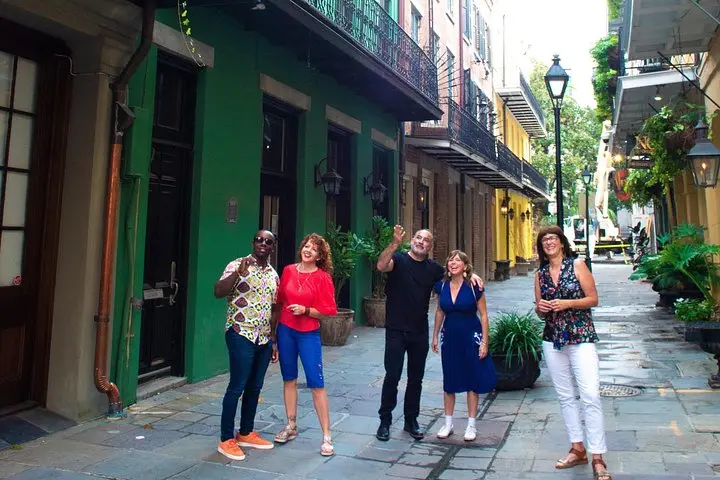
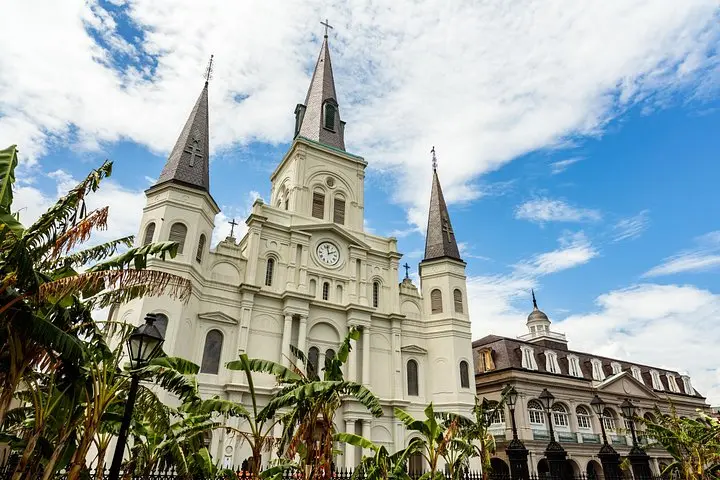

The tour opens on the worn stone steps near the Louisiana Supreme Court, where the French Quarter exhales history into the humid air. Cobbled alleys unfurl toward Jackson Square; street musicians trade time with masked wrought-iron balconies while guide and group move at a human pace. The city’s layers—French, Spanish, Creole, American—are readable in brick, shutters, and gallery porches.
The tour opens on the worn stone steps near the Louisiana Supreme Court, where the French Quarter exhales history into the humid air. Cobbled alleys unfurl toward Jackson Square; street musicians trade time with masked wrought-iron balconies while guide and group move at a human pace. The city’s layers—French, Spanish, Creole, American—are readable in brick, shutters, and gallery porches.
Beginners to New Orleans learn why the Crescent City sits above a river and below sea level: the Mississippi and surrounding bayous shaped settlement patterns, causing the distinctive above‑ground tombs seen at Lafayette Cemetery #1. The Garden District that follows tells a different story—mid‑19th‑century American wealth, oak‑lined avenues, and mansions set back from the street, a political and cultural counterpoint to the Quarter.
Expect a measured mix of short walks and van transfers over roughly three hours. Guides cover architecture, local folklore, and the burial traditions that grew from geology and climate; they explain conservation pressures—tourism vs. preservation—and point out working‑class neighborhoods alongside opulent estates.
Practical edge: wear supportive shoes for uneven sidewalks, plan morning or late‑afternoon starts to avoid peak heat, and carry a refillable bottle—the van provides transport but not constant shade. Photography stops are frequent; cemetery access is external only, so the guide elaborates on tomb styles from the curb. This private combo balances storytelling and context, giving travelers both sensory moments and clear navigation through New Orleans’ most photographed districts.