THE ADVENTURE COLLECTIVE® · Independent discovery and booking for outdoor travel

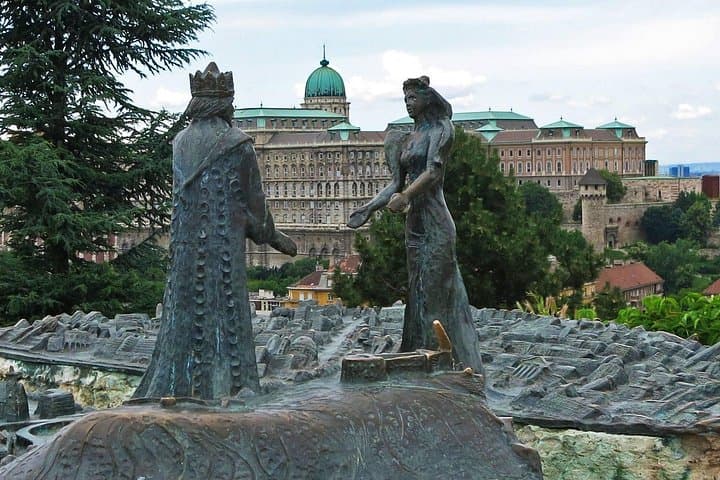
Spend eight private hours moving between Budapest’s signature scenes — thermal baths and market halls in Pest, hilltop fortresses and coronation churches in Buda. A local guide and private vehicle make it easy to see Parliament, Gellért Hill, the Castle District and more in one day.
Spend eight private hours moving between Budapest’s signature scenes — thermal baths and market halls in Pest, hilltop fortresses and coronation churches in Buda. A local guide and private vehicle make it easy to see Parliament, Gellért Hill, the Castle District and more in one day.
The Danube cuts Budapest in two like a bright seam — on one side the broad, flat avenues of Pest, on the other a string of hills crowned with fortresses and churches. On an eight-hour private tour, the city opens at street level: steam rising from Széchenyi’s outdoor pools, the chiming of a basilica bell down Andrássy Avenue, the slow, deliberate sweep of the guide’s hand across a coronation chair inside Matthias Church.
Verified experiences and guided adventures in the surrounding area.
Operated by Lantino Travel · Budapest, Budapest
The Danube cuts Budapest in two like a bright seam — on one side the broad, flat avenues of Pest, on the other a string of hills crowned with fortresses and churches. On an eight-hour private tour, the city opens at street level: steam rising from Széchenyi’s outdoor pools, the chiming of a basilica bell down Andrássy Avenue, the slow, deliberate sweep of the guide’s hand across a coronation chair inside Matthias Church.
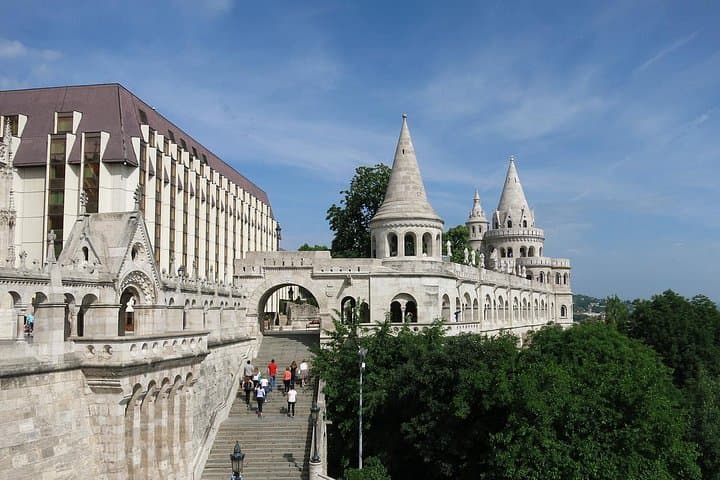
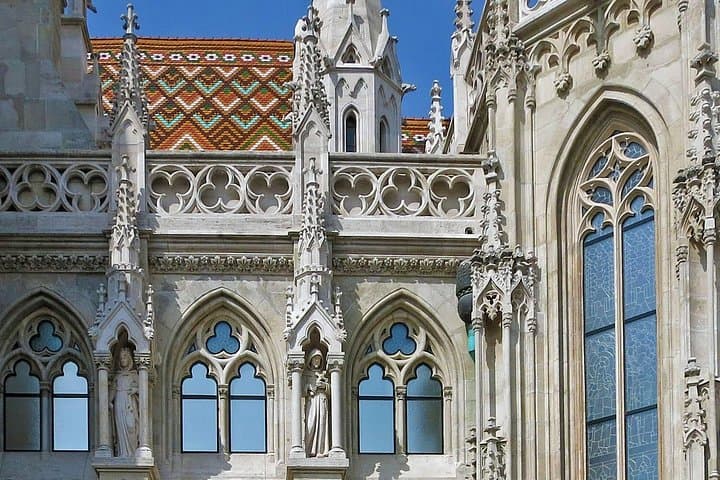
The route threads living history. Pest carries the imprint of the 19th-century Austro-Hungarian boom — marble-fronted townhouses, the Neo-Gothic Parliament facing the river — while Buda keeps older topography: limestone bedrock, thermal springs that have puffed up Gellért Hill and fed baths for centuries. The Castle District still reads as a medieval townscape: narrow alleys, the Fisherman’s Bastion with its crenellated viewing terraces, and Matthias Church, whose coronation rites bind modern Hungary to its medieval kings.
Culturally, the tour is a quick primer: Central Market Hall for smoked sausages and paprika, the Opera and Andrássy as proof of the city’s once-cosmopolitan posture, and the small museums that remember both Ottoman rule and the 20th-century upheavals. Geology and urbanism arrive together at Gellért Hill — a lookout that explains why settlements clustered here for defense and for the thermal waters that kept citizens bathing through Ottoman, Habsburg and modern times.
Practical details matter. Pickup and drop-off from your Budapest hotel are included; the schedule is entirely private and can be adapted. Expect a mix of short walks and vehicle transfers: the Castle District and the Parliament tour involve stairways and cobbled streets, while the Gellért viewpoint requires a short uphill approach. Entrance to Matthias Church and a guided inside visit to the Parliament House are included — bring passport or ID for security screening and allow extra time for checks.
Wear supportive shoes for uneven cobbles, and dress in layers: river winds and hilltop exposure change the temperature quickly. Carry a refillable water bottle, a small daypack and enough cash or card for market purchases and café stops. Start early if you want softer light and thinner crowds at the Bastion and Parliament.
For travelers who want a compact, curated view of Budapest, this private day ties landmarks into a single, relaxed loop. It’s less about ticking boxes and more about learning how the city’s stones, streets and steam baths came to shape modern Hungarian life.
Yes — private pickup and drop-off from hotels or private addresses within Budapest are included; provide the exact pickup location when booking.
The tour description includes entrance to Matthias Church and a guided inside visit of the Parliament House; other museum fees or items bought at the market are extra.
Parts of the tour are stroller-friendly, but expect cobbles and stairs in the Castle District; the operator notes stroller access but plan for some lifts or folding.
Guides typically speak English; confirm language needs ahead of time so the provider can match a guide fluent in your language.
Full refund is available if you cancel at least 24 hours before the scheduled departure time.
Tipping is customary for good service — consider 10–15% total or a modest cash tip for both guide and driver if you enjoyed the day.
Lantino Travel operates guided outdoor trips and adventures with an emphasis on safety, stewardship, and memorable experiences.
The Danube cuts Budapest in two like a bright seam — on one side the broad, flat avenues of Pest, on the other a string of hills crowned with fortresses and churches. On an eight-hour private tour, the city opens at street level: steam rising from Széchenyi’s outdoor pools, the chiming of a basilica bell down Andrássy Avenue, the slow, deliberate sweep of the guide’s hand across a coronation chair inside Matthias Church.
The Danube cuts Budapest in two like a bright seam — on one side the broad, flat avenues of Pest, on the other a string of hills crowned with fortresses and churches. On an eight-hour private tour, the city opens at street level: steam rising from Széchenyi’s outdoor pools, the chiming of a basilica bell down Andrássy Avenue, the slow, deliberate sweep of the guide’s hand across a coronation chair inside Matthias Church.
The route threads living history. Pest carries the imprint of the 19th-century Austro-Hungarian boom — marble-fronted townhouses, the Neo-Gothic Parliament facing the river — while Buda keeps older topography: limestone bedrock, thermal springs that have puffed up Gellért Hill and fed baths for centuries. The Castle District still reads as a medieval townscape: narrow alleys, the Fisherman’s Bastion with its crenellated viewing terraces, and Matthias Church, whose coronation rites bind modern Hungary to its medieval kings.
Culturally, the tour is a quick primer: Central Market Hall for smoked sausages and paprika, the Opera and Andrássy as proof of the city’s once-cosmopolitan posture, and the small museums that remember both Ottoman rule and the 20th-century upheavals. Geology and urbanism arrive together at Gellért Hill — a lookout that explains why settlements clustered here for defense and for the thermal waters that kept citizens bathing through Ottoman, Habsburg and modern times.
Practical details matter. Pickup and drop-off from your Budapest hotel are included; the schedule is entirely private and can be adapted. Expect a mix of short walks and vehicle transfers: the Castle District and the Parliament tour involve stairways and cobbled streets, while the Gellért viewpoint requires a short uphill approach. Entrance to Matthias Church and a guided inside visit to the Parliament House are included — bring passport or ID for security screening and allow extra time for checks.
Wear supportive shoes for uneven cobbles, and dress in layers: river winds and hilltop exposure change the temperature quickly. Carry a refillable water bottle, a small daypack and enough cash or card for market purchases and café stops. Start early if you want softer light and thinner crowds at the Bastion and Parliament.
For travelers who want a compact, curated view of Budapest, this private day ties landmarks into a single, relaxed loop. It’s less about ticking boxes and more about learning how the city’s stones, streets and steam baths came to shape modern Hungarian life.