THE ADVENTURE COLLECTIVE® · Independent discovery and booking for outdoor travel

Spend a full day tracing Egypt’s imperial past: stand beside the Giza pyramids, roam the Egyptian Museum’s halls, glide on a felucca and haggle in Khan el-Khalili. This private tour combines major sites with practical logistics and local insight.
Spend a full day tracing Egypt’s imperial past: stand beside the Giza pyramids, roam the Egyptian Museum’s halls, glide on a felucca and haggle in Khan el-Khalili. This private tour combines major sites with practical logistics and local insight.
You arrive on the Giza plateau as the sun carves the limestone into hard gold; the desert around the pyramids dares you to slow down and read the angles. Dust lifts in small ribbons as camels stand like patient old travelers and the Great Pyramid watches the city spread toward the Nile.
Verified experiences and guided adventures in the surrounding area.
Operated by Egypt Tours Travel · Giza, Giza Governorate
You arrive on the Giza plateau as the sun carves the limestone into hard gold; the desert around the pyramids dares you to slow down and read the angles. Dust lifts in small ribbons as camels stand like patient old travelers and the Great Pyramid watches the city spread toward the Nile.
The day moves from the monumental—Cheops, Khafre, Menkaure—to intimate artifacts inside the Egyptian Museum where funerary masks and small everyday objects illuminate 4,500 years of social life. Geologically, the plateau is a seam of Tura limestone capped by quarried blocks that once slid into place with engineering that still puzzles modern minds. Culturally, you’ll move from pharaonic tombs to the living maze of Khan el-Khalili, where coffeehouses and copper shops argue with voices and bargaining is part of the ritual.
Expect a mix of flat walking on compacted sand and paved streets in downtown Cairo, short climbs on and off the plateau, and a quiet hour sailing on a felucca as the Nile pushes the boat downstream. Local guides (Egyptologists) translate hieroglyphs into human stories and point out conservation rules: do not climb the structures and keep to marked paths.
Practical guidance: start early to avoid heat and crowds, carry at least 2 liters of water, wear closed-toe shoes with good traction, and bring sun protection. Plan for roughly nine hours including museum time, a short camel ride, a felucca glide, and an hour to breeze through Khan el-Khalili’s alleys.
Yes—private pickup and return from the stated starting point are included; confirm your exact pickup location when booking.
Entrance fees are included but interior access to specific pyramids can be restricted; check with your guide on the day for availability and extra charges.
Many areas visited (museum, felucca boarding, some parts of Khan el-Khalili) have accessible routes, but the plateau itself has uneven terrain—confirm mobility needs in advance.
Snacks are included as listed; lunch is generally on your own unless specified—your guide can recommend nearby options or arrange a stop.
Egypt Tours Travel operates guided outdoor trips and adventures with an emphasis on safety, stewardship, and memorable experiences.
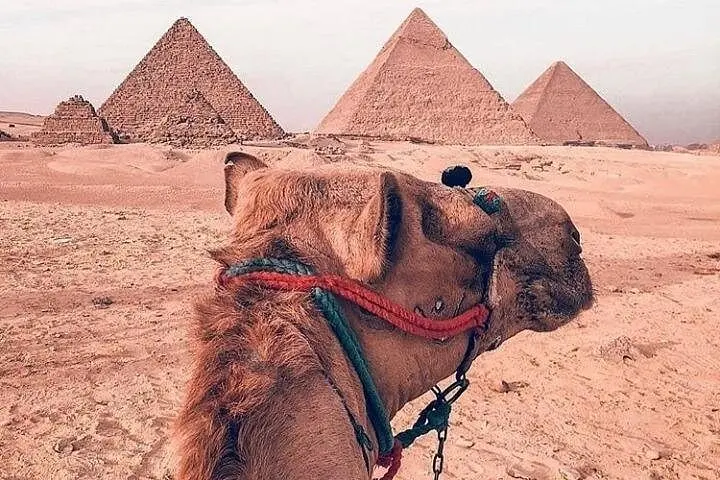
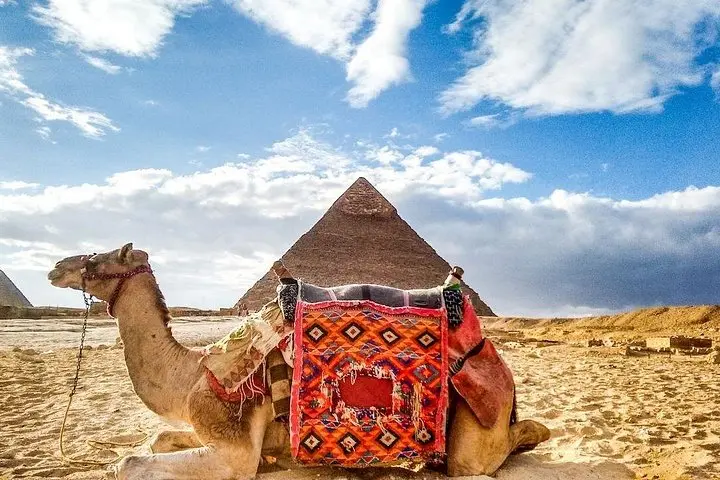
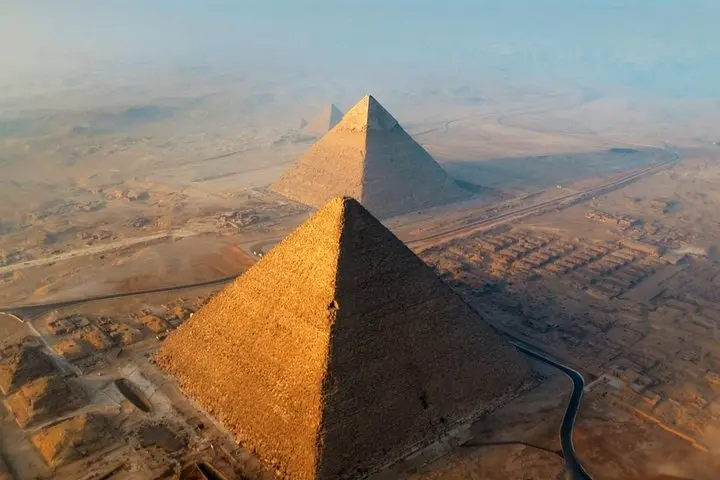
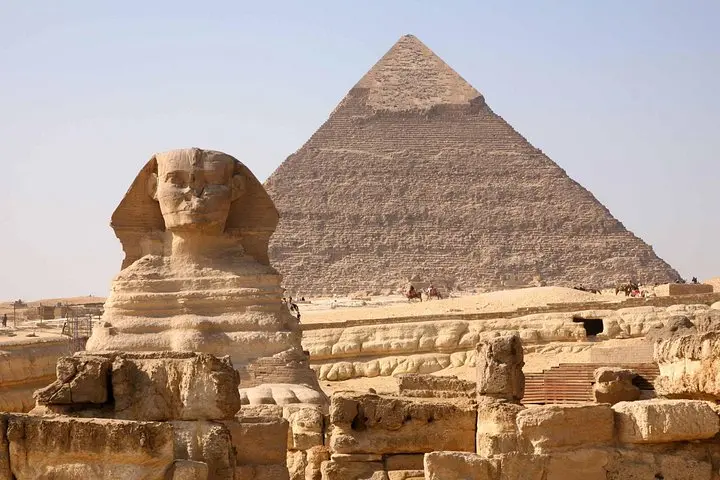
You arrive on the Giza plateau as the sun carves the limestone into hard gold; the desert around the pyramids dares you to slow down and read the angles. Dust lifts in small ribbons as camels stand like patient old travelers and the Great Pyramid watches the city spread toward the Nile.
You arrive on the Giza plateau as the sun carves the limestone into hard gold; the desert around the pyramids dares you to slow down and read the angles. Dust lifts in small ribbons as camels stand like patient old travelers and the Great Pyramid watches the city spread toward the Nile.
The day moves from the monumental—Cheops, Khafre, Menkaure—to intimate artifacts inside the Egyptian Museum where funerary masks and small everyday objects illuminate 4,500 years of social life. Geologically, the plateau is a seam of Tura limestone capped by quarried blocks that once slid into place with engineering that still puzzles modern minds. Culturally, you’ll move from pharaonic tombs to the living maze of Khan el-Khalili, where coffeehouses and copper shops argue with voices and bargaining is part of the ritual.
Expect a mix of flat walking on compacted sand and paved streets in downtown Cairo, short climbs on and off the plateau, and a quiet hour sailing on a felucca as the Nile pushes the boat downstream. Local guides (Egyptologists) translate hieroglyphs into human stories and point out conservation rules: do not climb the structures and keep to marked paths.
Practical guidance: start early to avoid heat and crowds, carry at least 2 liters of water, wear closed-toe shoes with good traction, and bring sun protection. Plan for roughly nine hours including museum time, a short camel ride, a felucca glide, and an hour to breeze through Khan el-Khalili’s alleys.