THE ADVENTURE COLLECTIVE® · Independent discovery and booking for outdoor travel

A full-day private excursion that pairs the raw scale of the Giza plateau with the concentrated history of the Egyptian Museum. Expect guided pyramid access, a short camel ride, and curated museum time—ideal for first-time visitors who want an efficient, interpretive overview.
A full-day private excursion that pairs the raw scale of the Giza plateau with the concentrated history of the Egyptian Museum. Expect guided pyramid access, a short camel ride, and curated museum time—ideal for first-time visitors who want an efficient, interpretive overview.
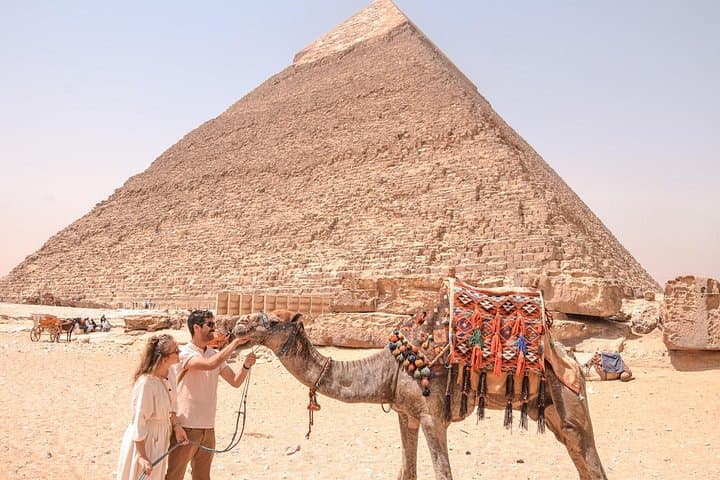
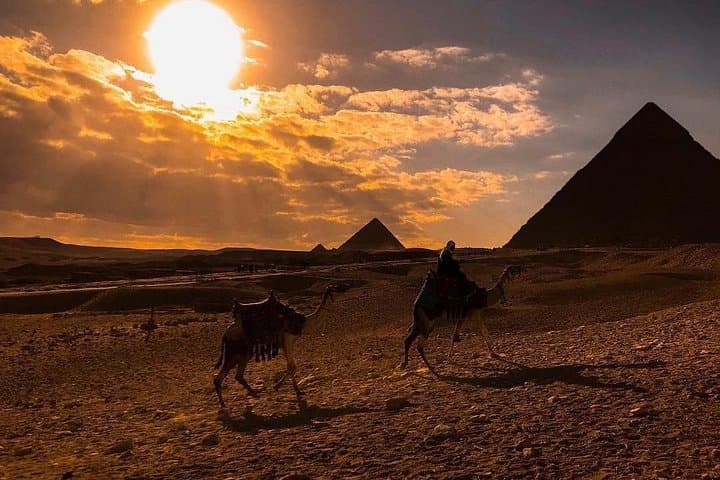
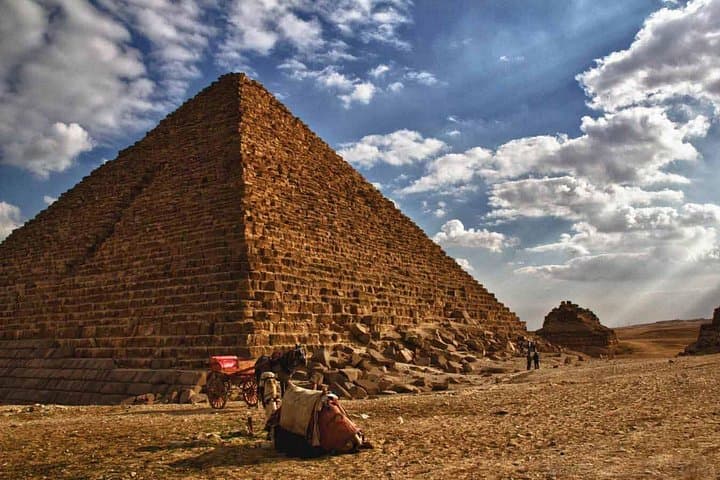
You leave Cairo before the city fully wakes; the highway thins, and the plateau of Giza rises from the haze like a working landscape shaped by millennia. Sunlight catches the stepped edges of the Great Pyramid as camels rest against a horizon of limestone and sand, and your guide outlines the day ahead: pyramids, the Sphinx, a short camel ride, then the Egyptian Museum's cool rooms of gold and stone.
Verified experiences and guided adventures in the surrounding area.
Operated by Emo Tours Egypt · Cairo, Cairo Governorate
You leave Cairo before the city fully wakes; the highway thins, and the plateau of Giza rises from the haze like a working landscape shaped by millennia. Sunlight catches the stepped edges of the Great Pyramid as camels rest against a horizon of limestone and sand, and your guide outlines the day ahead: pyramids, the Sphinx, a short camel ride, then the Egyptian Museum's cool rooms of gold and stone.
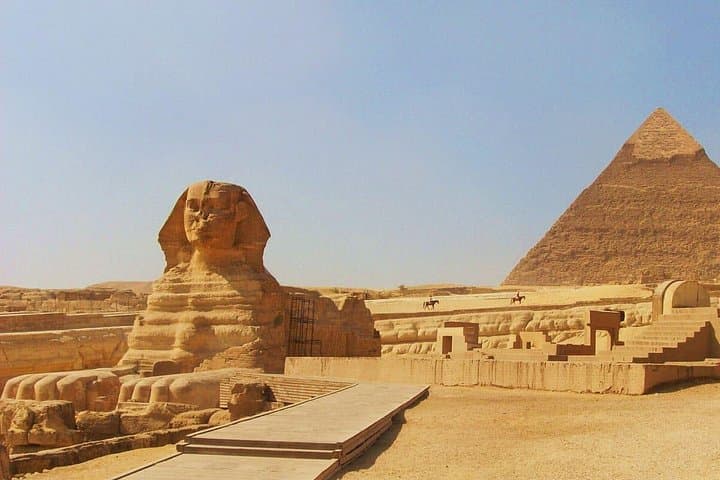
The three major pyramids on the plateau date to the Fourth Dynasty (c. 2600–2500 BCE) and were carved from local limestone and bedrock; the Sphinx is a later mortuary feature tied to Khafre's complex. The Egyptian Museum in Tahrir holds pharaonic artifacts spanning millennia, including objects linked to Tutankhamun and the royal funerary tradition that framed elite burial on the Nile.
Expect wide, sandy surfaces on the plateau with compacted walking lines, occasional loose sand, and minimal elevation change. The camel ride is a brief, managed experience across flat desert; the museum provides sheltered walking but stairs and crowded rooms in high season.
Practical notes: hotel pickup and private AC transport simplify logistics but traffic can extend transfers—plan 30–60 minutes each way from central Cairo. Bring sun protection, a refillable water bottle, and closed-toe shoes for sand and temple steps. Purchase entrance tickets if not included, and keep to designated paths—climbing monuments is prohibited and damages fragile masonry.
This full-day loop balances outdoor exposure on the Giza plateau with indoor time among artifacts, giving a compact, accessible window into ancient Egyptian landscape and culture.
Some booking options include entrance fees and museum tickets; confirm when you reserve—if not included, tickets can be purchased on site or arranged by the operator.
The included camel ride is short and supervised; operators typically set age or weight limits—check with the provider if traveling with very young children.
Transfer time varies with traffic but typically ranges from 30 to 60 minutes one way; morning pickups aim to avoid peak congestion.
Large bags may be restricted and subject to security checks; tripods are often prohibited without prior permission—travel light for quicker entry.
Emo Tours Egypt operates guided outdoor trips and adventures with an emphasis on safety, stewardship, and memorable experiences.
You leave Cairo before the city fully wakes; the highway thins, and the plateau of Giza rises from the haze like a working landscape shaped by millennia. Sunlight catches the stepped edges of the Great Pyramid as camels rest against a horizon of limestone and sand, and your guide outlines the day ahead: pyramids, the Sphinx, a short camel ride, then the Egyptian Museum's cool rooms of gold and stone.
You leave Cairo before the city fully wakes; the highway thins, and the plateau of Giza rises from the haze like a working landscape shaped by millennia. Sunlight catches the stepped edges of the Great Pyramid as camels rest against a horizon of limestone and sand, and your guide outlines the day ahead: pyramids, the Sphinx, a short camel ride, then the Egyptian Museum's cool rooms of gold and stone.
The three major pyramids on the plateau date to the Fourth Dynasty (c. 2600–2500 BCE) and were carved from local limestone and bedrock; the Sphinx is a later mortuary feature tied to Khafre's complex. The Egyptian Museum in Tahrir holds pharaonic artifacts spanning millennia, including objects linked to Tutankhamun and the royal funerary tradition that framed elite burial on the Nile.
Expect wide, sandy surfaces on the plateau with compacted walking lines, occasional loose sand, and minimal elevation change. The camel ride is a brief, managed experience across flat desert; the museum provides sheltered walking but stairs and crowded rooms in high season.
Practical notes: hotel pickup and private AC transport simplify logistics but traffic can extend transfers—plan 30–60 minutes each way from central Cairo. Bring sun protection, a refillable water bottle, and closed-toe shoes for sand and temple steps. Purchase entrance tickets if not included, and keep to designated paths—climbing monuments is prohibited and damages fragile masonry.
This full-day loop balances outdoor exposure on the Giza plateau with indoor time among artifacts, giving a compact, accessible window into ancient Egyptian landscape and culture.