THE ADVENTURE COLLECTIVE® · Independent discovery and booking for outdoor travel

Spend a private day moving through Egypt’s most iconic archaeological sites—from the Great Pyramid and Sphinx to Saqqara’s Step Pyramid and Dahshur’s experimental tombs. This all-inclusive tour covers transport, entrance fees, guided interpretation and a camel ride for a hassle-free dive into pharaonic history.
Spend a private day moving through Egypt’s most iconic archaeological sites—from the Great Pyramid and Sphinx to Saqqara’s Step Pyramid and Dahshur’s experimental tombs. This all-inclusive tour covers transport, entrance fees, guided interpretation and a camel ride for a hassle-free dive into pharaonic history.
You step out of an air-conditioned vehicle onto sun-warmed limestone; the Great Pyramid rises ahead, a precise, hulking geometry against Cairo’s low skyline. Wind moves the dust in thin ribbons, daring you to cross the plateau and close the distance between the present and a 4,500-year-old skyline.
Verified experiences and guided adventures in the surrounding area.
Operated by Egypt Tours Travel · Giza, Cairo Governorate
You step out of an air-conditioned vehicle onto sun-warmed limestone; the Great Pyramid rises ahead, a precise, hulking geometry against Cairo’s low skyline. Wind moves the dust in thin ribbons, daring you to cross the plateau and close the distance between the present and a 4,500-year-old skyline.
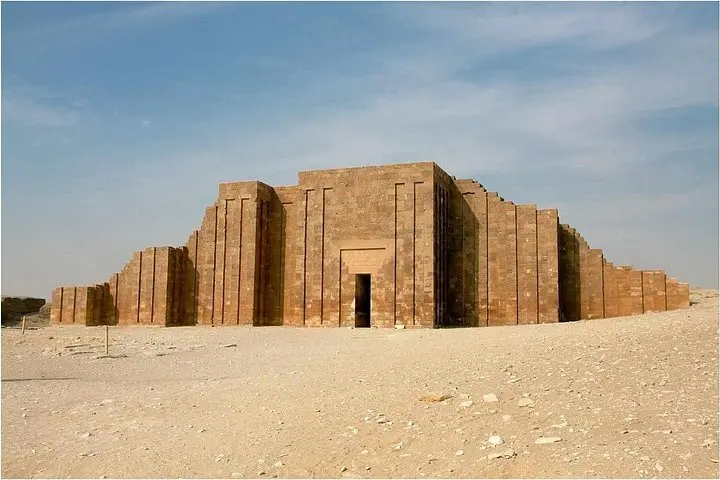
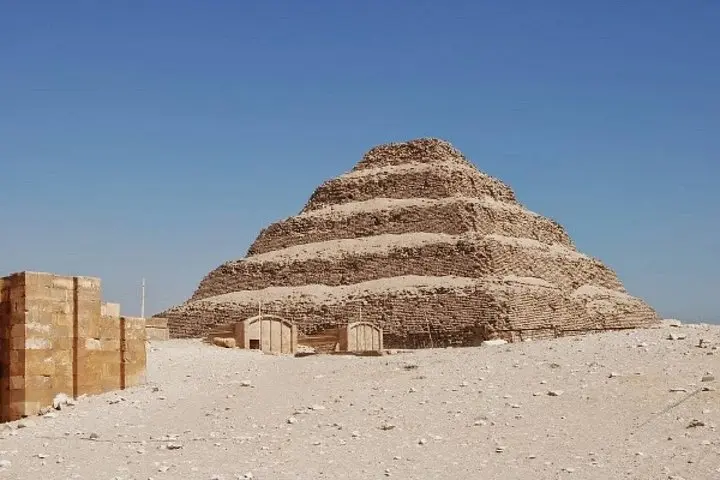
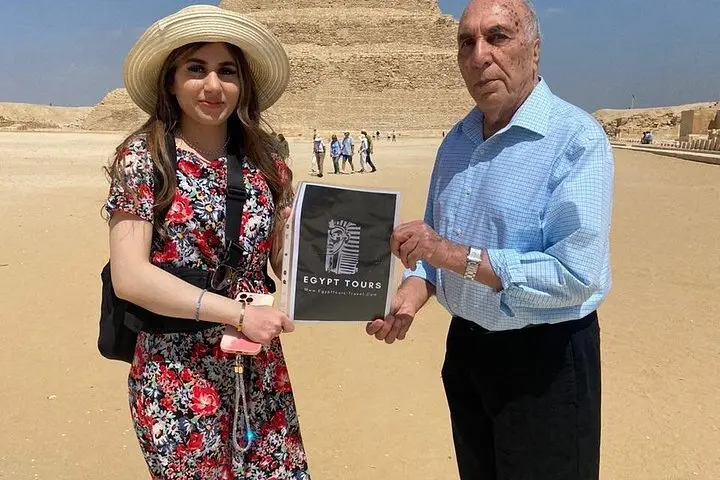
This private full-day outing strings together Giza, the Sphinx, Memphis, Saqqara and Dahshur—sites that chart the evolution of Egyptian mortuary architecture from Djoser’s Step Pyramid (3rd dynasty) through the apex at Giza and experimental forms at Dahshur. Geologically the plateau is weathered limestone and sand; walking is mostly flat with minimal elevation gain (under 50 m), though surfaces are uneven and sandy in places.
Culturally, a local Egyptologist animates the stories: pharaonic power, funerary rites, and the logistics of quarrying and transport that shaped these monuments. Expect short drives between sites (Giza to Saqqara ~30–40 minutes depending on traffic) and a 30-minute camel ride included to sample how people once traversed this landscape.
Practically, this is a low-technical, moderate-time commitment: the itinerary runs about 6–8 hours with several short walks totaling roughly 3–5 km. Bring sun protection, sturdy shoes for uneven stone and sand, and a refillable water bottle—the sun is direct and relentless. Morning starts avoid the hottest hours and crowds; the private guide and included entrance fees make logistics straightforward. Respect marked paths, listen to your guide about restricted areas, and leave no trace—these monuments survive because visitors learn to tread lightly.
Yes—this private package includes entrance fees to the specified sites as listed in the itinerary.
The 30-minute camel ride is managed by handlers; riders should be able to mount with assistance and follow handlers’ instructions—notify the operator of mobility concerns in advance.
Interior access is sometimes limited and may require a separate ticket or be closed for conservation; check with your guide on the day of the tour.
The tour notes wheelchair-accessible transportation and some accessible surfaces, but many archaeological areas have uneven ground—discuss specific accessibility needs with the operator when booking.
Egypt Tours Travel operates guided outdoor trips and adventures with an emphasis on safety, stewardship, and memorable experiences.
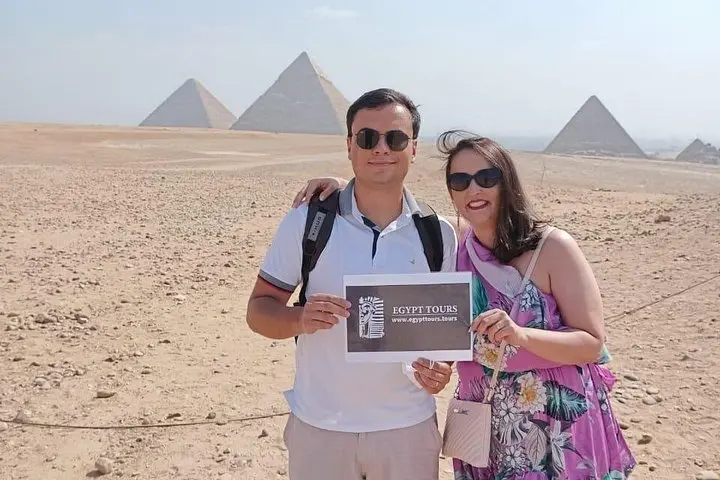
You step out of an air-conditioned vehicle onto sun-warmed limestone; the Great Pyramid rises ahead, a precise, hulking geometry against Cairo’s low skyline. Wind moves the dust in thin ribbons, daring you to cross the plateau and close the distance between the present and a 4,500-year-old skyline.
You step out of an air-conditioned vehicle onto sun-warmed limestone; the Great Pyramid rises ahead, a precise, hulking geometry against Cairo’s low skyline. Wind moves the dust in thin ribbons, daring you to cross the plateau and close the distance between the present and a 4,500-year-old skyline.
This private full-day outing strings together Giza, the Sphinx, Memphis, Saqqara and Dahshur—sites that chart the evolution of Egyptian mortuary architecture from Djoser’s Step Pyramid (3rd dynasty) through the apex at Giza and experimental forms at Dahshur. Geologically the plateau is weathered limestone and sand; walking is mostly flat with minimal elevation gain (under 50 m), though surfaces are uneven and sandy in places.
Culturally, a local Egyptologist animates the stories: pharaonic power, funerary rites, and the logistics of quarrying and transport that shaped these monuments. Expect short drives between sites (Giza to Saqqara ~30–40 minutes depending on traffic) and a 30-minute camel ride included to sample how people once traversed this landscape.
Practically, this is a low-technical, moderate-time commitment: the itinerary runs about 6–8 hours with several short walks totaling roughly 3–5 km. Bring sun protection, sturdy shoes for uneven stone and sand, and a refillable water bottle—the sun is direct and relentless. Morning starts avoid the hottest hours and crowds; the private guide and included entrance fees make logistics straightforward. Respect marked paths, listen to your guide about restricted areas, and leave no trace—these monuments survive because visitors learn to tread lightly.