THE ADVENTURE COLLECTIVE® · Independent discovery and booking for outdoor travel

Spend a focused day moving from the Giza Plateau’s iconic pyramids to Saqqara’s Step Pyramid and the experimental forms at Dahshur. This private tour pairs close-up archaeology with practical logistics—transfers, local crafts stops and expert context—to make Egypt’s pyramid history readable in a single day.
Spend a focused day moving from the Giza Plateau’s iconic pyramids to Saqqara’s Step Pyramid and the experimental forms at Dahshur. This private tour pairs close-up archaeology with practical logistics—transfers, local crafts stops and expert context—to make Egypt’s pyramid history readable in a single day.
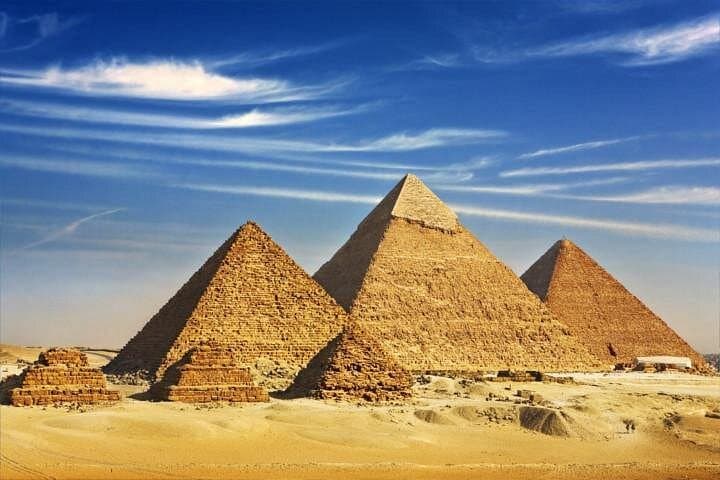
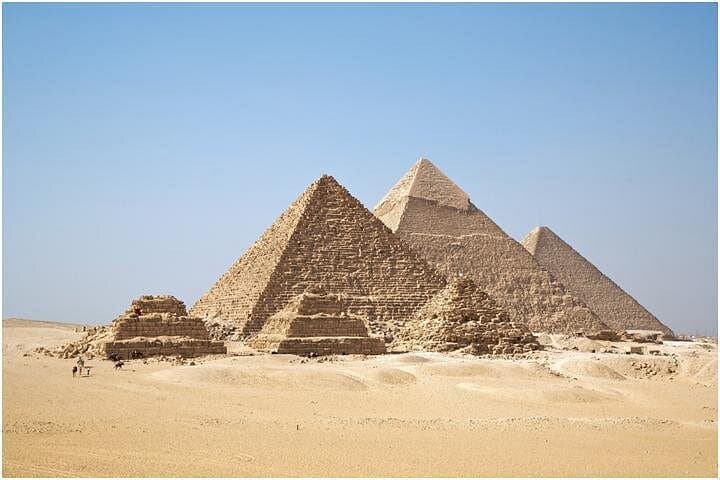
You arrive at dawn on the limestone rise of the Giza Plateau and the desert opens like a stage: the three great pyramids stand geometrically against a bright sky while the Sphinx watches the horizon with a weathered, human face.
Verified experiences and guided adventures in the surrounding area.
Operated by Emo Tours Egypt · Giza, Cairo Governorate
You arrive at dawn on the limestone rise of the Giza Plateau and the desert opens like a stage: the three great pyramids stand geometrically against a bright sky while the Sphinx watches the horizon with a weathered, human face.
This private full-day circuit strings together Egypt’s most formative funerary sites. At Giza you’ll see Khufu, Khafre and Menkaure—monuments of Fourth Dynasty ambition—and the Sphinx, carved from the same bedrock. Saqqara’s Step Pyramid at Djoser records an earlier chapter when mastabas gave way to stacked stone. Further south, Dahshur’s Bent and Red Pyramids reveal experiments in angle and construction that shaped later design.
Geologically the sites sit on the western edge of the Nile Valley where the plateau’s nummulitic limestone provided the raw material for monumental architecture. Culturally the tour passes Memphis, the Old Kingdom capital, where colossi and alabaster fragments speak to centralized power and ritual practice. En route the itinerary commonly includes short artisan stops—papyrus workshops, perfumeries and cotton or carpet demonstrations—that showcase living crafts tied to Egypt’s material history.
Practical planning matters: this is an 8-hour day with vehicle transfers and moderate walking on uneven stone, gravel and compacted sand. Start early to avoid heat and crowds; carry sun protection and water; check which entrance tickets are included and whether you want optional interior pyramid access. Expect brief market stops; keep valuables secure and allot time for photos and short rests. For travelers who want a concentrated, interpretive view of pyramid evolution, this route delivers both spectacle and context in a single, manageable day.
Some bookings include basic site entrance fees while interior access (pyramid chambers) is typically optional and paid on site—confirm your ticket option before arrival.
Interior entry (e.g., Khufu) is limited, timed, and may require a separate ticket; access is physically confined and not recommended for those with claustrophobia or mobility issues.
The tour is vehicle-based with short walks; children and elderly can participate but should be able to walk short distances and tolerate heat and uneven terrain.
October–April offers milder temperatures and more comfortable sightseeing; summer can be extremely hot, especially midday.
Emo Tours Egypt operates guided outdoor trips and adventures with an emphasis on safety, stewardship, and memorable experiences.


You arrive at dawn on the limestone rise of the Giza Plateau and the desert opens like a stage: the three great pyramids stand geometrically against a bright sky while the Sphinx watches the horizon with a weathered, human face.
You arrive at dawn on the limestone rise of the Giza Plateau and the desert opens like a stage: the three great pyramids stand geometrically against a bright sky while the Sphinx watches the horizon with a weathered, human face.
This private full-day circuit strings together Egypt’s most formative funerary sites. At Giza you’ll see Khufu, Khafre and Menkaure—monuments of Fourth Dynasty ambition—and the Sphinx, carved from the same bedrock. Saqqara’s Step Pyramid at Djoser records an earlier chapter when mastabas gave way to stacked stone. Further south, Dahshur’s Bent and Red Pyramids reveal experiments in angle and construction that shaped later design.
Geologically the sites sit on the western edge of the Nile Valley where the plateau’s nummulitic limestone provided the raw material for monumental architecture. Culturally the tour passes Memphis, the Old Kingdom capital, where colossi and alabaster fragments speak to centralized power and ritual practice. En route the itinerary commonly includes short artisan stops—papyrus workshops, perfumeries and cotton or carpet demonstrations—that showcase living crafts tied to Egypt’s material history.
Practical planning matters: this is an 8-hour day with vehicle transfers and moderate walking on uneven stone, gravel and compacted sand. Start early to avoid heat and crowds; carry sun protection and water; check which entrance tickets are included and whether you want optional interior pyramid access. Expect brief market stops; keep valuables secure and allot time for photos and short rests. For travelers who want a concentrated, interpretive view of pyramid evolution, this route delivers both spectacle and context in a single, manageable day.