THE ADVENTURE COLLECTIVE® · Independent discovery and booking for outdoor travel

Spend a private day crossing Luxor’s East and West Banks with an Egyptologist guide—visit the Valley of the Kings, Hatshepsut’s terraces, Karnak and the Colossi of Memnon. This seamless tour pairs historical depth with comfortable transport for a full-day immersion.
Spend a private day crossing Luxor’s East and West Banks with an Egyptologist guide—visit the Valley of the Kings, Hatshepsut’s terraces, Karnak and the Colossi of Memnon. This seamless tour pairs historical depth with comfortable transport for a full-day immersion.
The day begins on the Nile’s broad back, city noise thinning as the private vehicle carries you across Luxor toward sunlit stone. On the West Bank, dry wind teases the limestone cliffs where tomb entrances gape like mouths—hieroglyphs and painted corridors holding centuries of ritual. Later the East Bank opens into courtyards of columns, where sunlight chisels relief into sandstone and priests’ altars still command the space.
Verified experiences and guided adventures in the surrounding area.
Operated by CRUISE ERA · Luxor, Luxor Governorate
The day begins on the Nile’s broad back, city noise thinning as the private vehicle carries you across Luxor toward sunlit stone. On the West Bank, dry wind teases the limestone cliffs where tomb entrances gape like mouths—hieroglyphs and painted corridors holding centuries of ritual. Later the East Bank opens into courtyards of columns, where sunlight chisels relief into sandstone and priests’ altars still command the space.
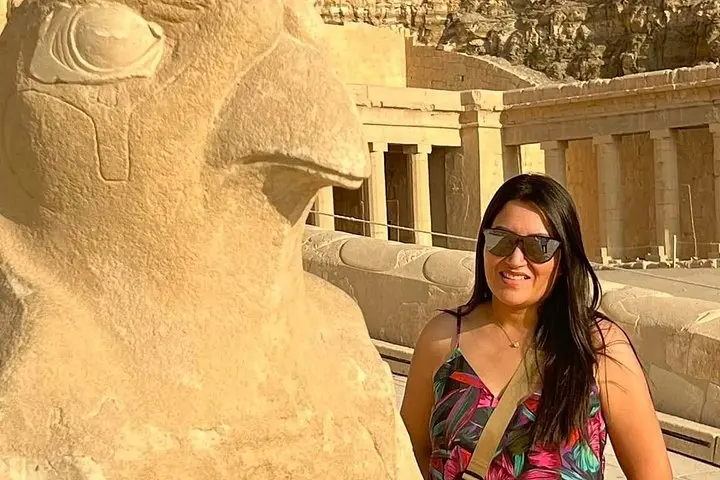
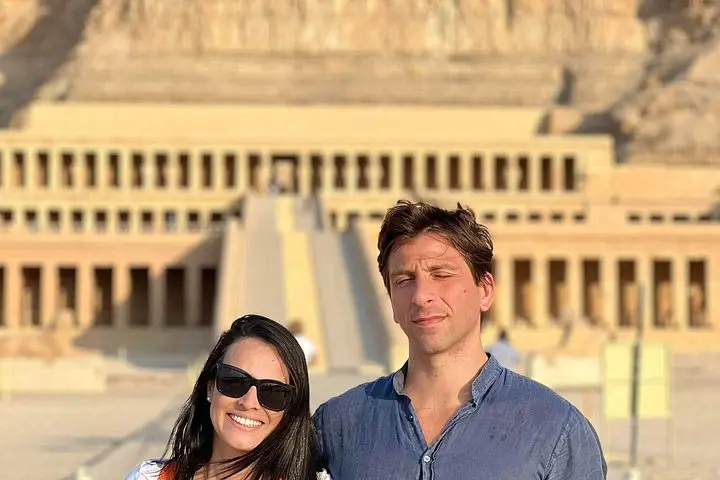
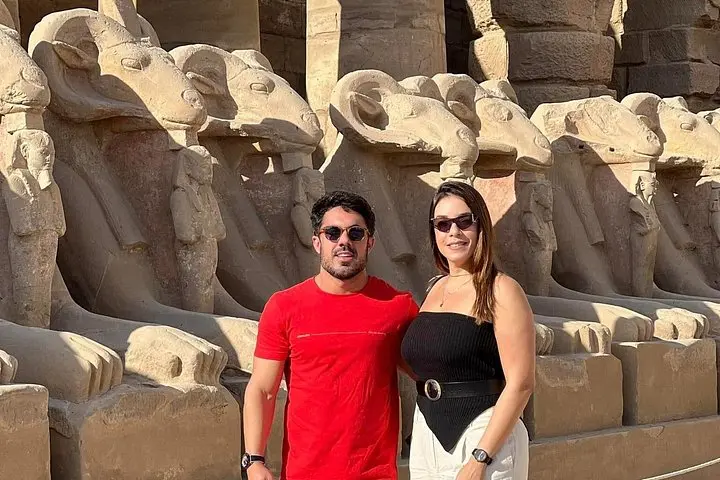
Luxor sits on the ruins of ancient Thebes, the New Kingdom’s religious and political heart. The Valley of the Kings contains burial shafts for pharaohs whose funerary art aimed to guide souls through the afterlife; the mortuary temple of Hatshepsut rises in layered terraces against the cliff, an architectural gamble from the 15th century BCE. Karnak and Luxor Temples represent generations of builders adding pylons, obelisks, and hypostyle halls—an accretion of power carved in stone.
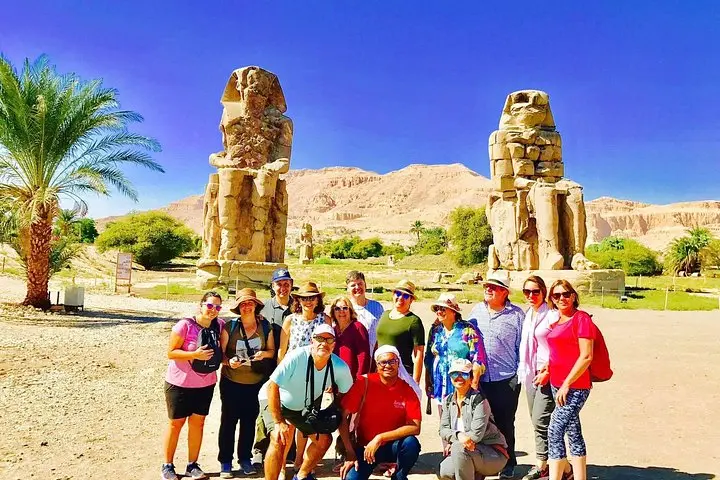
Expect uneven surfaces, tight tomb corridors, and bright desert sun. The tour rhythm alternates 30–120 minute site visits with comfortable air-conditioned transfers, guided explanations, and photo stops at the Colossi of Memnon. Practical notes: carry a hat and water, wear closed-toe shoes for gravel and stairs, and plan for heat by scheduling morning starts or late-afternoon arrivals.
Photography policies and entrance tickets vary by monument—ask your Egyptologist guide ahead of time. With a private guide and transport, the day balances deep context with manageable pacing, leaving time to absorb both carved myths and the living city that grew around them.
Entrance fees are typically not included—confirm with the operator; your guide can advise which sites require separate tickets.
Some vehicle transfers and temple grounds are accessible, but many tombs have narrow, stepped entrances; check specifics with the operator for mobility needs.
Photography rules differ by monument—flash and tripods are often prohibited inside tombs to protect pigments; follow your guide’s instructions.
Bottled water is supplied, but meals are usually not included; ask about stops for lunch or bring snacks for the day.
CRUISE ERA operates guided outdoor trips and adventures with an emphasis on safety, stewardship, and memorable experiences.
The day begins on the Nile’s broad back, city noise thinning as the private vehicle carries you across Luxor toward sunlit stone. On the West Bank, dry wind teases the limestone cliffs where tomb entrances gape like mouths—hieroglyphs and painted corridors holding centuries of ritual. Later the East Bank opens into courtyards of columns, where sunlight chisels relief into sandstone and priests’ altars still command the space.
The day begins on the Nile’s broad back, city noise thinning as the private vehicle carries you across Luxor toward sunlit stone. On the West Bank, dry wind teases the limestone cliffs where tomb entrances gape like mouths—hieroglyphs and painted corridors holding centuries of ritual. Later the East Bank opens into courtyards of columns, where sunlight chisels relief into sandstone and priests’ altars still command the space.
Luxor sits on the ruins of ancient Thebes, the New Kingdom’s religious and political heart. The Valley of the Kings contains burial shafts for pharaohs whose funerary art aimed to guide souls through the afterlife; the mortuary temple of Hatshepsut rises in layered terraces against the cliff, an architectural gamble from the 15th century BCE. Karnak and Luxor Temples represent generations of builders adding pylons, obelisks, and hypostyle halls—an accretion of power carved in stone.
Expect uneven surfaces, tight tomb corridors, and bright desert sun. The tour rhythm alternates 30–120 minute site visits with comfortable air-conditioned transfers, guided explanations, and photo stops at the Colossi of Memnon. Practical notes: carry a hat and water, wear closed-toe shoes for gravel and stairs, and plan for heat by scheduling morning starts or late-afternoon arrivals.
Photography policies and entrance tickets vary by monument—ask your Egyptologist guide ahead of time. With a private guide and transport, the day balances deep context with manageable pacing, leaving time to absorb both carved myths and the living city that grew around them.