THE ADVENTURE COLLECTIVE® · Independent discovery and booking for outdoor travel

Spend a private day moving from the Sultan Qaboos Grand Mosque to Mutrah Souq, taking in coastal views, royal palaces and Omani hospitality. This guided circuit is ideal for first-time visitors who want a structured, culturally aware introduction to Muscat.
Spend a private day moving from the Sultan Qaboos Grand Mosque to Mutrah Souq, taking in coastal views, royal palaces and Omani hospitality. This guided circuit is ideal for first-time visitors who want a structured, culturally aware introduction to Muscat.
The morning light in Muscat hits white stone and blue sea with a clarity that makes details sharp: the mosque’s marble cool underfoot, the corniche wind pushes salt into your face, and the souq’s alleys hum with haggling and cardamom. A private full-day tour threads these scenes into one practical circuit — mosque, opera, Al Alam Palace, Mutrah Corniche and souq, and a small museum stop — giving a compact view of Muscat’s coastal city and guarded bays.
Verified experiences and guided adventures in the surrounding area.
Operated by Star Tours · Muscat, Muscat Governorate
The morning light in Muscat hits white stone and blue sea with a clarity that makes details sharp: the mosque’s marble cool underfoot, the corniche wind pushes salt into your face, and the souq’s alleys hum with haggling and cardamom. A private full-day tour threads these scenes into one practical circuit — mosque, opera, Al Alam Palace, Mutrah Corniche and souq, and a small museum stop — giving a compact view of Muscat’s coastal city and guarded bays.
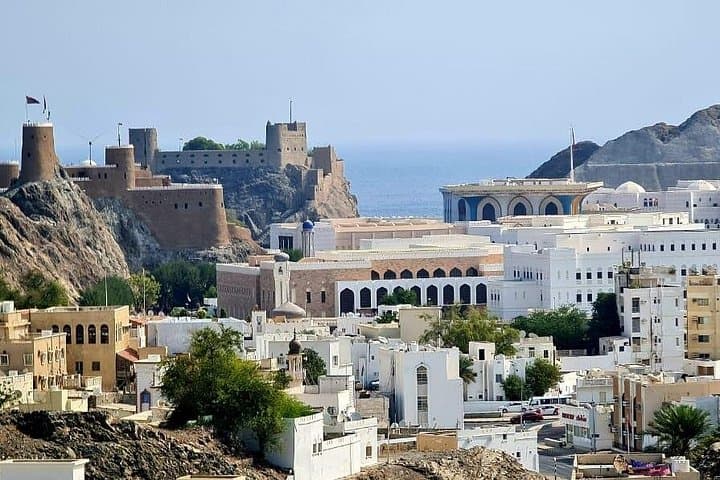
Muscat’s built landscape grew where the Hajar foothills meet the Gulf of Oman; Portuguese forts still watch the harbor and Omani coastal trade shaped the city’s marketplaces and cuisine. Geologically the area shifts from volcanic and sedimentary rocks inland to alluvial plains at the shore, which is why the city’s steep, carved headlands frame sheltered coves.
Culturally expect formal hospitality: greetings, poured karak tea, and locally made breads. History appears in the palace facades and in small private museums displaying traditional dress, daggers and pearl-trade artifacts.
Practical guidance: plan for a 7–8 hour outing with a private vehicle and English-speaking local guide. Respect dress codes at the Sultan Qaboos Grand Mosque (long sleeves and hair covering for women) and avoid Fridays for mosque visits. Carry cash for souq purchases, stay hydrated in the midday sun, and schedule the Opera House or museums earlier in the day to avoid closures. This tour balances easy walking with short stops and provides a useful primer for first-time visitors who want a measured, informed introduction to Muscat.
The mosque is open Saturday–Thursday mornings (usually 8:00–11:00); it is closed to visitors on Fridays due to Jummah prayers.
Yes; private tours typically include pickup and drop-off within the Muscat area as part of the booking.
Many main stops like the mosque, Opera House exterior and Mutrah Corniche have accessible sections; confirm specific needs when booking so the operator can arrange suitable transport and access.
Haggling is common for crafts and souvenirs; start lower than the asking price and be polite — many vendors expect some negotiation.
Star Tours operates guided outdoor trips and adventures with an emphasis on safety, stewardship, and memorable experiences.


The morning light in Muscat hits white stone and blue sea with a clarity that makes details sharp: the mosque’s marble cool underfoot, the corniche wind pushes salt into your face, and the souq’s alleys hum with haggling and cardamom. A private full-day tour threads these scenes into one practical circuit — mosque, opera, Al Alam Palace, Mutrah Corniche and souq, and a small museum stop — giving a compact view of Muscat’s coastal city and guarded bays.
The morning light in Muscat hits white stone and blue sea with a clarity that makes details sharp: the mosque’s marble cool underfoot, the corniche wind pushes salt into your face, and the souq’s alleys hum with haggling and cardamom. A private full-day tour threads these scenes into one practical circuit — mosque, opera, Al Alam Palace, Mutrah Corniche and souq, and a small museum stop — giving a compact view of Muscat’s coastal city and guarded bays.
Muscat’s built landscape grew where the Hajar foothills meet the Gulf of Oman; Portuguese forts still watch the harbor and Omani coastal trade shaped the city’s marketplaces and cuisine. Geologically the area shifts from volcanic and sedimentary rocks inland to alluvial plains at the shore, which is why the city’s steep, carved headlands frame sheltered coves.
Culturally expect formal hospitality: greetings, poured karak tea, and locally made breads. History appears in the palace facades and in small private museums displaying traditional dress, daggers and pearl-trade artifacts.
Practical guidance: plan for a 7–8 hour outing with a private vehicle and English-speaking local guide. Respect dress codes at the Sultan Qaboos Grand Mosque (long sleeves and hair covering for women) and avoid Fridays for mosque visits. Carry cash for souq purchases, stay hydrated in the midday sun, and schedule the Opera House or museums earlier in the day to avoid closures. This tour balances easy walking with short stops and provides a useful primer for first-time visitors who want a measured, informed introduction to Muscat.