THE ADVENTURE COLLECTIVE® · Independent discovery and booking for outdoor travel

Spend a full day uncovering Oman’s interior: climb Nizwa Fort, haggle at the historic souq, and explore the restored halls of Bahla and Jabreen Castles. This private tour from Muscat combines archaeology, architecture and local market life with an English-speaking guide.
Spend a full day uncovering Oman’s interior: climb Nizwa Fort, haggle at the historic souq, and explore the restored halls of Bahla and Jabreen Castles. This private tour from Muscat combines archaeology, architecture and local market life with an English-speaking guide.
Dust from the desert road rises as the minivan slides away from Muscat and the foothills of the Hajar Mountains come into view. By midmorning the guide leads the group into Nizwa Fort’s circular tower: thick mud-brick walls, narrow stairways and gun ports that still point toward the range. The fort’s ramparts give a clear-eyed view of the old town and the terraces below, where date palms line the falaj channels.
Verified experiences and guided adventures in the surrounding area.
Operated by Oman Honey Tours · Muscat, Muscat Governorate
Dust from the desert road rises as the minivan slides away from Muscat and the foothills of the Hajar Mountains come into view. By midmorning the guide leads the group into Nizwa Fort’s circular tower: thick mud-brick walls, narrow stairways and gun ports that still point toward the range. The fort’s ramparts give a clear-eyed view of the old town and the terraces below, where date palms line the falaj channels.
This circuit visits history on three scales: Nizwa’s role as an early Omani capital and market center; Bahla Fort, a UNESCO site representing centuries of stone-and-mortar defensive architecture; and Jabreen Castle, a 17th‑century manor-house of learning with painted ceilings and carved doors. Geology here is blunt — dark volcanic outcrops and folded limestone meet dry wadi beds — and culture is tactile: merchants calling prices at the souq, silver-smiths shaping khanjars, and the quiet work of falaj irrigation that sustained these settlements.
Practicalities are straightforward for a day trip: expect roughly 6–7 hours including driving, an English-speaking private guide, bottled water and entrance fees included. Wear closed-toe shoes for stairs and uneven floors, protect yourself from sun and carry small change for the souq. Pace the visit: climb the fort early for the light, move through the covered market when shade is welcome, and leave time to explore Jabreen’s chambers before the return drive. The tour balances living culture and fortified history — an efficient way to read central Oman’s landscape by foot and by eye.
Yes — entrance to Nizwa Fort, Bahla Fort and Jabreen Castle is included with this tour.
Expect roughly 1.5–2 hours each way depending on traffic, so plan for a 6–7 hour round trip.
The tour is family-friendly but involves stairs and uneven surfaces; it’s not recommended for travelers with significant mobility or spinal issues.
Yes — Nizwa Souq has produce, dates, silverware and crafts; bring cash and allow time for browsing.
Oman Honey Tours operates guided outdoor trips and adventures with an emphasis on safety, stewardship, and memorable experiences.
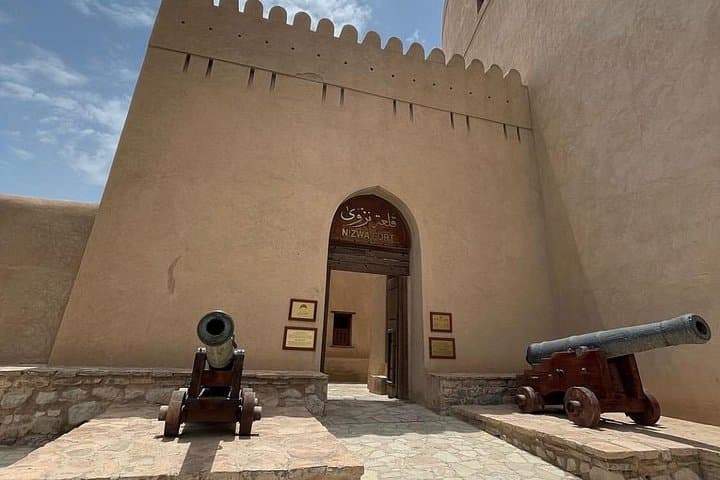
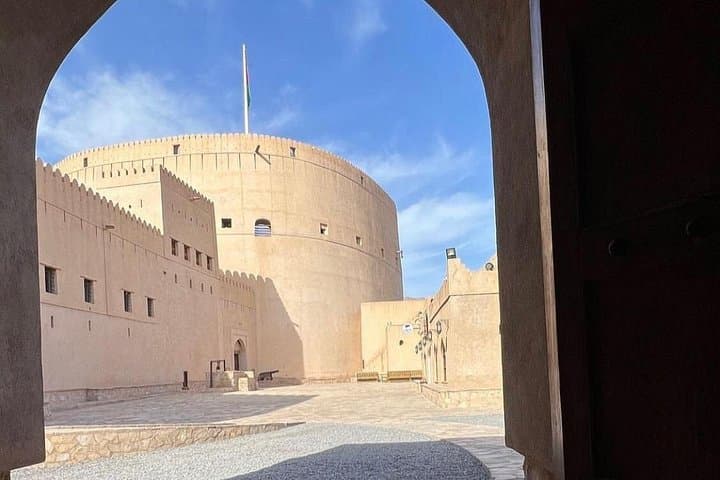
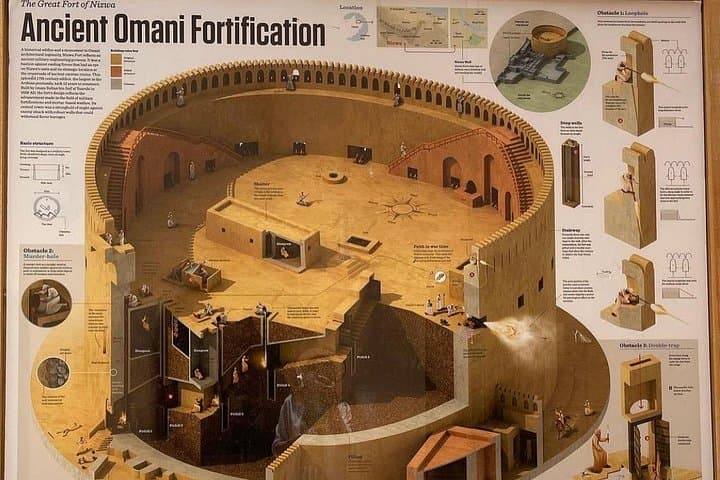
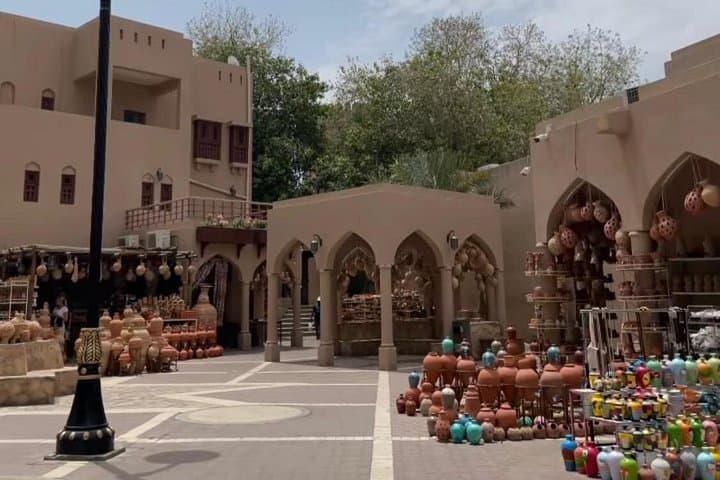
Dust from the desert road rises as the minivan slides away from Muscat and the foothills of the Hajar Mountains come into view. By midmorning the guide leads the group into Nizwa Fort’s circular tower: thick mud-brick walls, narrow stairways and gun ports that still point toward the range. The fort’s ramparts give a clear-eyed view of the old town and the terraces below, where date palms line the falaj channels.
Dust from the desert road rises as the minivan slides away from Muscat and the foothills of the Hajar Mountains come into view. By midmorning the guide leads the group into Nizwa Fort’s circular tower: thick mud-brick walls, narrow stairways and gun ports that still point toward the range. The fort’s ramparts give a clear-eyed view of the old town and the terraces below, where date palms line the falaj channels.
This circuit visits history on three scales: Nizwa’s role as an early Omani capital and market center; Bahla Fort, a UNESCO site representing centuries of stone-and-mortar defensive architecture; and Jabreen Castle, a 17th‑century manor-house of learning with painted ceilings and carved doors. Geology here is blunt — dark volcanic outcrops and folded limestone meet dry wadi beds — and culture is tactile: merchants calling prices at the souq, silver-smiths shaping khanjars, and the quiet work of falaj irrigation that sustained these settlements.
Practicalities are straightforward for a day trip: expect roughly 6–7 hours including driving, an English-speaking private guide, bottled water and entrance fees included. Wear closed-toe shoes for stairs and uneven floors, protect yourself from sun and carry small change for the souq. Pace the visit: climb the fort early for the light, move through the covered market when shade is welcome, and leave time to explore Jabreen’s chambers before the return drive. The tour balances living culture and fortified history — an efficient way to read central Oman’s landscape by foot and by eye.